Adventures in Peru 2014: Part Two-Ollantaytambo

I am writing this blog on Tuesday. We are resting comfortably at the hotel. This would have been the starting morning of the Inca Trail, but as I reported last night, that went by the wayside. So, instead of waking up and meeting our van at 5:30 AM, we slept in, had a nice breakfast and are now sitting out in the Sacred Valley sun. The wifi signal is strong, so Genene is happily watching videos, I am blogging and Greg is reading. It’s what we call a “make and mend day.” We were disappointed, but I could get used to relaxing in the sun.

So let’s return to the program in order.

Sunday, July 27, 2014

At the end of Part One, I was just starting to get really annoyed about the festival that was going on outside our hotel room. There were loudspeakers, and the entertainment was not of the highest quality. As I mentioned, there was one song that was repeated ad nauseum, and I swear the guy kept singing, “Sopapilla! Sopapilla! Sopapilla!” Another thing the singer liked to do was make a sound like, “EeeYie! EeeYie! EeeYie!” It was impossible to sleep. The noise went on until after 2 AM. I should have known that Greg was getting sick because he can usually sleep through a hurricane, but even he was awake and said, “This is HORRIBLE.” I called to front desk to complain and tell them that it was intolerable. The lady at the front desk was mortified. She apologized profusely and hissed, “It’s the TOWN.” She said it as if the town were something totally separate from her and from the hotel, something evil and malevolent.

Greg got up again in the wee hours and said that he did not feel right. He was dizzy and out of breath, classic symptoms of altitude sickness. We had been to the travel doctor in Houston before we left and had been taking all the recommended medicines, and we were warned that if this happened, the remedy was rest until the body adjusts. Our guide Carlos concurred. When he came to pick us up on Sunday morning, he told Greg to rest in bed all day. We were all supposed to go for full day of sightseeing, but Carlos recommended that Genene and I go for a half-day and then check on Greg. The hotel had oxygen on hand, and they took good care of Greg while we went to do a little exploring.

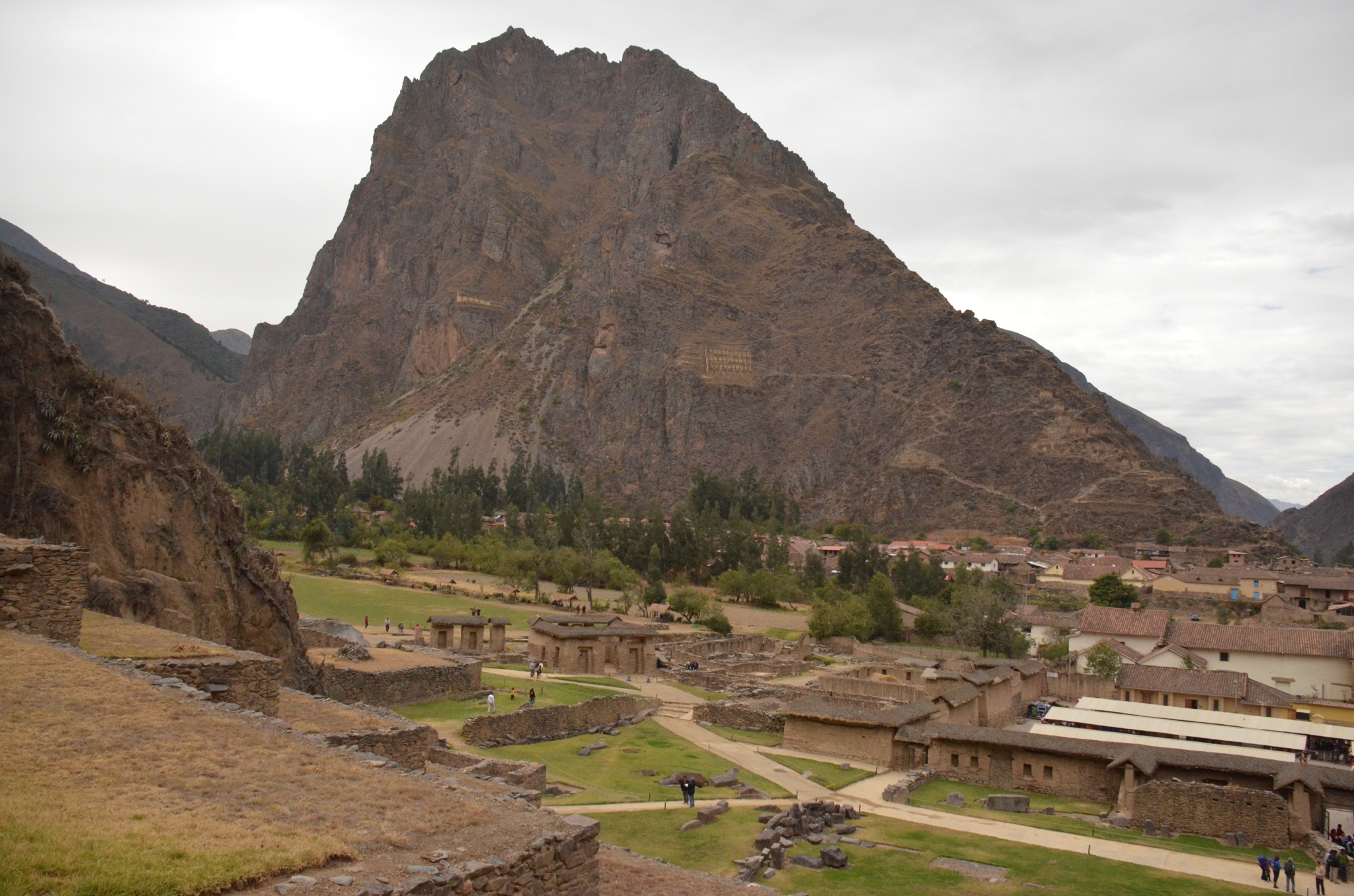
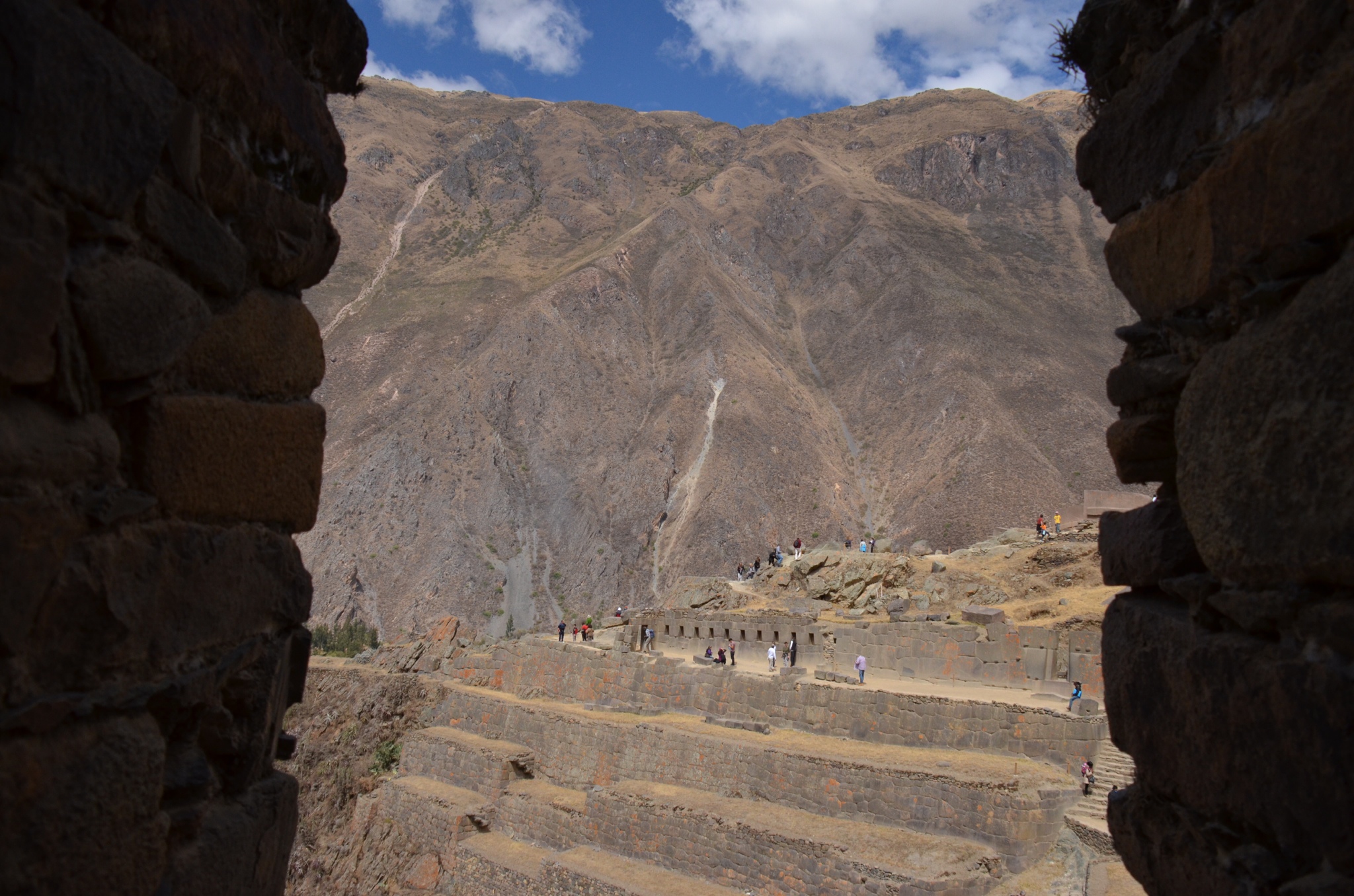
Genene and I hopped in with Carlos and the driver Rolondo and we set out for Ollantaytambo, an Incan village set below an ancient Inca fortress and temple. The town is named for Ollantay, the Incan general who expanded his people’s frontier as far north as Columbia and south to Argentina. He served under the Sapa Inca Pachacutec, the 9th Inca emperor, whom we have already met. Ollantay was naturally pleased with his military exploits, and thus he was emboldened to ask for the hand of Pachacutec’s daughter. This request was refused. Though a great general, Ollantay was a commoner, not a Sapa Inca. The general did what all generals and scorned men do. He rebelled against Pachacutec and holed up in the fortress that we are about to visit. The legend has it that Ollantay kept the princess a prisoner until her more tolerant brother became ruler. As I mentioned, the Incas do not have written histories, so much of their stories were chronicled by the conquering Spaniards, and myth is difficult to separate from fact. In any event, it is a beautiful place. It’s in the Sacred Valley northwest of Cusco, and it contains religious, astronomical, administrative and urban complexes.

Beautiful ruins of the fortress:

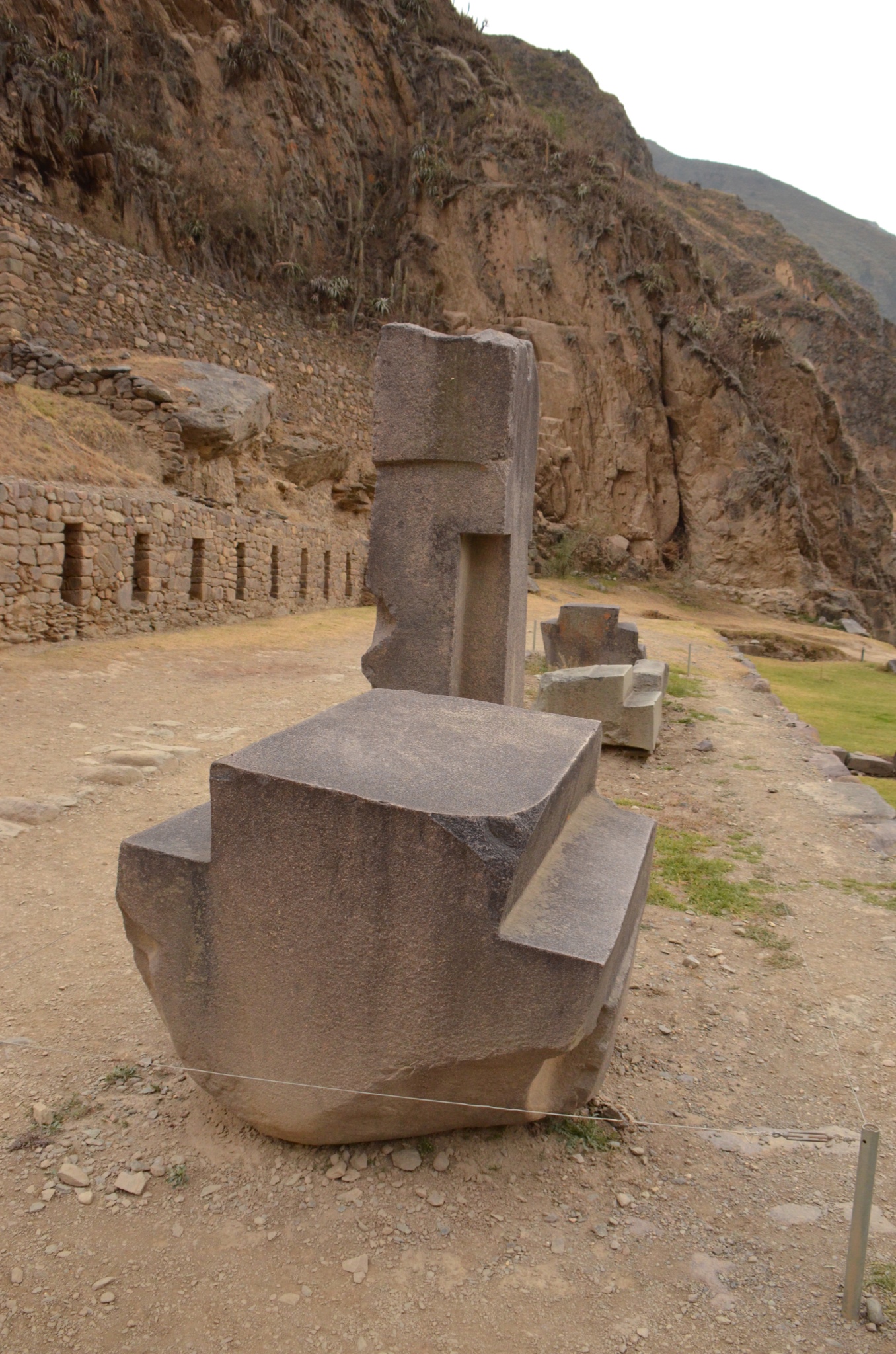
Carlos said that these pieces must have fallen from above when the fortress was destroyed by the Spaniards. The pieces do not “fit” where they have fallen.
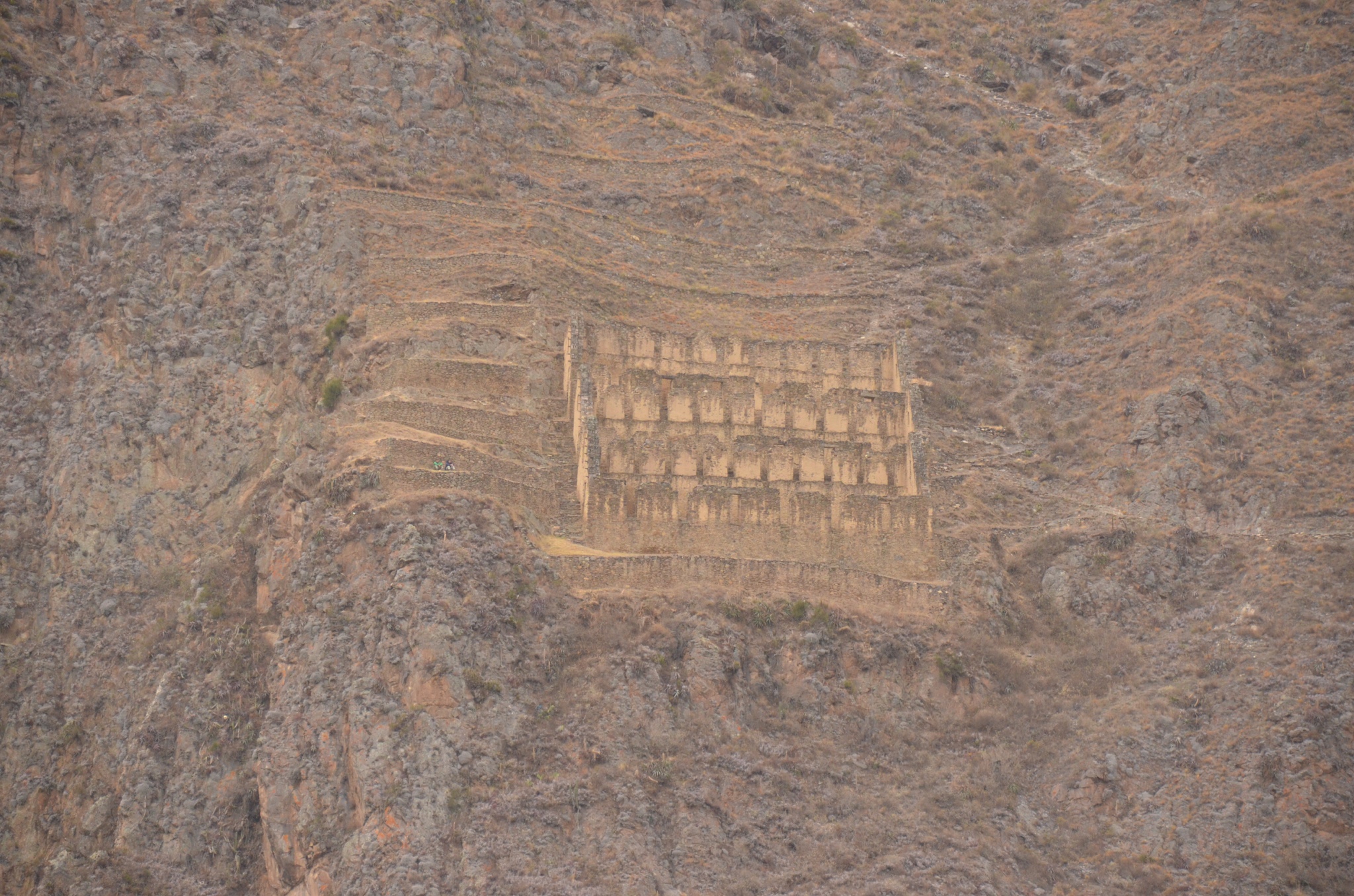
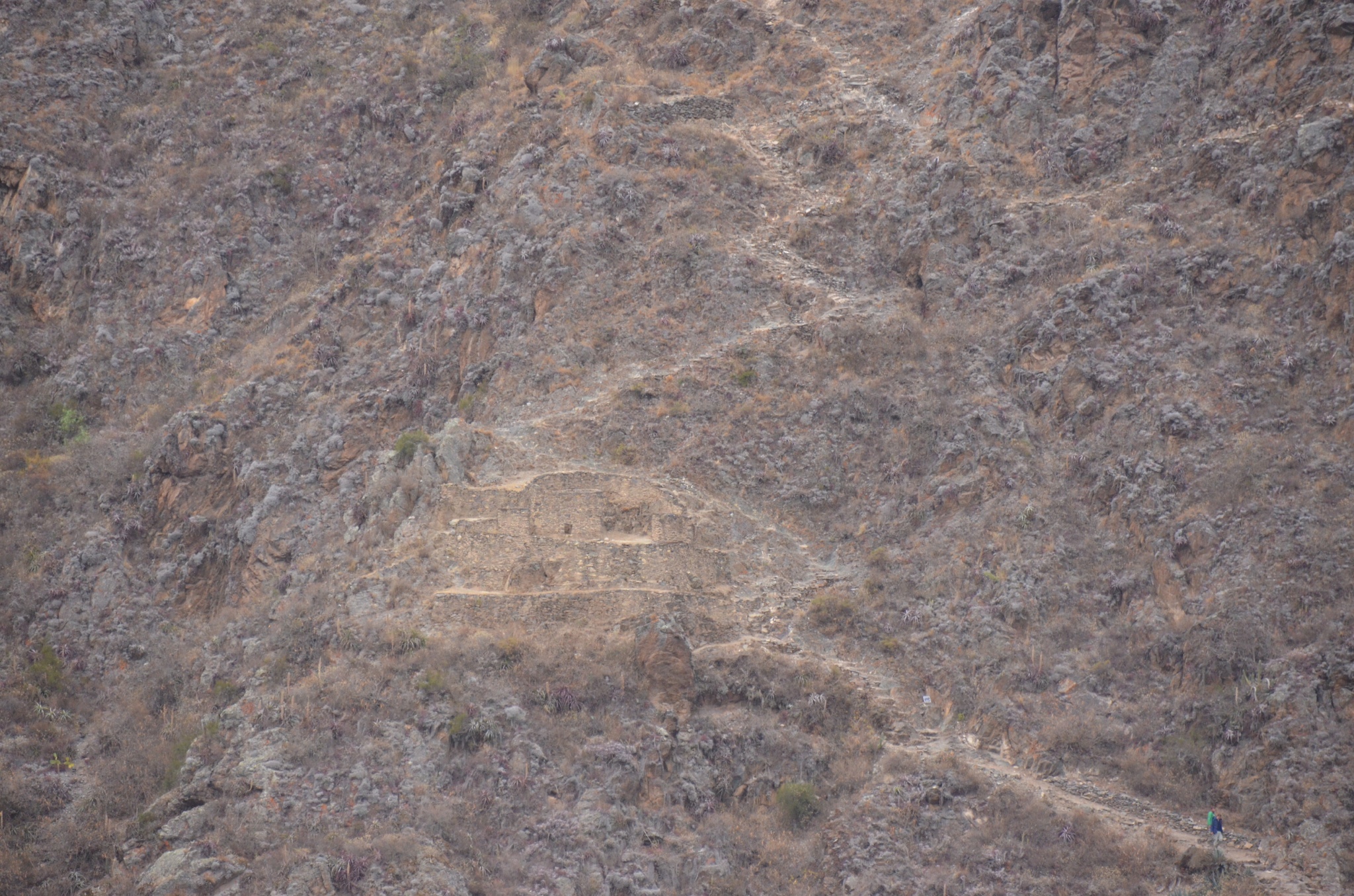
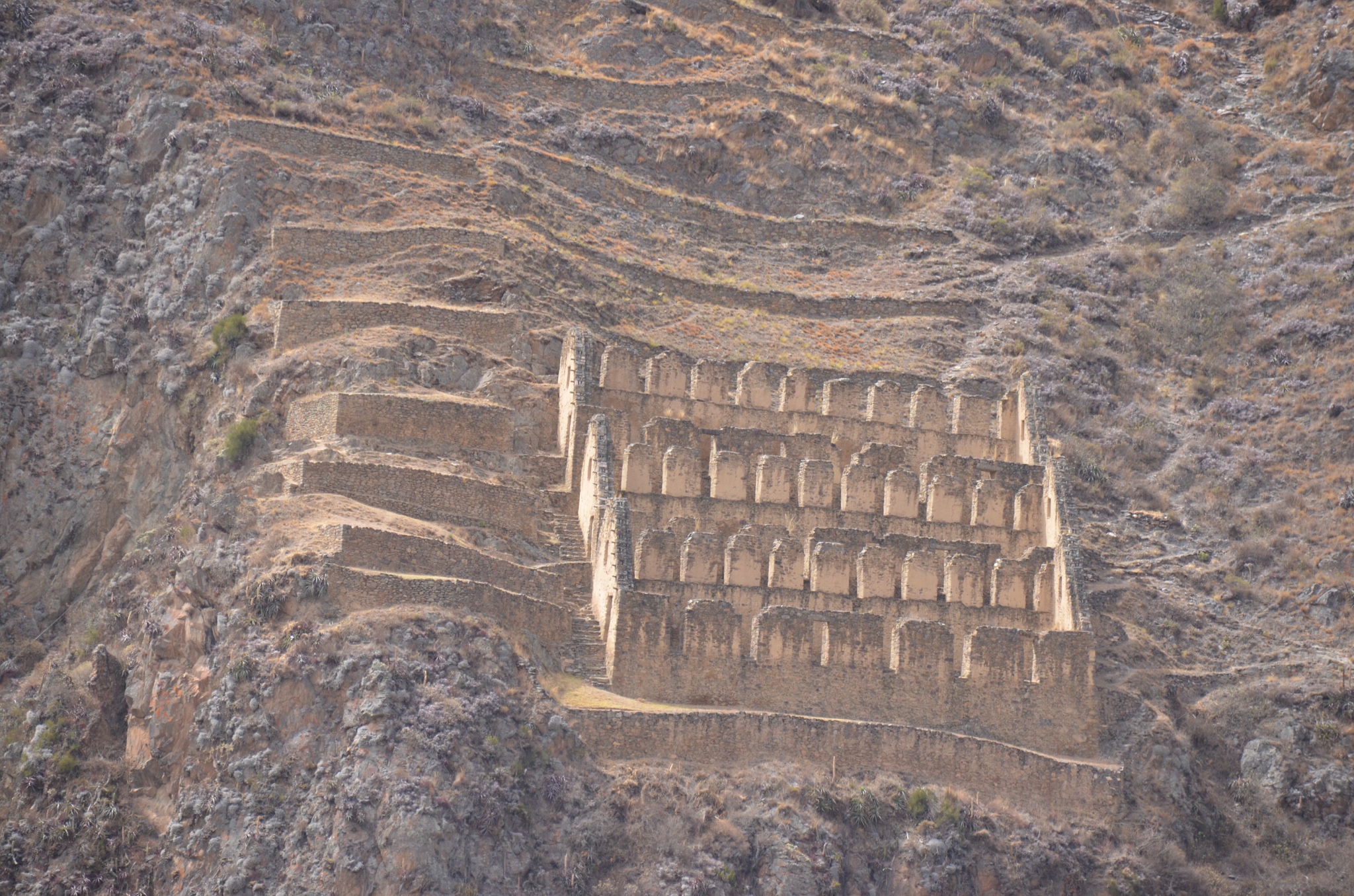
Temples and buildings are carved into the side of the mountain face. This is a storage facility, possibly a granary.
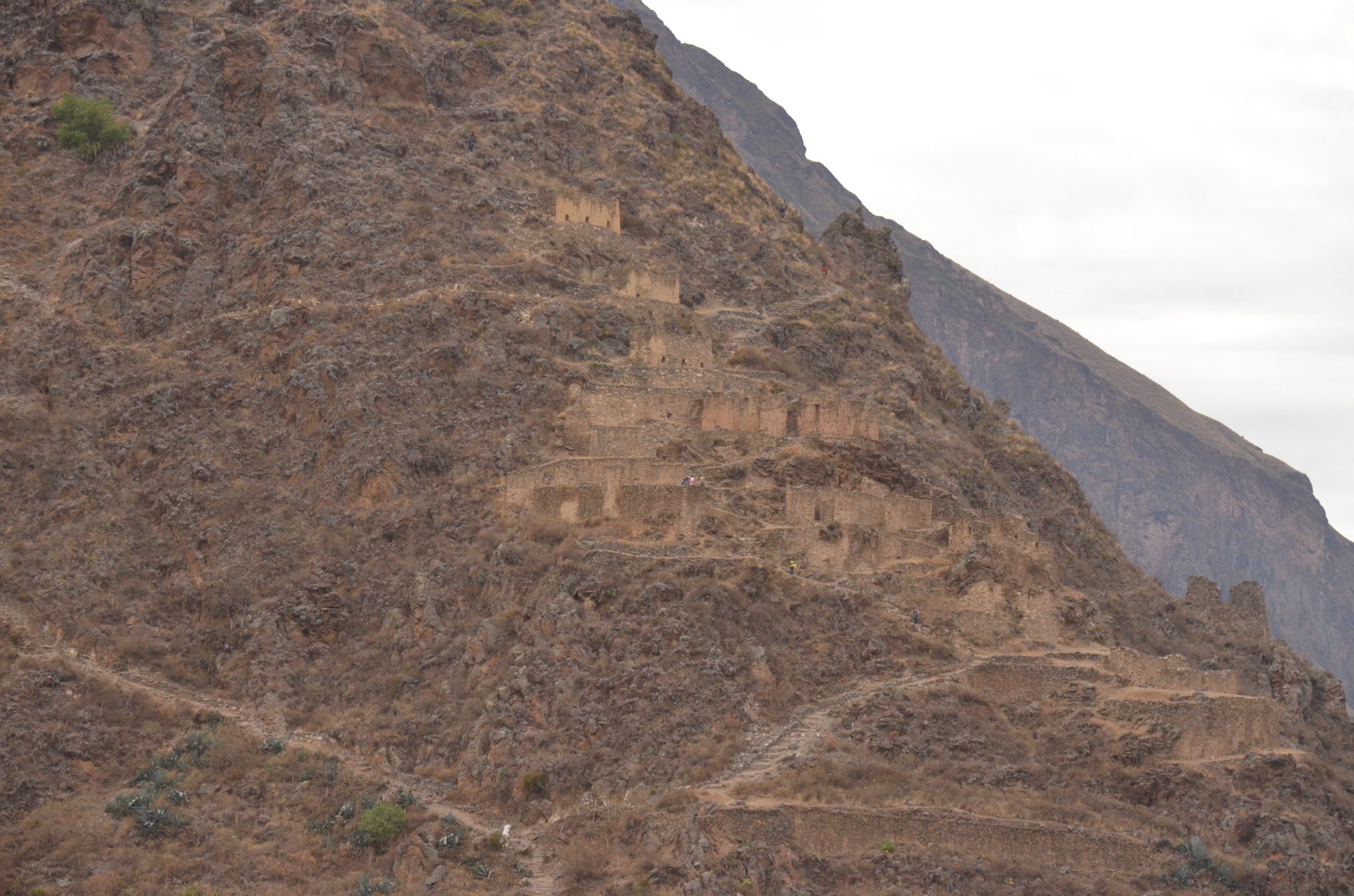
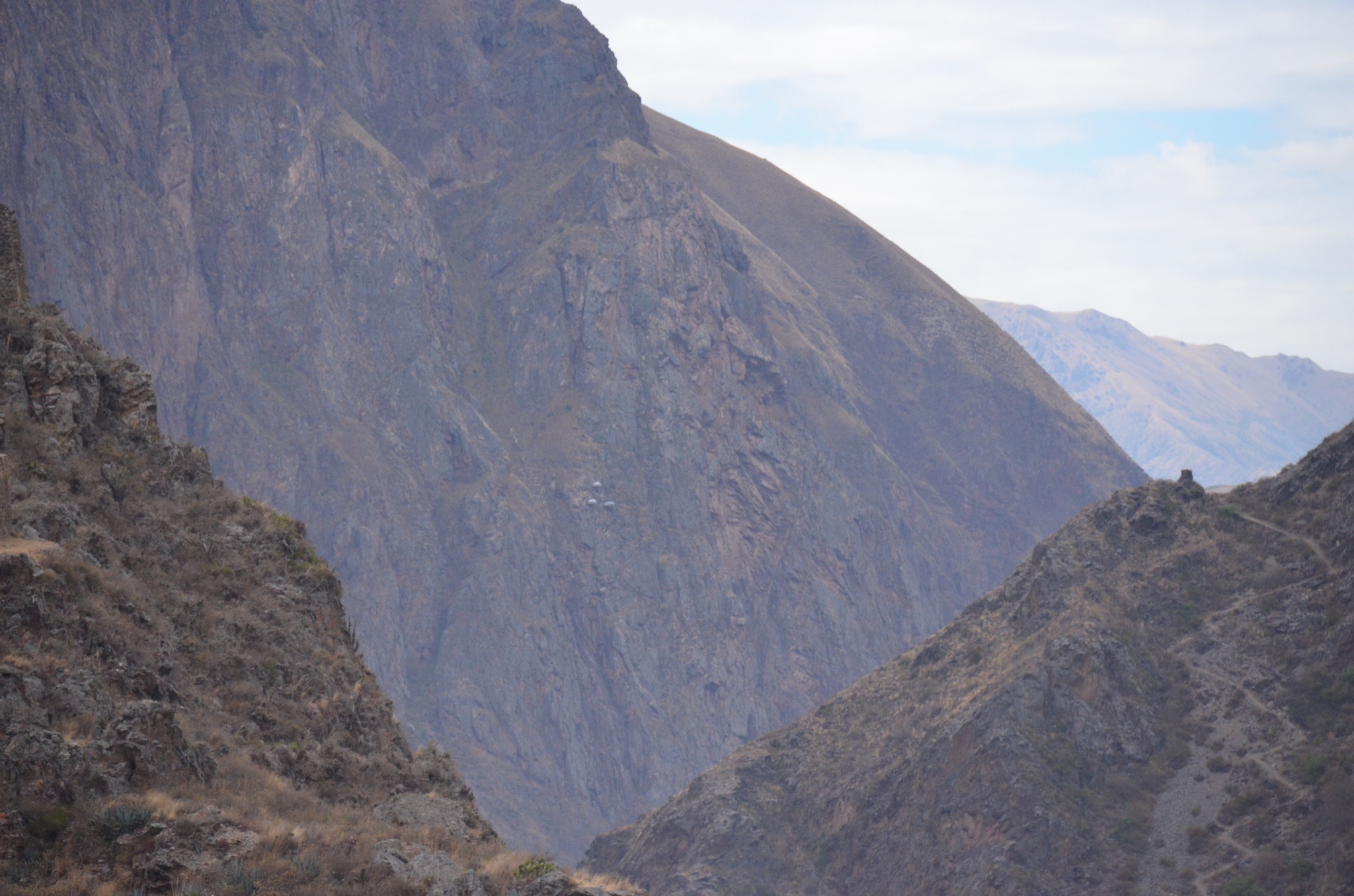
Below is a view of the Temple of the Sun of Tanupa:
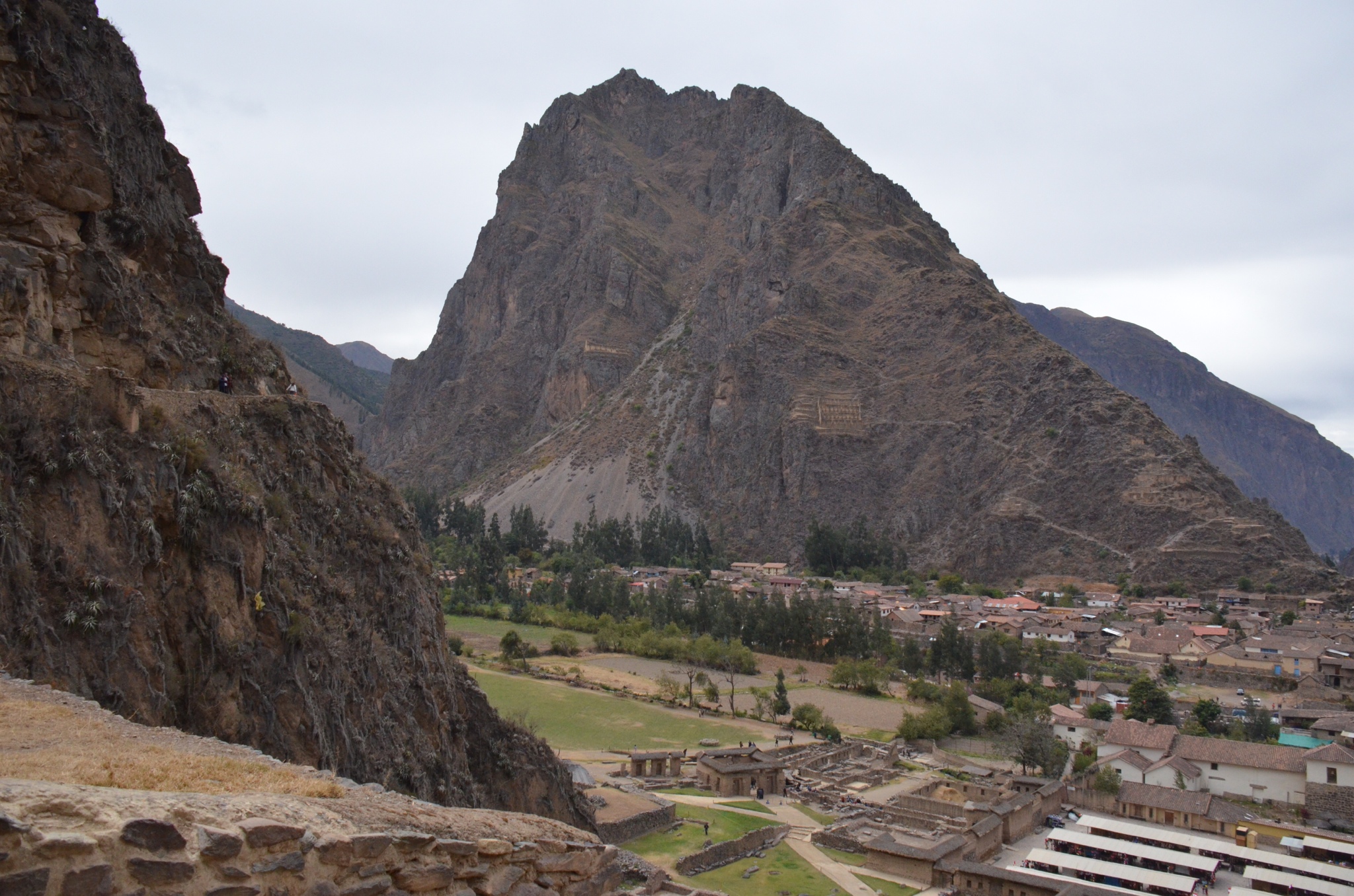
A view of Ollantaytambo town:
The ruins of the fortress are in the foreground in this shot:
A closer view of the Temple of the Sun:
A closer view of the granary:
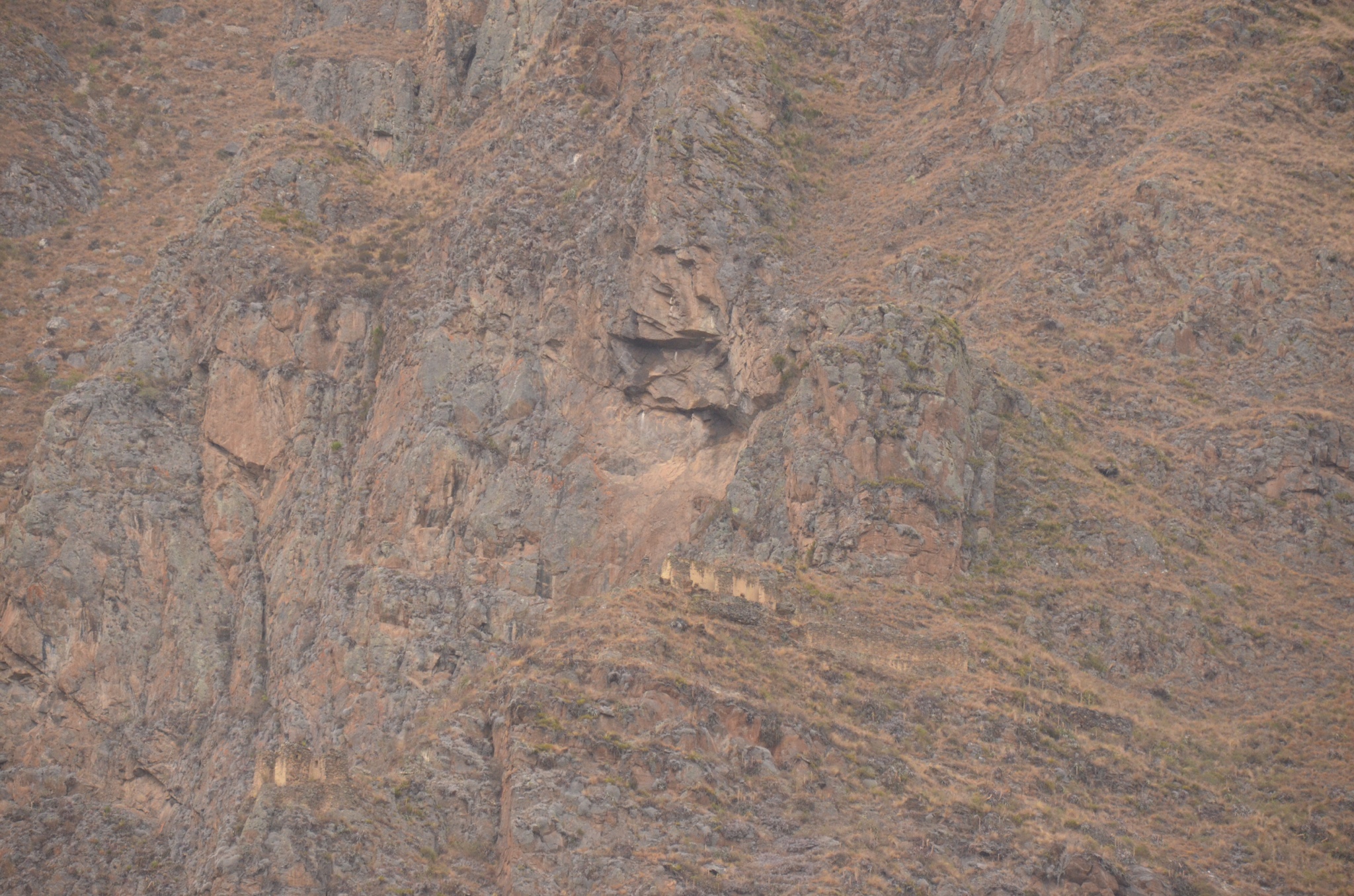
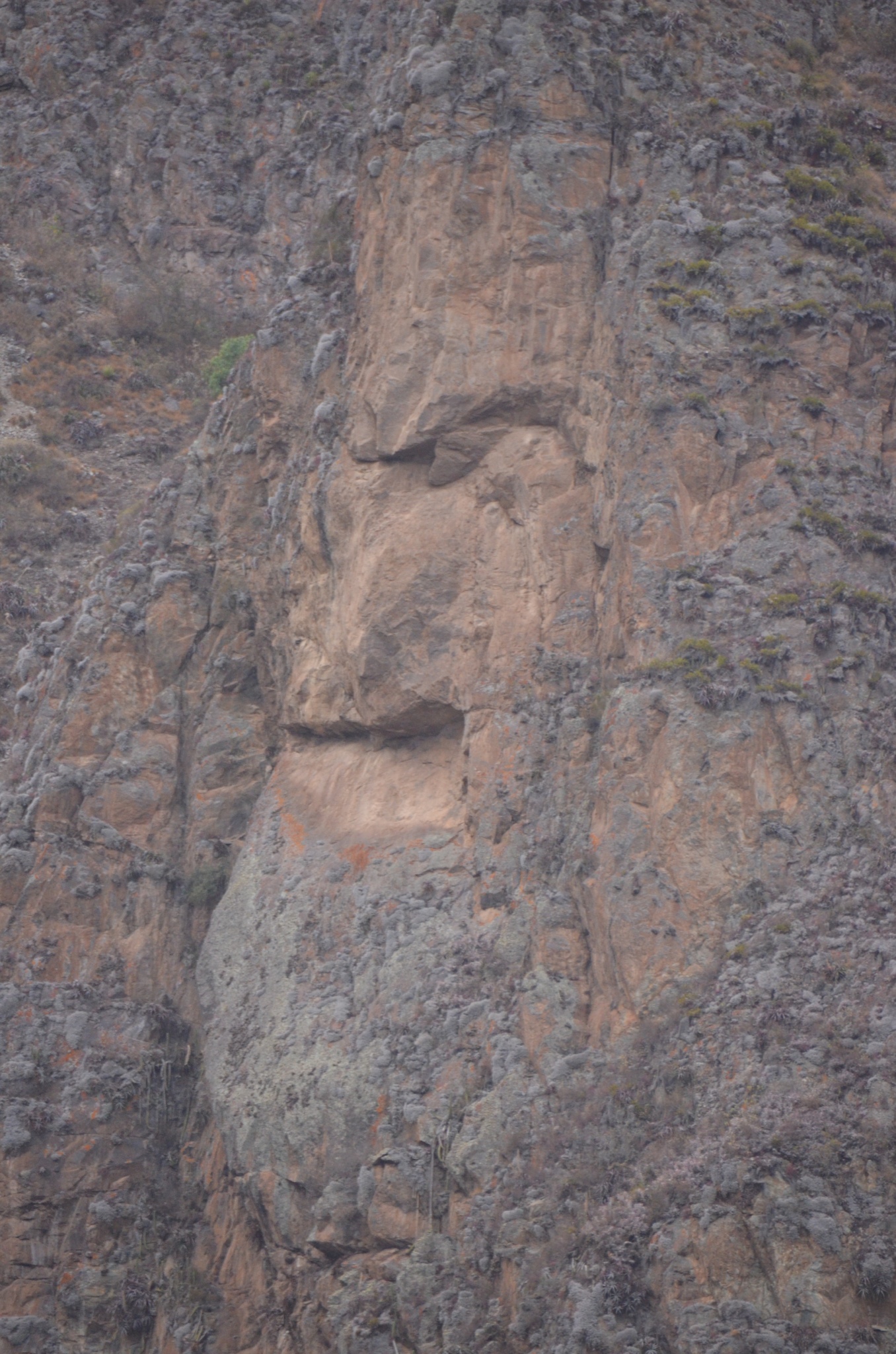
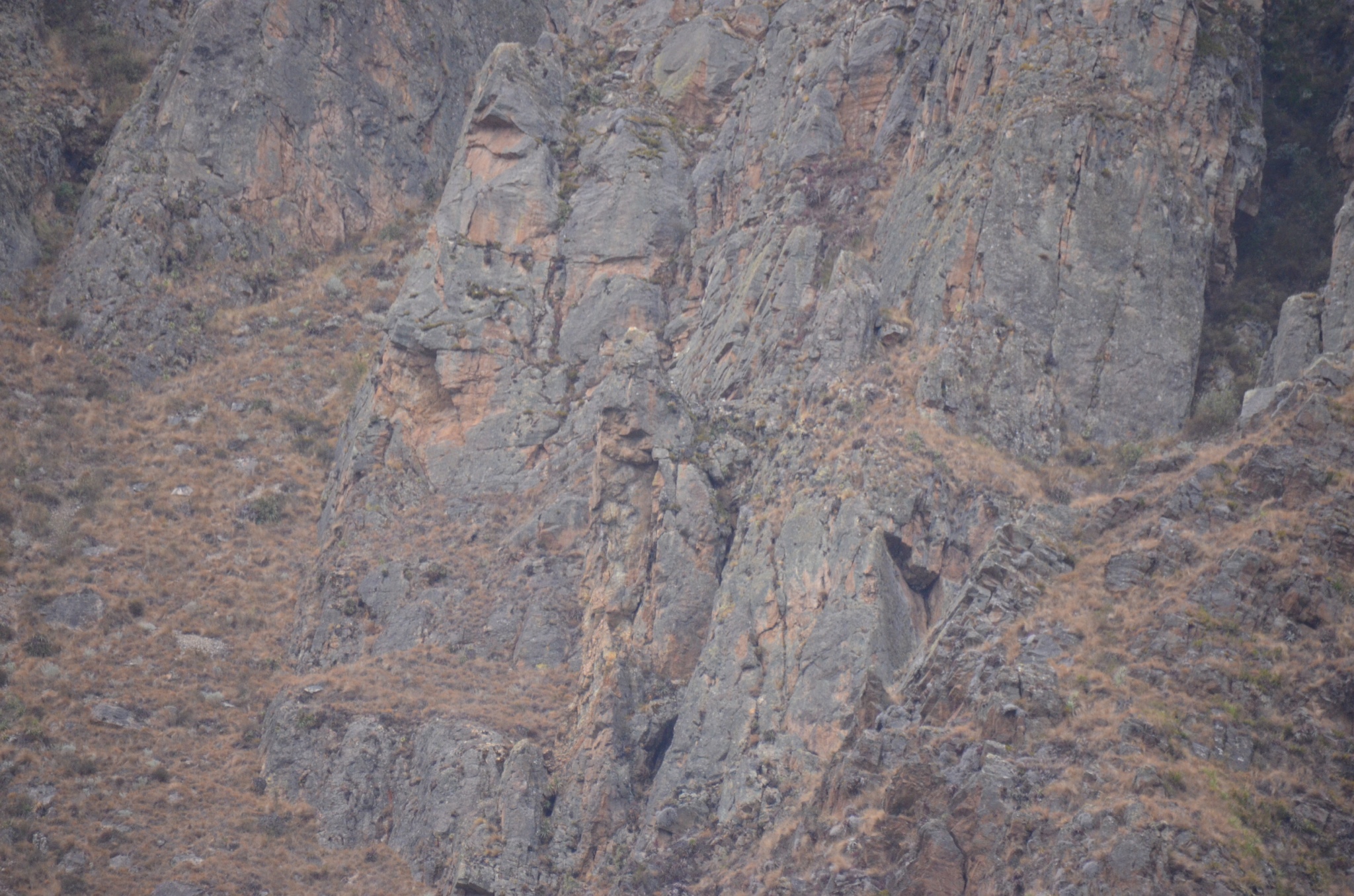
Below is the carved face of Tunupa, also known as Wiracochan. He was believed to be a messenger of Waracocha, another god. Tunupa was supposedly a person with superhuman powers (Superman), a tall man with short hair, dressed in a tunic and a bonnet with four corners. Tunupa’s sacred profile is sculpted into the mountain Pinkuylluna, across from the fortress. Because of the Andean geography and the shape of the mountains, his face changes throughout the day. Sometimes he appears to be scowling, other times sleeping, enhancing the notion of his supernatural powers.
The Incans worshipped nature and the ecosystem. They saw the world as a living thing with man as only a part of it. They built temples to the sun, sky, and water. They aligned these structures with the solistice and other planetary objects. I find this to be so intriguing, because we have seen so many other examples in our other journeys. Ancient people had a much better sense of the earth’s rhythm than do we, I think. We have so many distractions (I’m on my iPad right now). How many of us actually go out and look at the night sky and really observe?
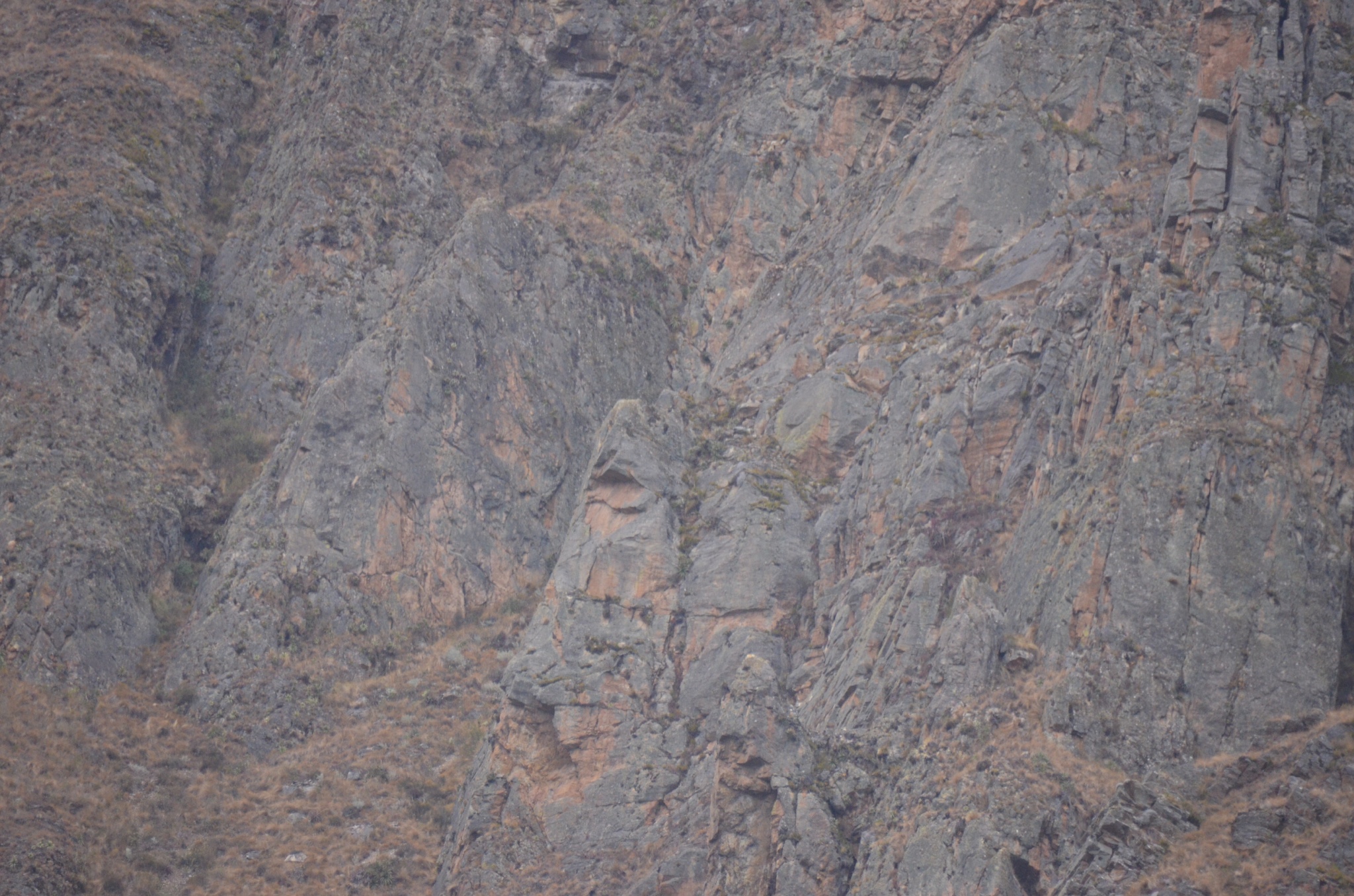
Genene saw many faces in the rocks.
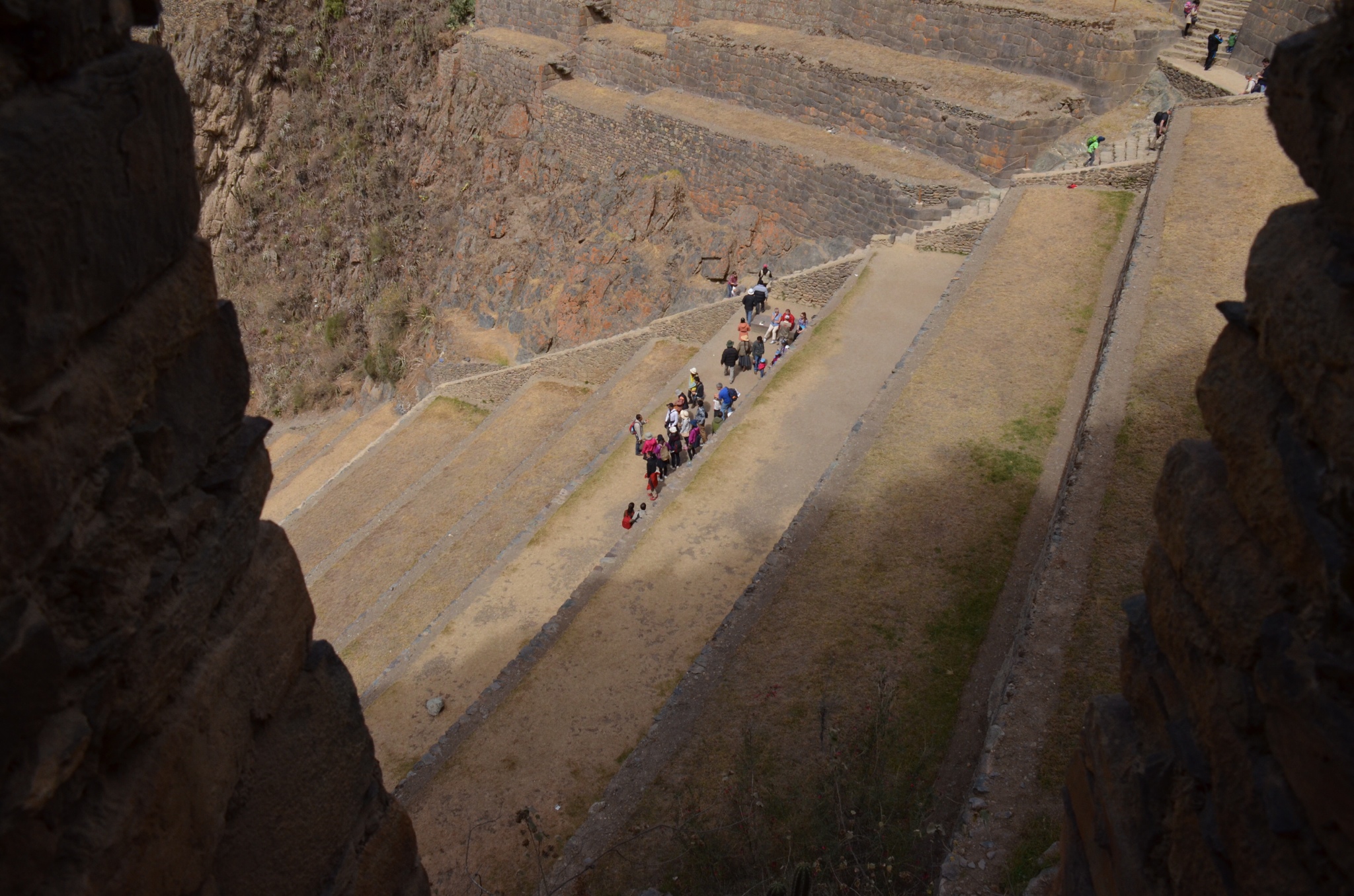
Structures built into the sides of the mountains, with trails up and down.
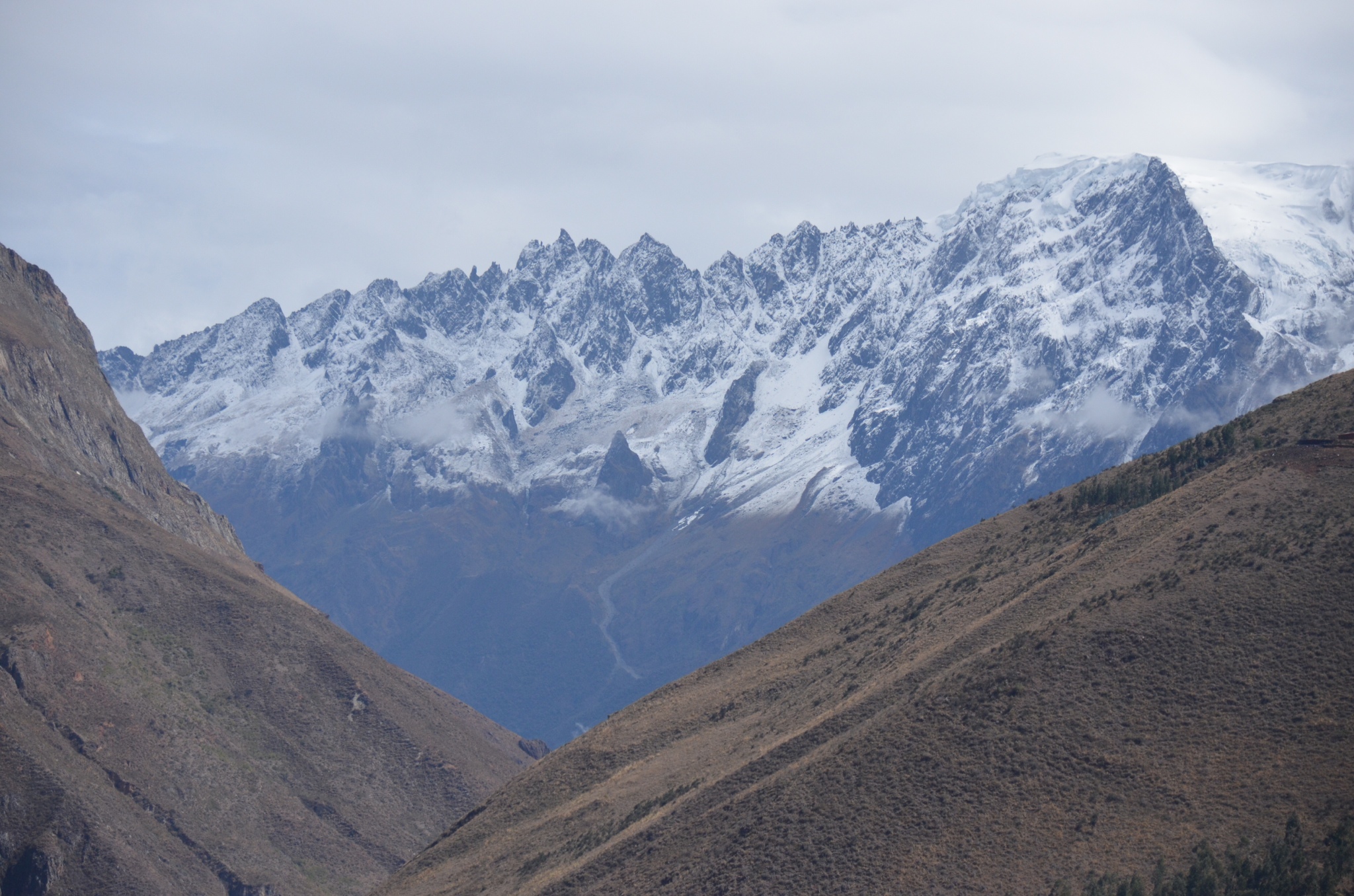
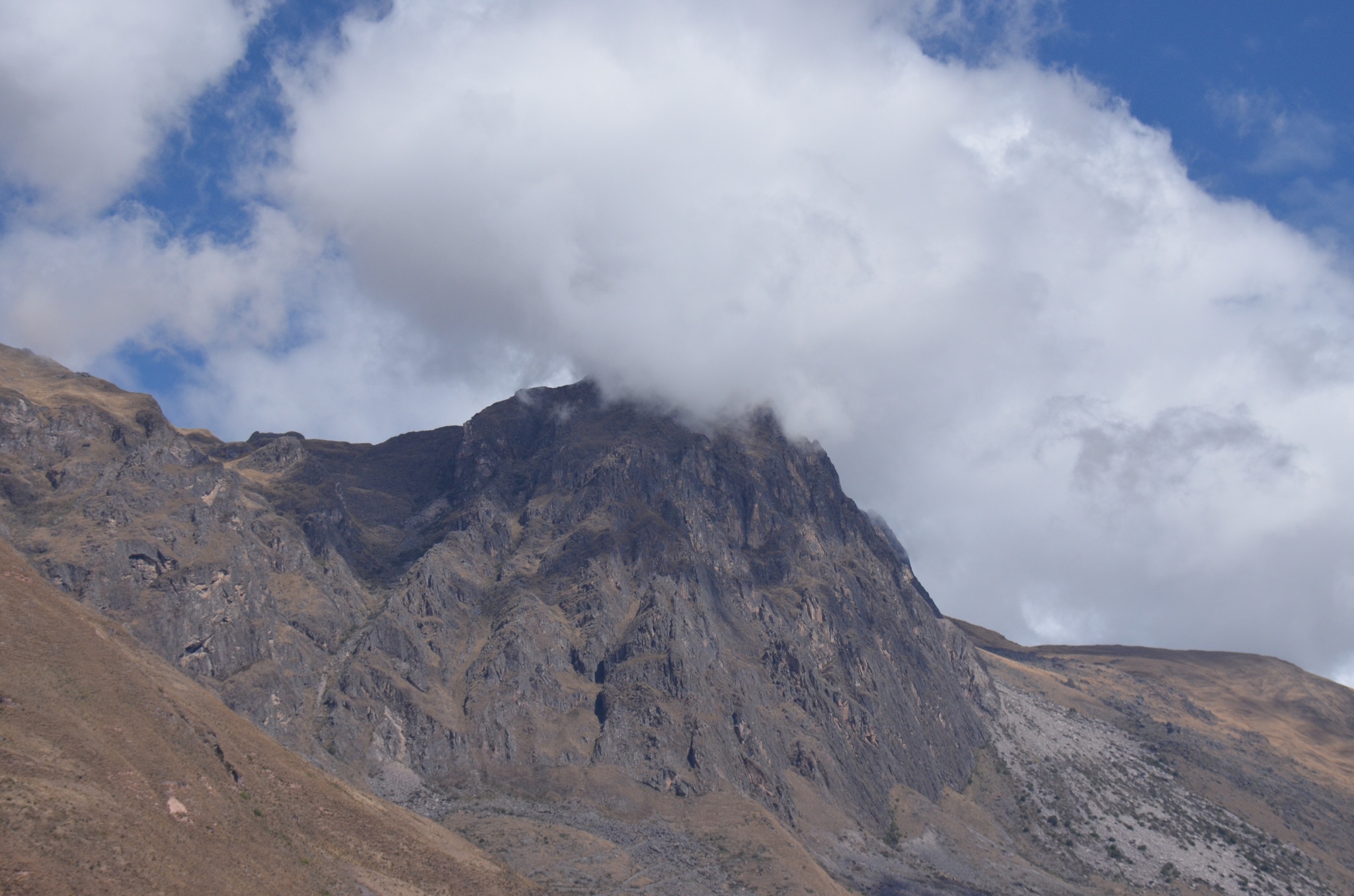
The mountains are stunning:
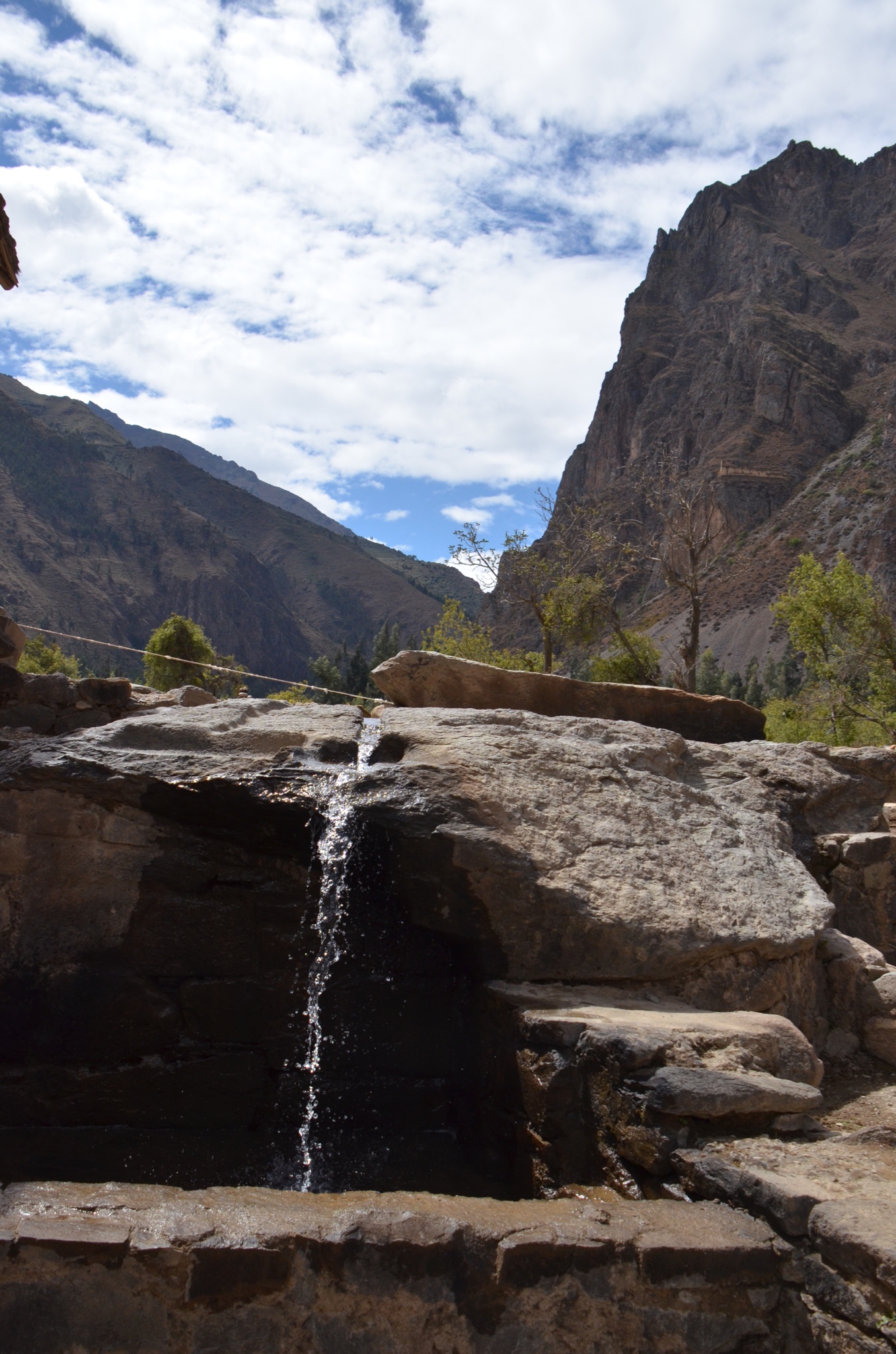
The temple for the worship of water:
In this next shot, you can see the Temple of the Sun on the left edge of the photo, in alignment with Tunupa’s forehead. The temple was constructed so that the sun shines in perfectly at the dawn of the winter solstice. In the summer solstice, the light shines brightly on the temple and the head of Tunupa is illuminated. At that time, there is a coming-of-age ceremony for young men and the plants in the field. On the right side is a storage facility, carved out of the rock. Carlos told us another story of Ollantay and Pachacutec. Supposedly when Ollantay asked to marry the emperor’s daughter, the emperor gave him an impossible task, to build this storage area and many of the other buildings in the face of the mountain. The general was given two months, an impossible task. Ollantay called upon Tunupa and the other gods for help. The gods favored Ollantay and helped him get the job done, but the emperor refused him anyway. (No one is ever really good enough for Daddy’s girl.)
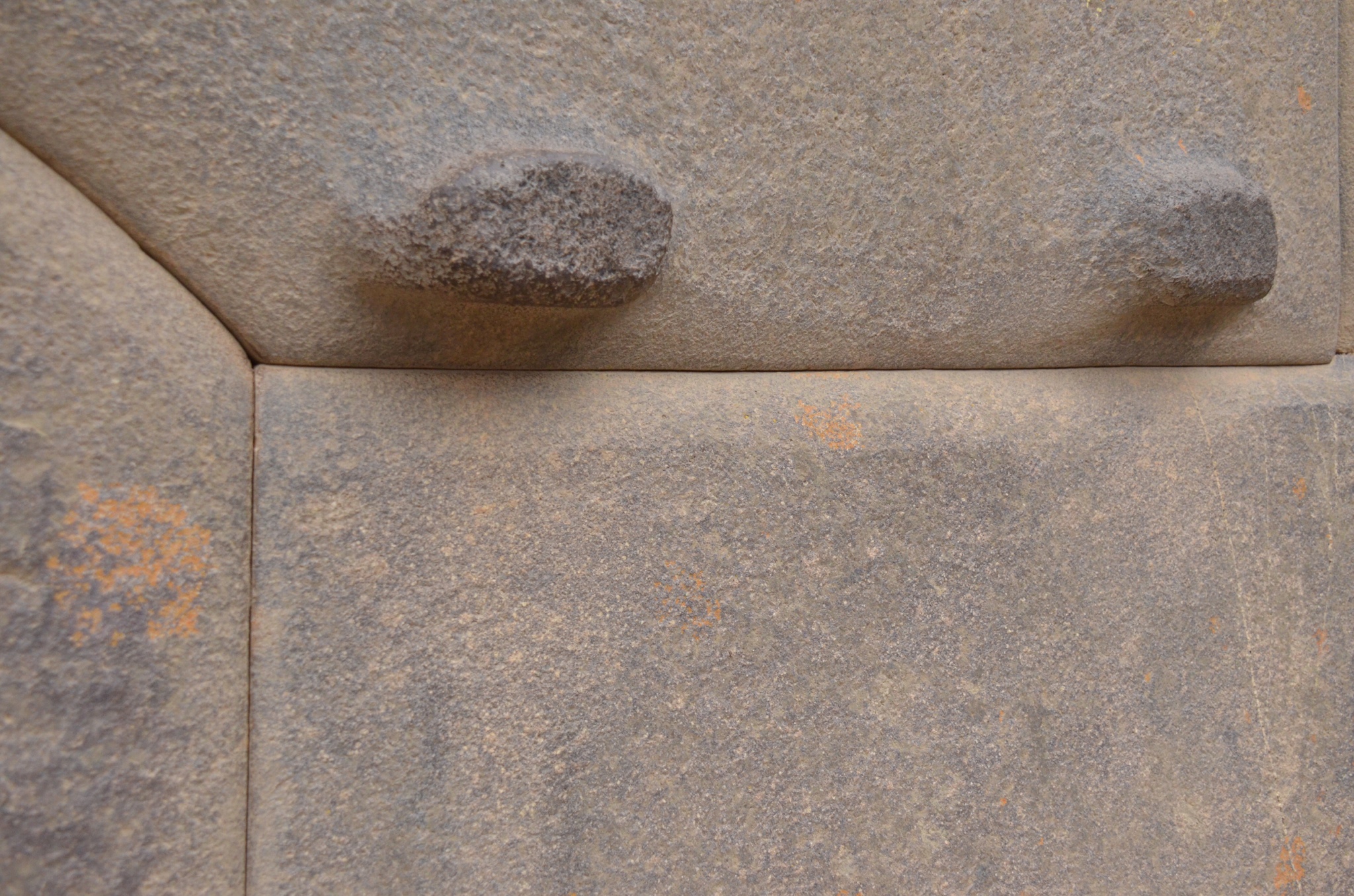
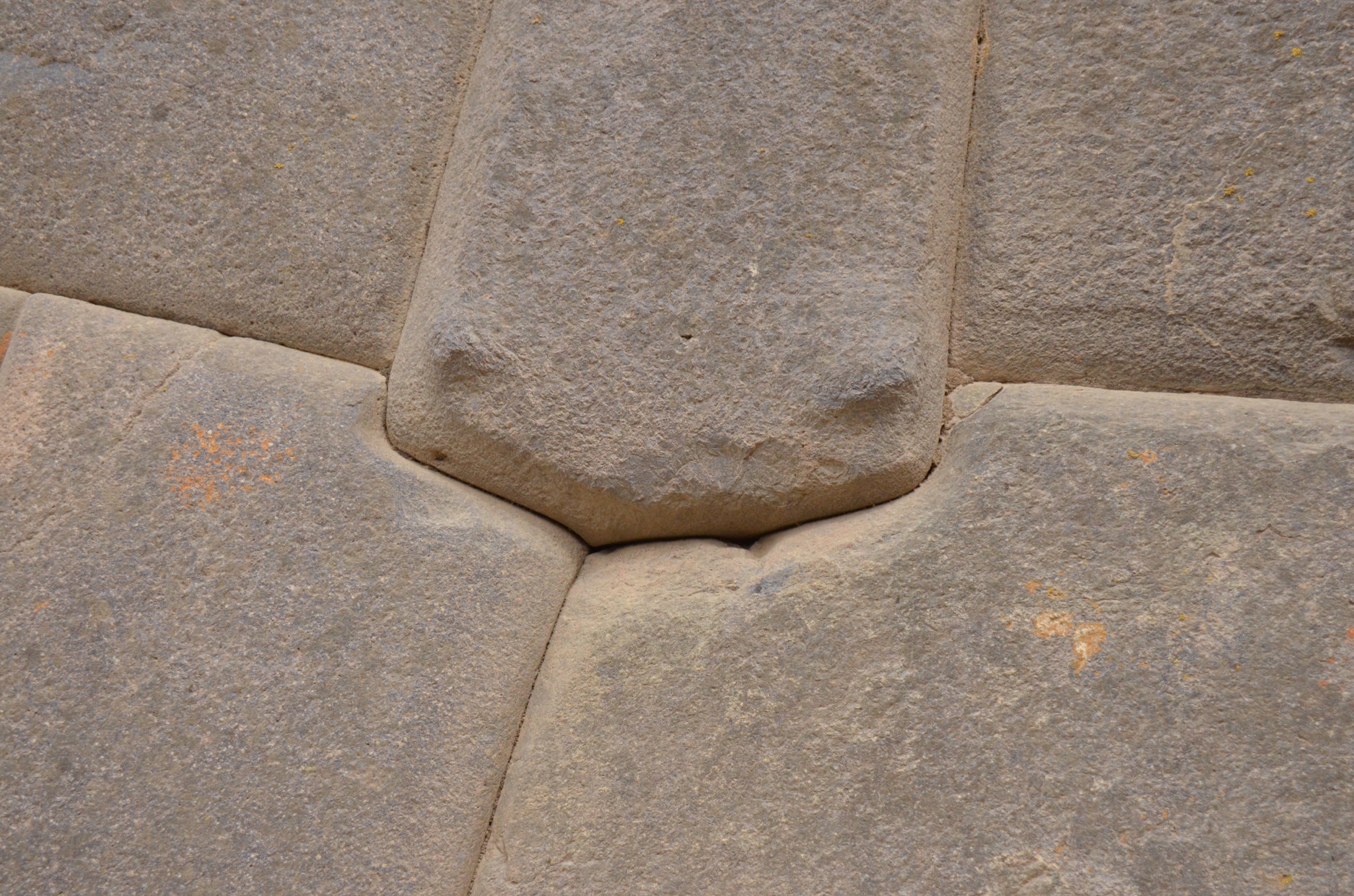
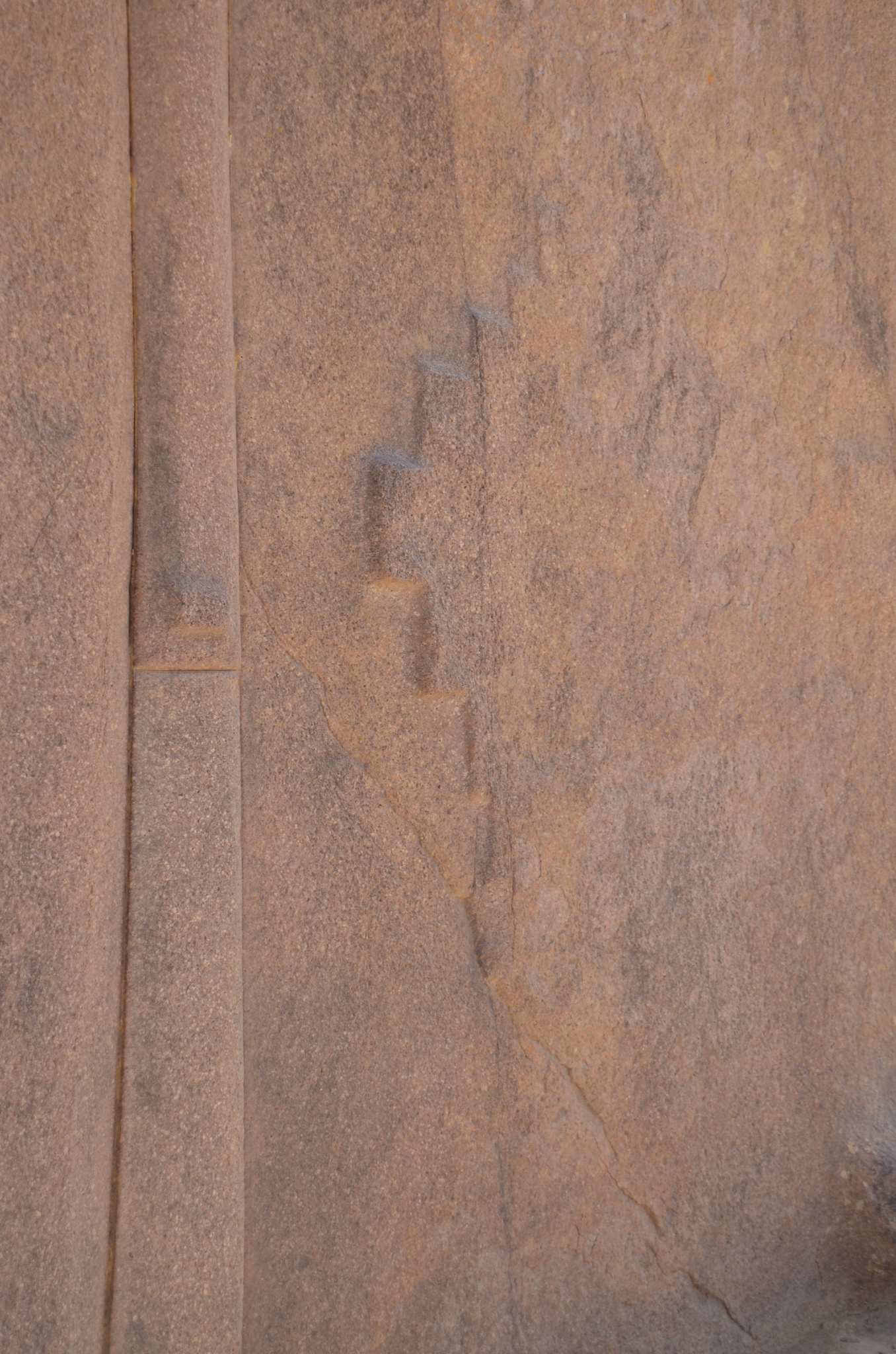
This is a close-up of some of the carved rocks. I believe Carlos said that these protuberances served as handles to lift the rocks into place.
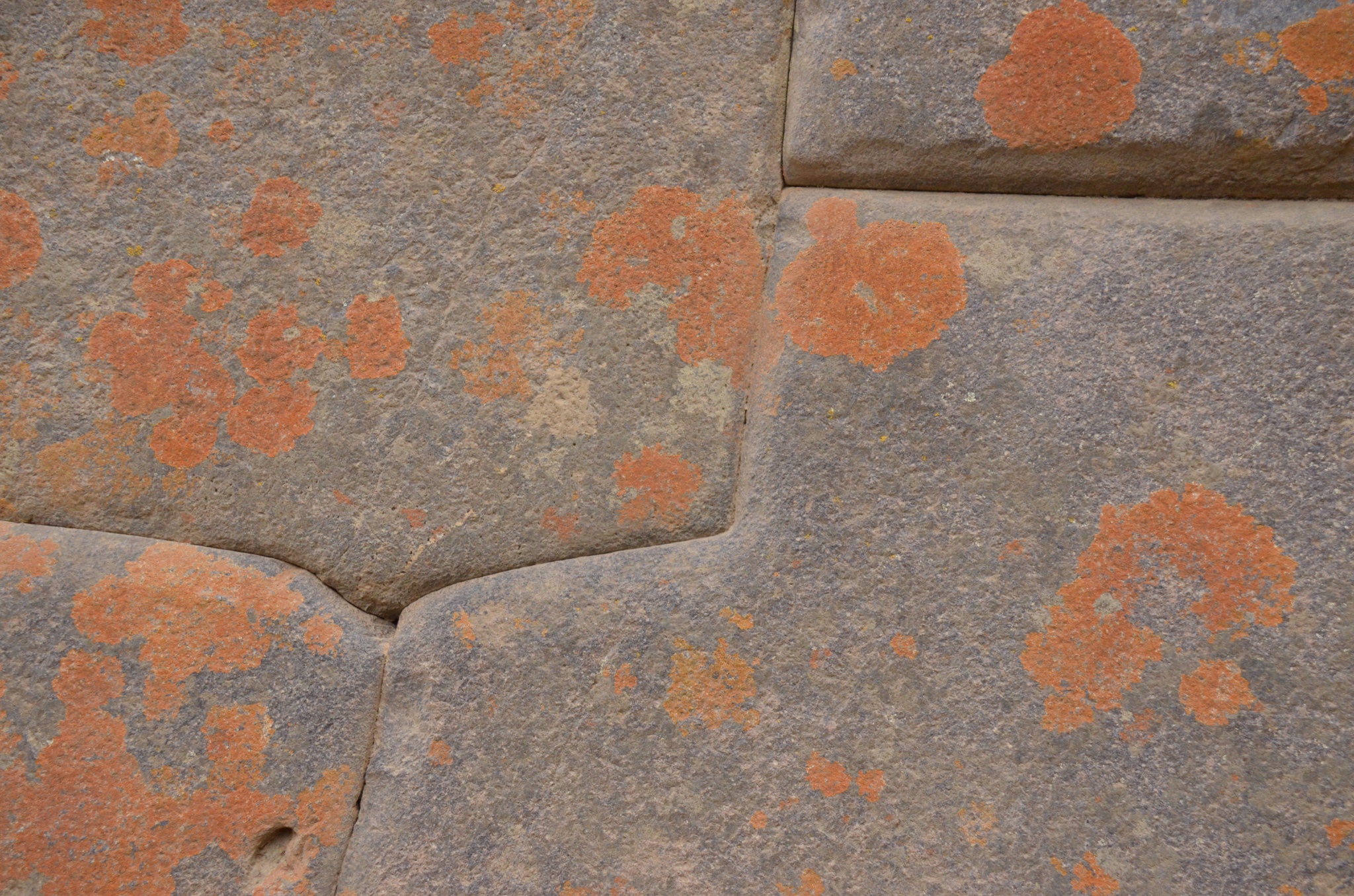
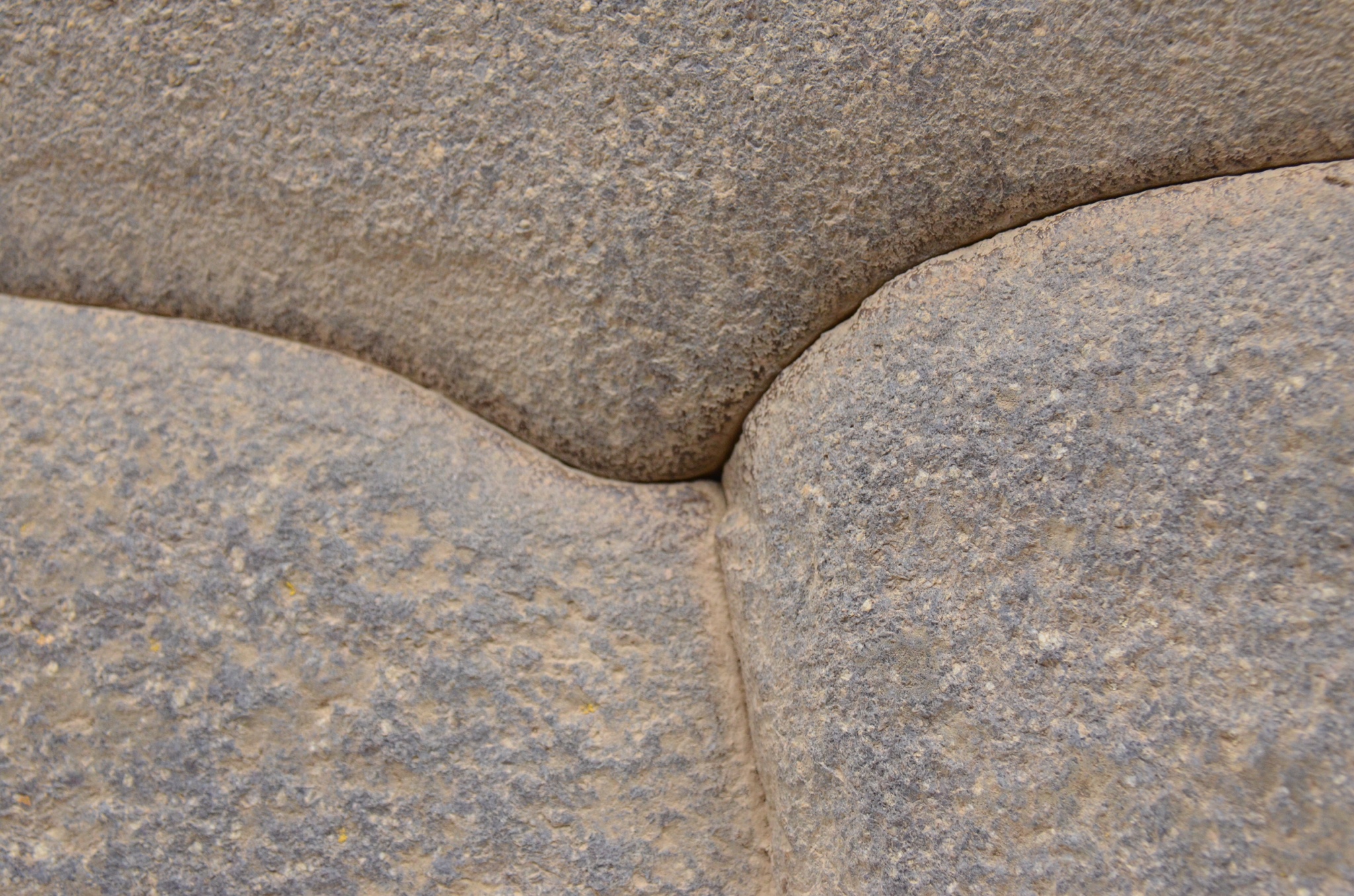
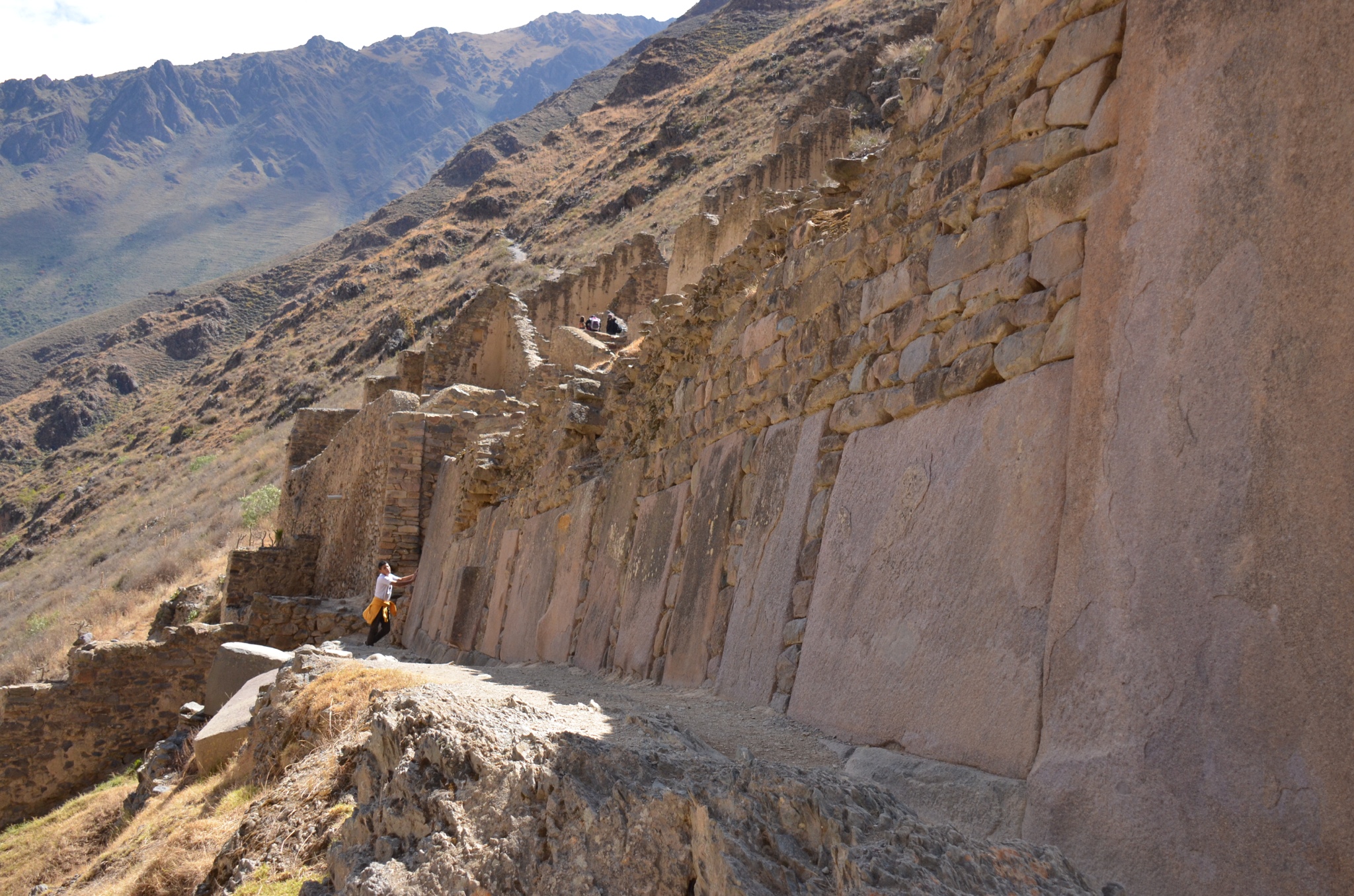
This area of the world is subject to earthquakes and was so in ancient times. The Incan engineers had a design for that. The rocks were intricately carved and placed together, not always at right angles. As you can see below, they used curved connections to allow the force of the earth movement to be absorbed and for the structure to remain solid. If they had simply carved everything into right angles, when the earth started shaking, the whole thing could have toppled. Could our engineers do as well today with their computers and CAD programs?
 
Here are some beautiful views of the Sacred Valley of the Urubamba River. One of the reasons the valley was sacred was because the Milky Way is reflected in the waters of the Urubamba in this area. Again, I am struck by the observations of the ancient people and how they were in tune with the earth.
The stone below at one time had a carving on it, but Carlos said that it had been knocked off by the Spaniards. It was most likely a puma. Genene thinks she can make some of it out still. Can you?
More carvings in the rocks.
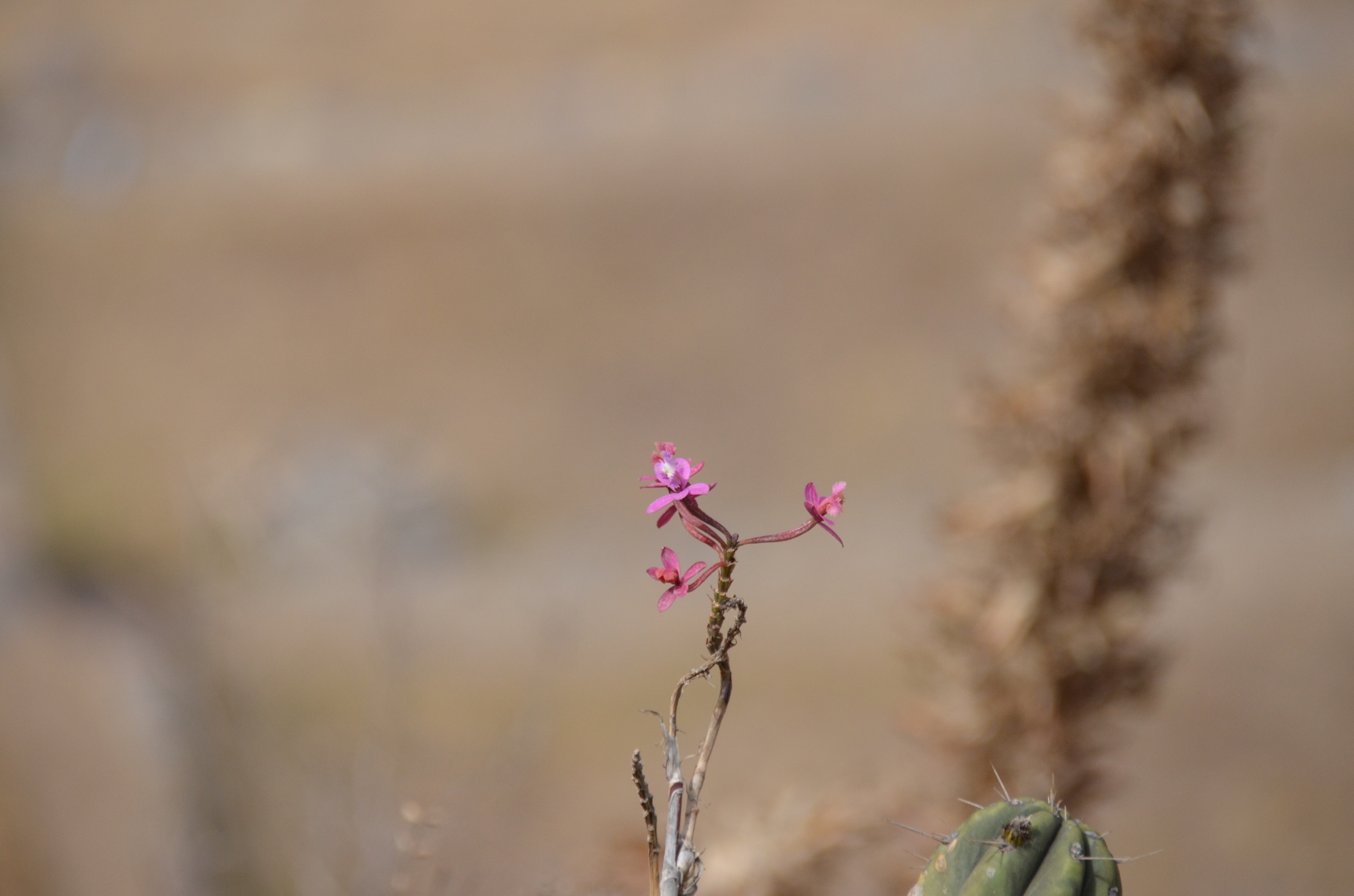
This flower was important in Inca customs and traditions. There were games of skill, running, jumping over fire (I’m thinking something like the Olympics). At the conclusion of these rites of passage, the men were allowed to put the flower in their forehead. This meant that they could marry then and own property.
Carlos said this flower’s English name was “Forever Young.” Obviously, this is a highly sought-after plant. I guess everyone is always looking for a fountain of youth.
Another view of Tunupa and the granary:
In this picture, you can see Tunupa’s “crown.”
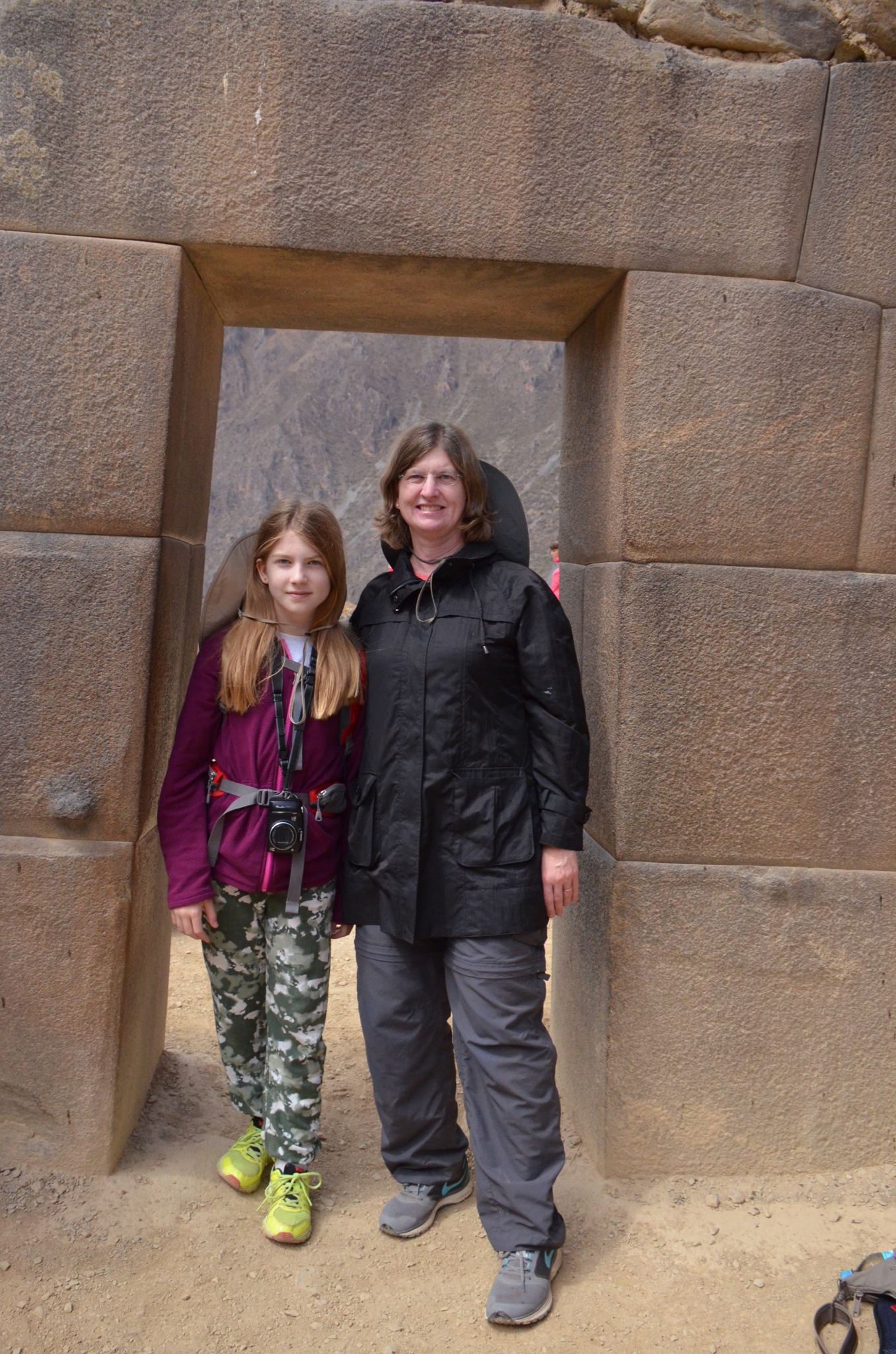
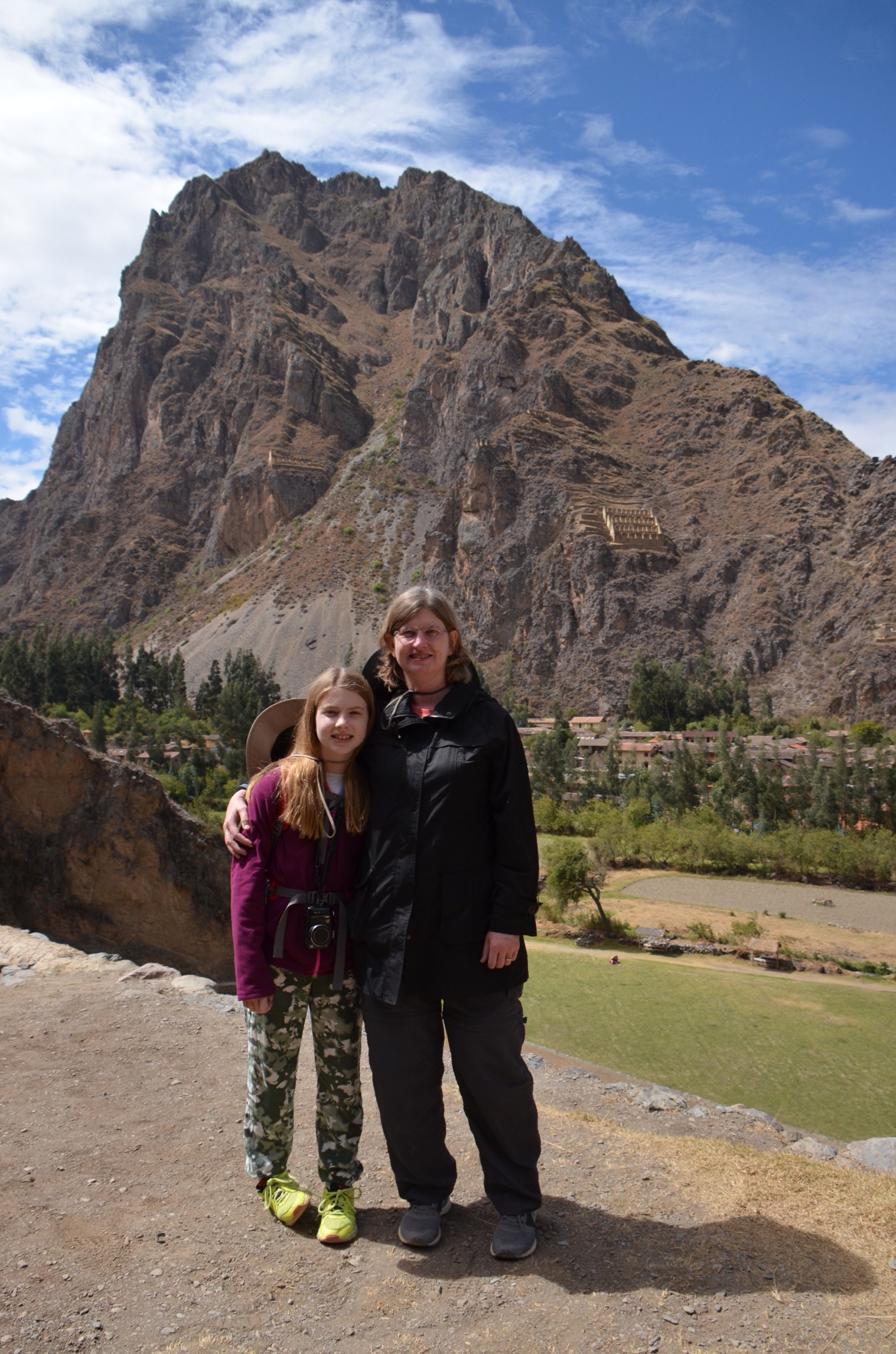
Carlos takes good pictures of us:
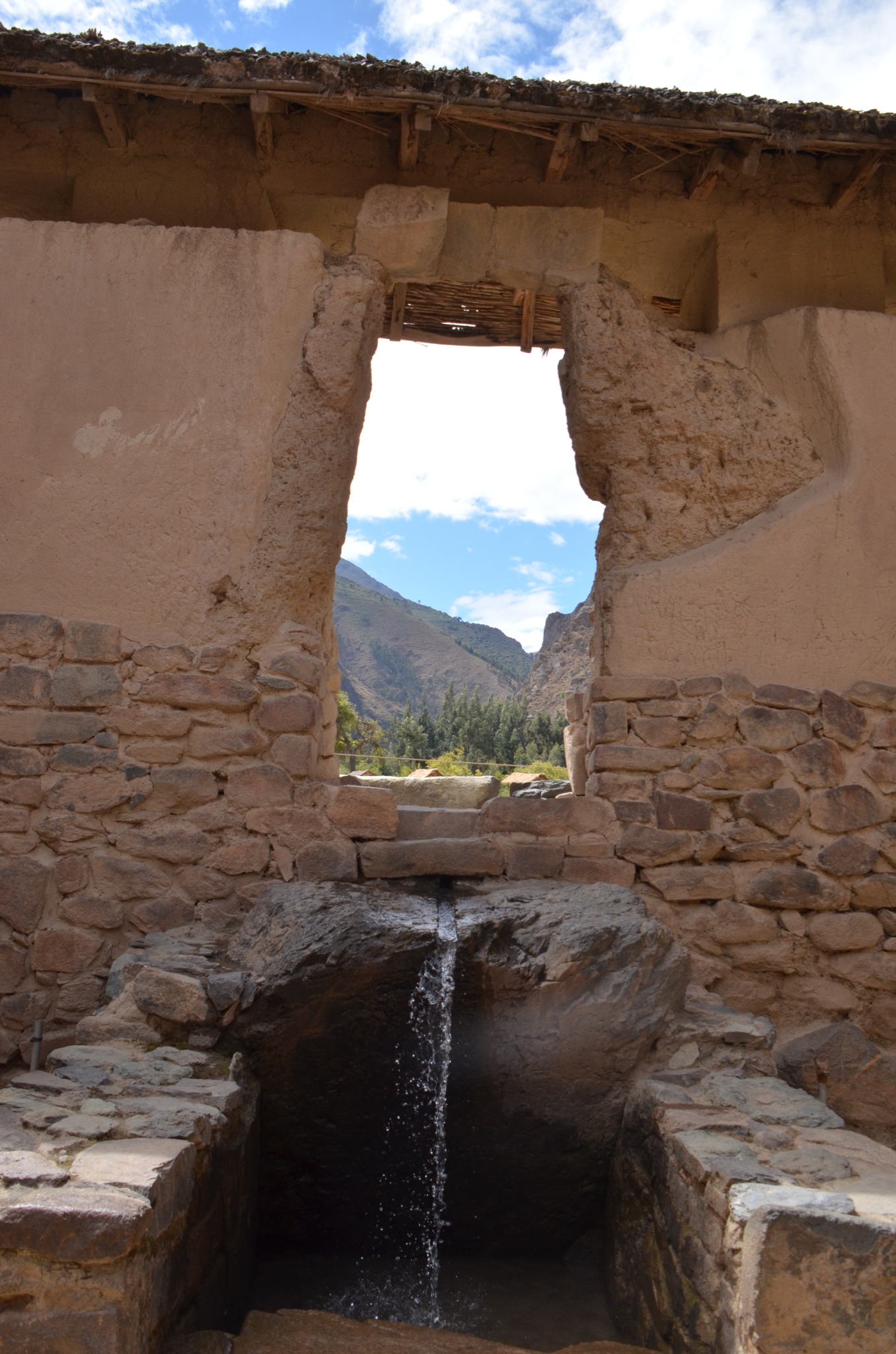
This building is a temple devoted to the worship of water. Can you see the downward notch in the mountain through the window? At solstice, the light shines through that notch and illuminates the water at the edge of the waterfall.
 

Our visit to Ollantaytambo complete, we went back to the hotel to check on Greg. We found him resting comfortably but still very tired. Our itinerary called for us to go back out in the the afternoon. We were to visit a home and learn about customs, traditions, and weaving from a family of Amuru villagers and then travel to the ruins at Pisaq. Alas, they will have to wait for another time. We elected to stay with Greg and rest ourselves. Genene and I had a late lunch at the hotel, while Greg tried to keep resting. Genene and I joined him with a nap. I think the sleepless night was bad for all of us, and Carlos thought so too. He was trying to preserve our chances to make it to the trail, and I agreed with that effort, even though in the end, it has not worked out. We gave it every chance.

We had room service and just took it easy all evening. Greg still did not have much appetite, but I could actually hear when his breathing eased in the middle of the night. I was comforted by that sound and drifted away myself.


Adventures in Peru 2014: we interrupt this program

I usually like to take my blogs in order, but I have some news tonight and so I am interrupting the program. (I will return to the format in the next blog.) We will not be going on the Inca Trail. I spoke too soon in my first blog when I reported that none of us was having any particular issues with altitude sickness. Greg began having problems late Saturday night/early Sunday morning. Our guide Carlos advised us that Greg should stay in bed and rest in the hopes that he would feel better and that our hike could be saved. Genene and I did a halfday tour instead of a full day and came home to rest with him. He felt better in the night on Sunday and was able to go have breakfast with us this morning (Monday). Our schedule was the via ferrata and zip line, and Carlos had told us that if Greg was not at 100 percent that he should skip it, so he did. Genene and I went, and it was awesome. I will tell you more about that later.

Greg went to visit a medical clinic just as a precaution, and the doctor there told us that he should NOT attempt the trail. For a few short minutes, we toyed with the idea of letting him rest and going without him. Greg really wanted Genene and me to do it without him, but we just could not do it. So our plans will change. I am not sure about what we will do, but we will figure out a new adventure. Please don't worry about us. Greg is resting comfortably and already feels much better, and Genene and I are doing fine. Instead of spending three nights out in 38 degree temperatures at altitude, we will spend them in a nice warm hotel. Our tour operator has been in constant contact, and they are working on logistics of our new plan. Stay tuned.

And now, back to our regular programming…..

Adventures in Peru 2014: Part 1

Friday, July 25, 2014

Last year's African safari was a dream come true for me so when we returned home, I was lacking in ambition or direction. What do you do after you cross off a really big bucket list item? Genene ended last year's vacation with a pledge to return to Tanzania and climb Africa's tallest peak, Mount Kilimanjaro. No tour outfitter will take her until she turns 12, and she is only 10. We talked to other people who had made the Kili summit and described its difficulty. After much deliberation, we decided that this year, we would take an adventure to Peru. We plan to see a lot of sights and have a lot of fun, but the feat that looms large on the horizon is the Inca Trail. We are planning to see what are some of the most famous ruins in the world: Machu Picchu (or as my mom called it, Mancho Pancho). It is possible to ride a bus or take a train and make a day trip to Machu Picchu, but we wanted more of a challenge and a little tune-up to see if Kilimanjaro is a real possibility or a pipe dream. We have elected to hike to Machu Picchu by way of the Inca Trail. It's a 4-day, 3-night hike and camp at altitude. We will sleep in tents and go to the ancient Incan city as the Incans did–on our feet. We will spend some time getting accustomed to the altitude before we start, so there are lots of adventures ahead and much to make us nervous.

I spent most of yesterday in my usual pre-trip panic mode. Most of the gear was purchased and piled up long ago, but when I actually start to pack it, my brain goes into hyperdrive. I spent most of yesterday morning piling up things, rifling through them, and asking Greg a thousand dumb questions. He was glad when I finally gave up and went to the office. While I was gone, he packed his bag and Genene's, and both of them weighed in at just under the 50 pound max. I got home from my last client meeting at around 8:30 PM, stared for a while at the pile of stuff and then gave the nod–Greg, you may pack my things! Yes, I know that I sound like a queen, but Greg has a gift. He packs a mean bag. My packing looks like my office (or my computer, or my files, or my nightstand). I know where everything is, but it's a wreck. Greg balls everything up in beautiful tight little rolls that fit perfectly into the bag. I watched him do it all (to keep down my natural paranoia and to keep me from asking him later, “Did you pack this? Did you pack that?). My bag came in just under the limit as well, and we went to bed happy.

This morning, we made one last run to Best Buy. Genene wanted to take her DS, and it's one of the few chargers that only runs on 110, while Peru operates at 240. We found what we needed and got back home to resume the last minute running around. While going in and out the backdoor, I made a critical mistake. We have two cats, a boy and a girl. Of course, the girl is smarter and knows how to go in and out the dog door. I love her. She's a great cat. The boy is a little prince and insists that you let him in and out the back door repeatedly. He's the dumbo step cat that I got from my mother-in-law. (Yes, Essee, I know you are reading this.) He always stands at the backdoor just waiting for a chance to make a break for it. I “accidentally” let him out, causing a bit of consternation. Since he does not know how to get back in, it would have been a problem if we left him out and hoped that the cat sitter could reel him back. Alas, The da#@ thing came back after about an hour, and I got him back in the house before we left. (Hey, I'm only kidding. I like the cat….sort of.)

Action Limo showed up right on the dot at 1:00 PM and we were off for the airport. Our driver was Galleria George, and he was a bicycle enthusiast. We caught up on all the latest Tour de France news from him, and we compared notes on MS150's and other rides we had all done. Genene soon lost interest and fell asleep.

We got to the airport in plenty of time. Greg has what I like to call “old man disease.” He likes to get everywhere with LOTS of time to spare. I like to squeal into the parking lot as the big hand on the clock is hitting the hour. I always humor Greg though. It is better to be early than to miss your flight. Genene calls him the Prontosaurus. As we went through security, I was helping Genene get her gear up onto the xray machine. The lady behind me said loudly and matter-of-factly, “Can I go in front of you?” I was grappling with the gear, so I didn't look up. She didn't say please and I was busy so I said, “No.” After a time, she went ahead and got in front of me. She was a flight attendant. She said, “The difference is that I'm late for work.” I said, “You should have left earlier.” I was smiling when I said it, and there was nothing more to it than that. I did have the fleeting fear that she would end up at the beverage cart on my flight and refuse to serve me a drink. Happily, I didn't see her again, and I should not have worried. United will serve you as many beverages as you like, as long as you have a credit card.

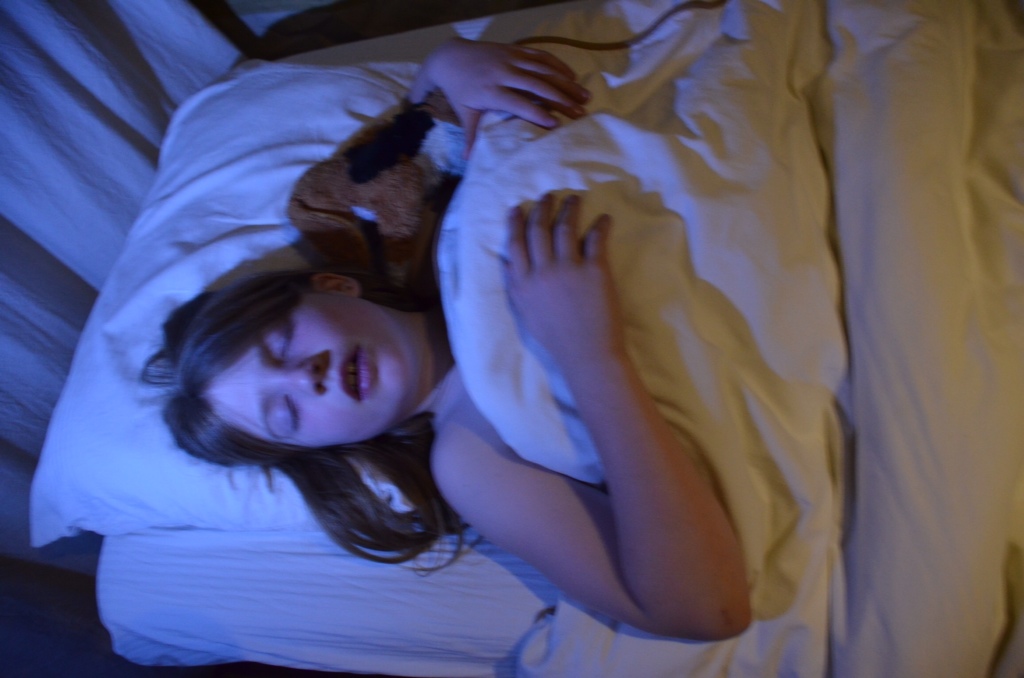
As the plane doors closed and before we had even gotten into the air, Genene let out a small gasp. “I forgot Senior!” she cried, and tears welled in her eyes. Senior is her little stuffed dog. He was a present from Santa Claus on her first Christmas, and he sleeps with her each night and has been EVERYWHERE with her. Senior has been to Belize, Italy, England, France, Mexico, Ireland, and Tanzania. Alas, he will not go to Peru. She slept with him last night and forgot to put him in her gear bag this morning. I told Genene we would find another stuffed animal as soon as we get to Peru, and she can bring the new one home and he can tell Senior about all the adventures. That didn't make her feel too much better, so I said, “Well, you will just have to come back one day and bring him.” That seemed a better solution for her.

I can never make myself spring for first or business class, but I do love the extra legroom seats. We are not particularly tall, and these seats suit us just fine. Our flight left a little late, but our pilot made up time nicely. The food was passable, and the movie selection was awesome. I watched “Nebraska,” and I thought the film was a revelation. It was absolutely marvelous, filled with wicked humor and real pathos. I recommend it. After that, I watched “Rushmore,” something long overdue for me. Much of it was filmed in Houston, and I enjoyed trying to spot landmarks. However, I must confess that the movie made me feel uncomfortable. The protagonist was a little too creepy for my tastes, and he seemed a bit of a stalker. Genene watched several cartoon family movies and Greg watched “Gravity,” which he only gave a passing grade.

Random observation: why do women wear loud perfume on airplanes? It's so annoying. I hate scents anyway, so I always end up with a headache after whiffing up some lady's cheap eau du crap.

We got off the plane at about 10:30. Immigration was pretty easy. Like Africa, they had a lot of different signs purporting to show where the various nationalities should queue to be processed. However, they had a lady right at the back of the line telling people to ignore the signs and that all agents were taking all comers. That system worked just fine, and we were into the baggage claim area quickly. We had to wait a bit for our bags. They were already on Latin time.

Customs consisted of shoving all your bags through another xray machine, and then we were into the ground transportation area. Our tour group representative was right there. It's always such a relief to see the placard with GORDON emblazoned on it. He walked us outside and said, “We are walking across the street to your hotel.” It was literally right across the street. We were relieved and grateful. The flight was only 6 1/2 hours, so it was not the marathon trek we have done our prior trips, but it was now after 11:00 PM and we were ready to settle in. Our guide squired us to some comfortable couches and tended to getting our bags underway with the hotel porters, checking us in, and dealing with all the paperwork. We would be leaving in the morning for Cusco, so he handed us our preprinted bording passes, and a coupon for 3 complimentary drinks at the hotel bar. I could get used to this pampering. We were soon unloaded in our room, and we stepped downstairs for two Pisco sours and a banana-flavored Inca Cola for Genene. We were all tired and not tempted to continue drinking, so we retired to our beds.

Here's the view of the airport from our room:


Genene collapsed instantly, and Greg was not far behind. I'm always the last to wind down. Even when I am exhausted, my mind keeps churning. In the end, I raided some Ritz crackers from the minibar, hid out in the bathroom trying to munch them quietly, took a 1/4 of an Ambien. Sleep finally washed over me.

Saturday, July 26, 2014

Our boarding passes and our tour operator told us to arrive at the airport at 8:00 AM for a 10:00 AM departure. We thought that seemed like a bit of overkill for a domestic flight, but we are rule-followers so we got up early, had a nice Continental buffet at the hotel and headed across the street. We were flying LAN for the first time, and the line to check in was an absolute circus. It wrapped around and around and around. They had flights going out to Cusco every 30 minutes and to several other destinations. We soon figured out what the system was. They let everyone queue up until you were just about to miss your flight, and they they would call you by your flight number out of the queue and into a shorter queue. We listened diligently but never heard our flight until we heard the words, “Last call for flight 2045!” We leapt into action and got to the front of the line. Turns out something was wrong with our boarding passes. We never knew what it was. The lady kept saying, “One moment, please,” and then she would disappear for five minutes at a time. By the time she finally ran up with our luggage tags, she waved us away and told us to hurry. Why do I always end up running like OJ Simpson through the airport? It wasn't fair. We arrived two hours early with Protosaurus and still we were about to miss our flight. We still had to clear through the passport control and security. We made it just in the nick of time. There were a few people behind us but not many. Our seats were not together, and I gave Genene the seat beside a younger girl. I thought they could keep each other entertained during the short flight, which was just under an hour and a half. Just as the flight landed, the little girl tossed her cookies EVERYWHERE. I saw it coming, but Genene was caught off guard and looked at the whole thing. Then she started gagging. I thought she was going to lose it too. Luckily we were in the front at row 5 (I was across from her), so the plane cleared out pretty quickly. I apologized to the poor mother sitting beside her child trying to clean up, grabbed Genene's bag and told her to climb over the seat in front of her as soon as possible before she got any on her or joined the blowing chunks club. It's every mom for herself in this world.

Speaking of the landing, Cusco is beautiful and mountainous. Its elevation is over 13,000 feet. The airport sits between two steep ridges, and the captain had to drop the plane out of the sky. There was no margin for error. It reminded me of the old airport in Fayetteville, Arkansas, before Tyson and Wal-mart corporate traffic justified the construction of the larger Northwest Arkansas Regional Airport. The old Drake Field airport sat just on the edge of town, and when Lou Holtz coached the Hogs, he used to joke, “They don't sell tickets at Drake Field. They sell chances.” Lou could say the same thing about Cusco.

I was afraid that our luggage would not make it on the flight, but they must have shoved it in and closed the cargo door because our bags were among the first on the carousel. We grabbed them and headed out into the beautiful Cusco sun.

Our guide Carlos and driver Rolondo were waiting for us, and we had a relaxing lunch at Restaurant Incanto in the heart of Cusco.

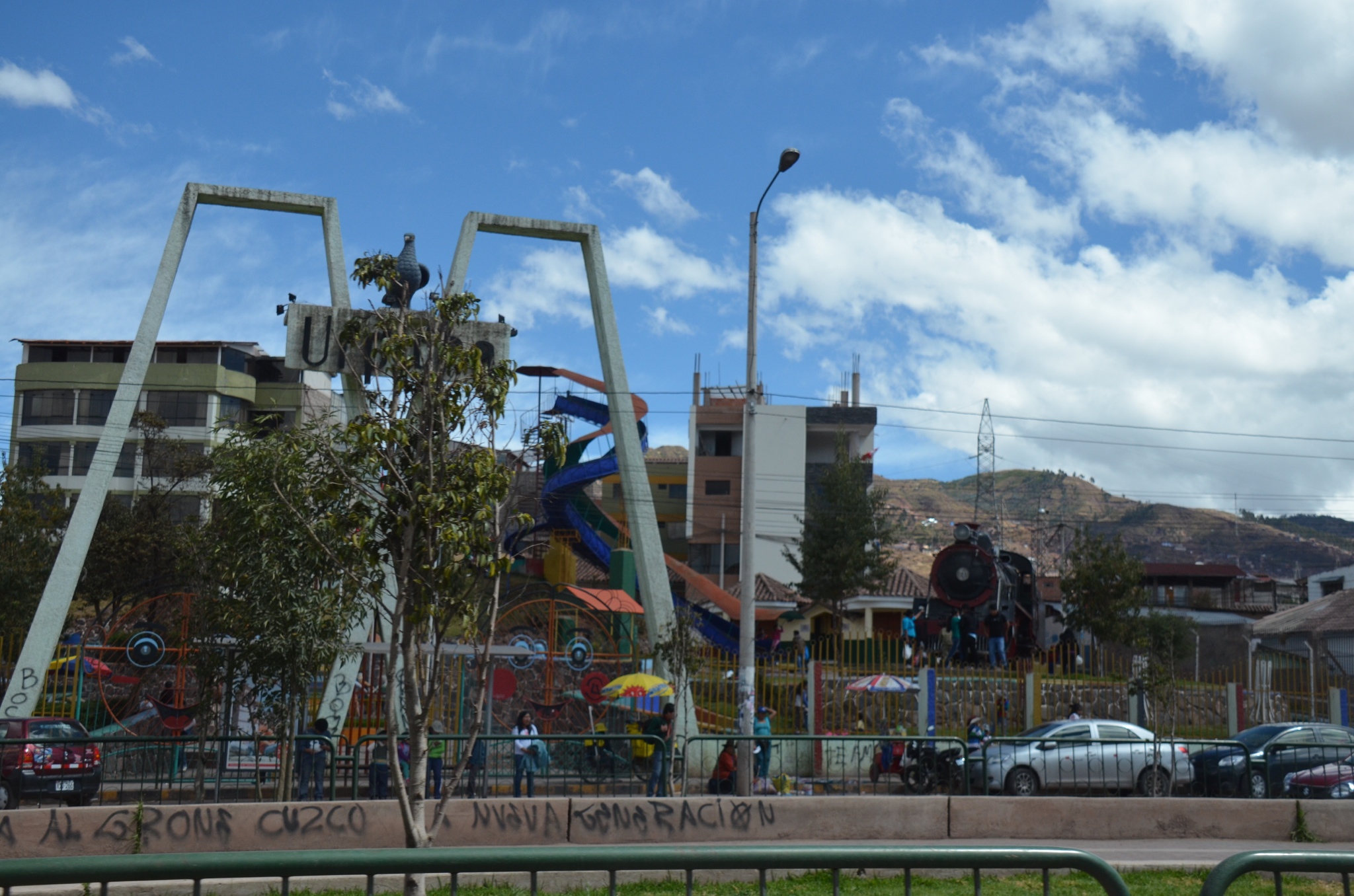
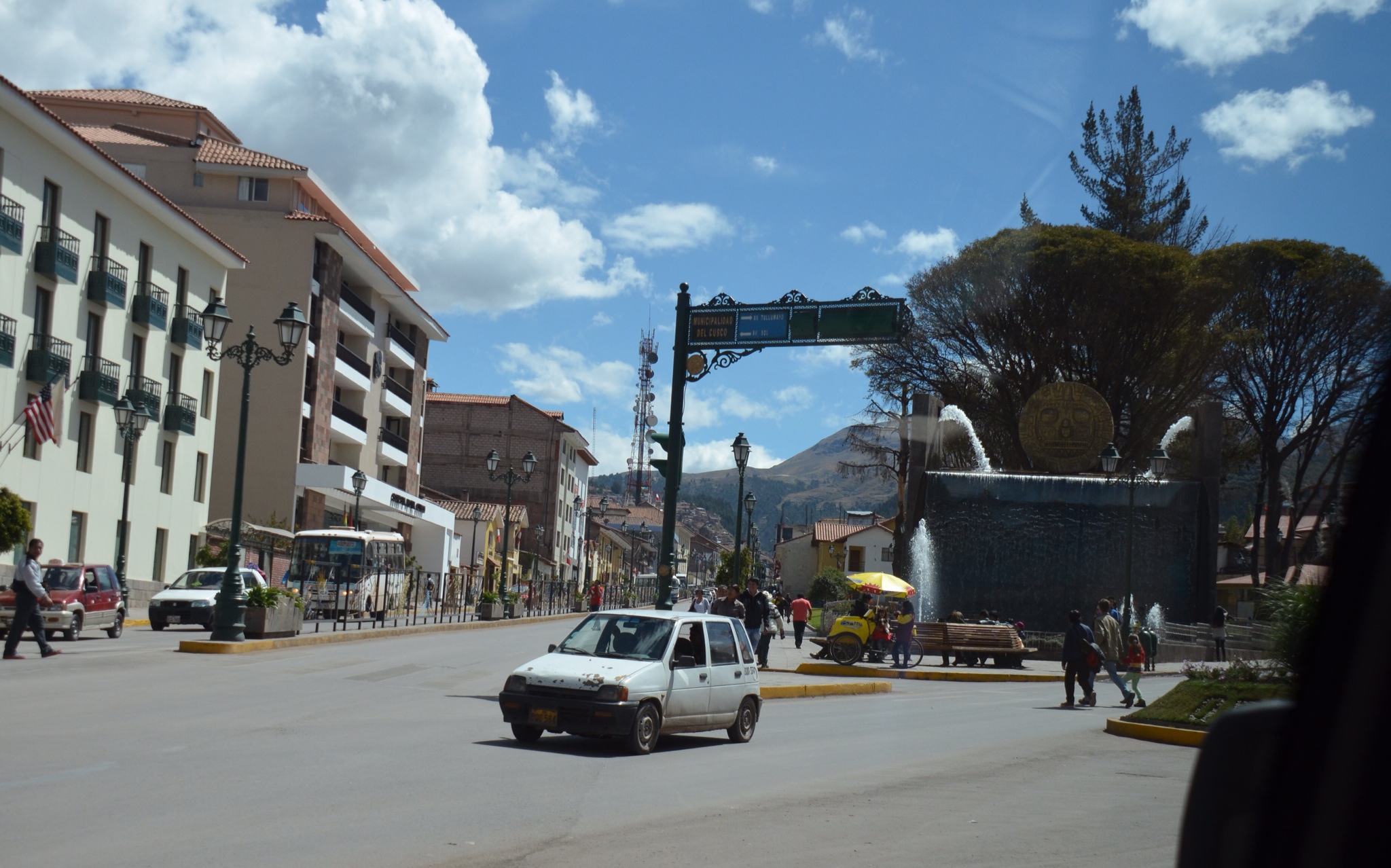
Some street scenes from the drive from the airport to the central city:


The fountain on the right marks the spot where two rivers run together.
 
The people of Cusco have their own version of the white Christ (think Rio or Christ of the Ozarks). He stands atop the city near the ruins of Sacsayhuaman, where we would be going after lunch.


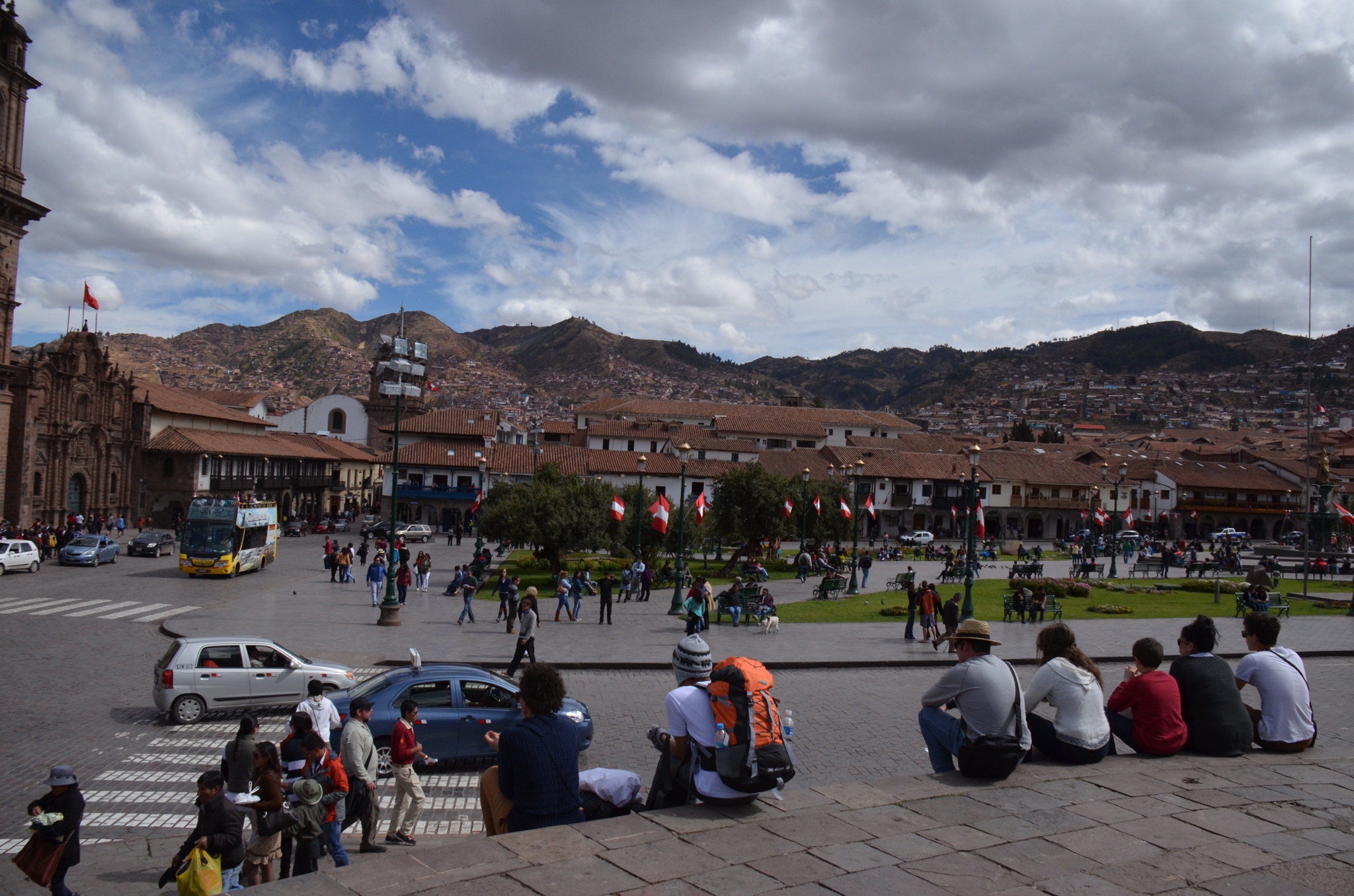
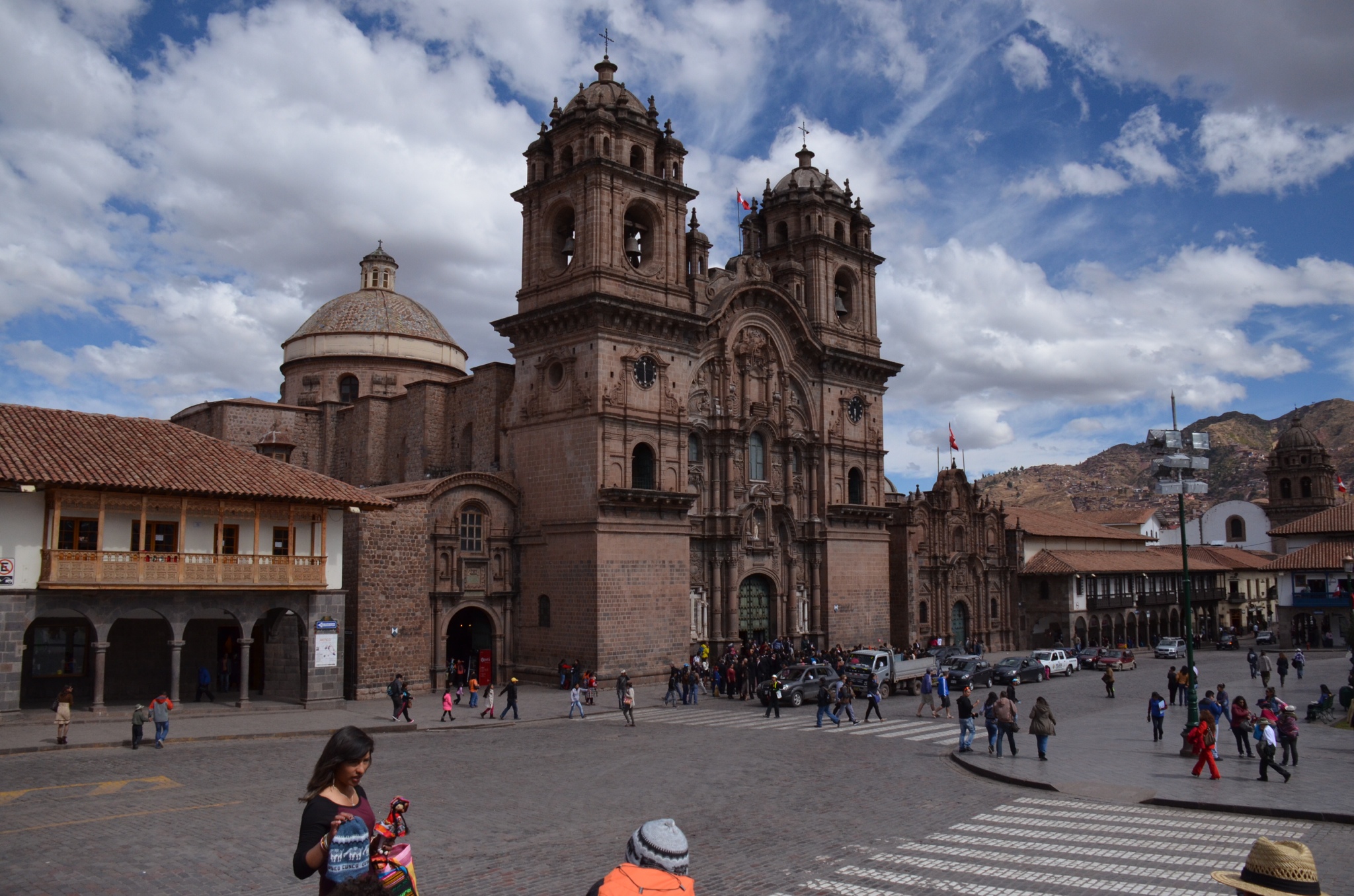
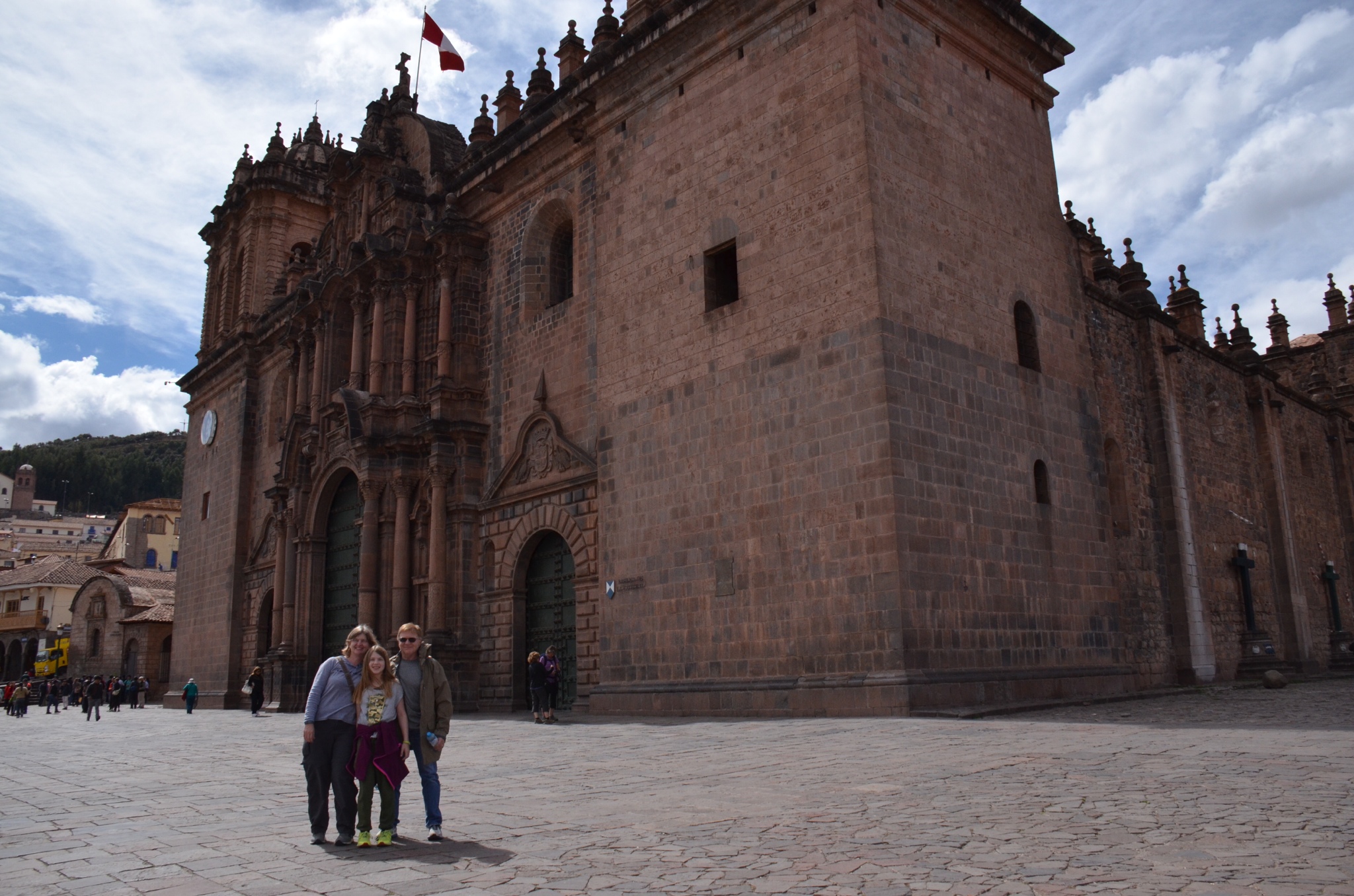
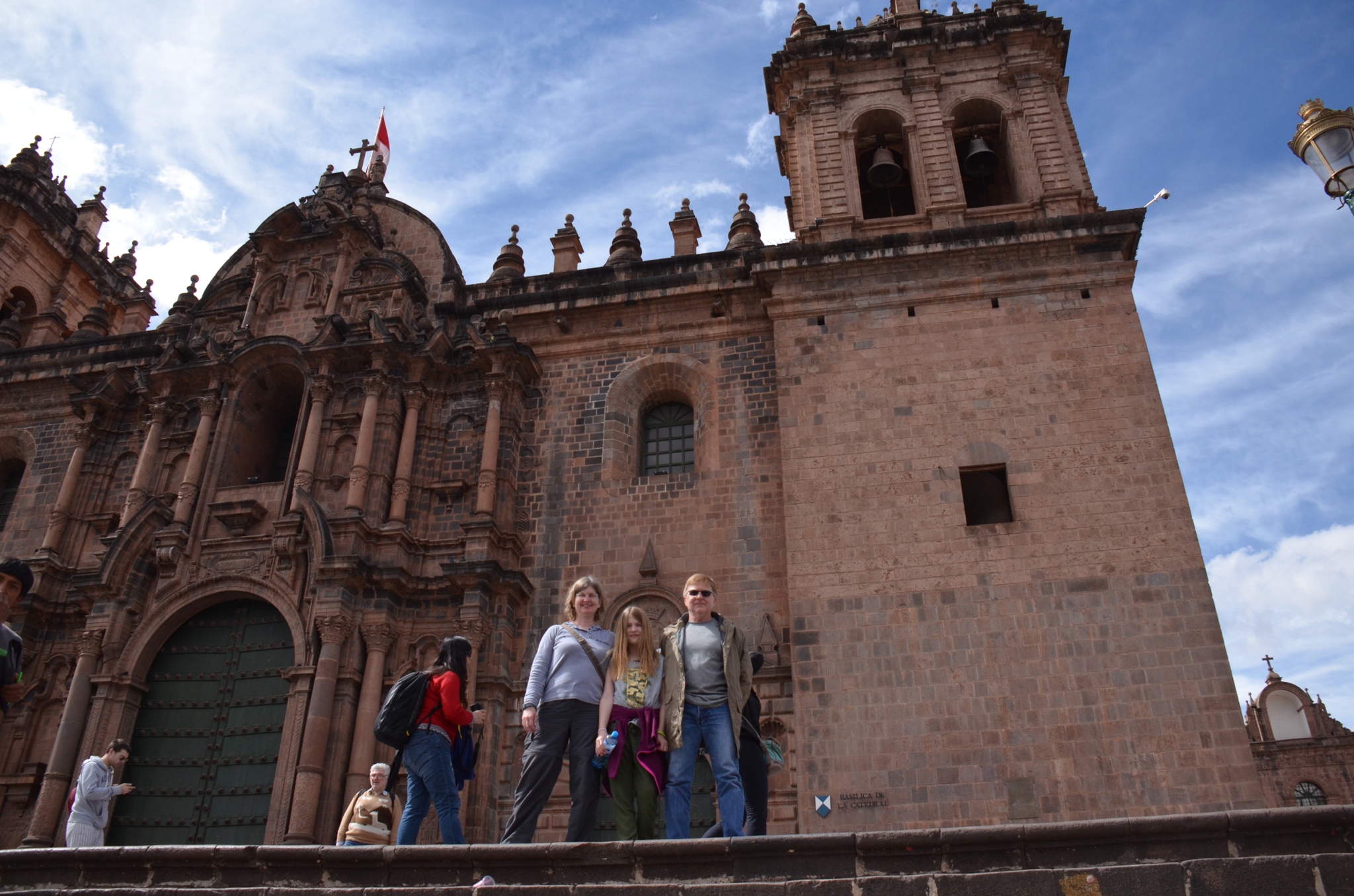
Lunch was delicious and enjoyed by all. We all had vegetable cream soup for an appetizer. Genene and Greg had breaded beef tenderloin, while I had a pasta dish. Cheesecake and fruit finished our meal, we headed out for some easy sightseeing. We went to the large plaza in the center of the city, Plaza de Armas. The cathedral was constructed on the base of a former Inca palace. When the Spaniards invaded, the destroyed the Incan ruins and sacred places, took the gold and silver, and built Catholic Churches on the ruins. To the victor….

Some views from the plaza:


Carlos is good with my camera and actually asks to take family shots. Perhaps I will show up in a few more this year:


I try to get my guides to educate me on the politics of their countries because I am remarkably ignorant of how other countries do their business. Carlos was knowledgeable and forthcoming. He told us about some of the good and bad Peruvian leaders, Shining Path, the institutional corruption, the sale of cocaine to the north, and the political process. We learned from Carlos that presidential elections are held every 5 years in Peru. Everyone must vote or pay a monetary penalty. The vote is secret ballot, and paper ballots are used. There are 10 candidates running in next year's elections, and the winner must receive 50 percent of the vote, which will likely require what he called a “second round.” In the USA, we would call it a runoff. In any event, I find it fascinating to learn about the way other governments work (or don't work) from people who live in the country.

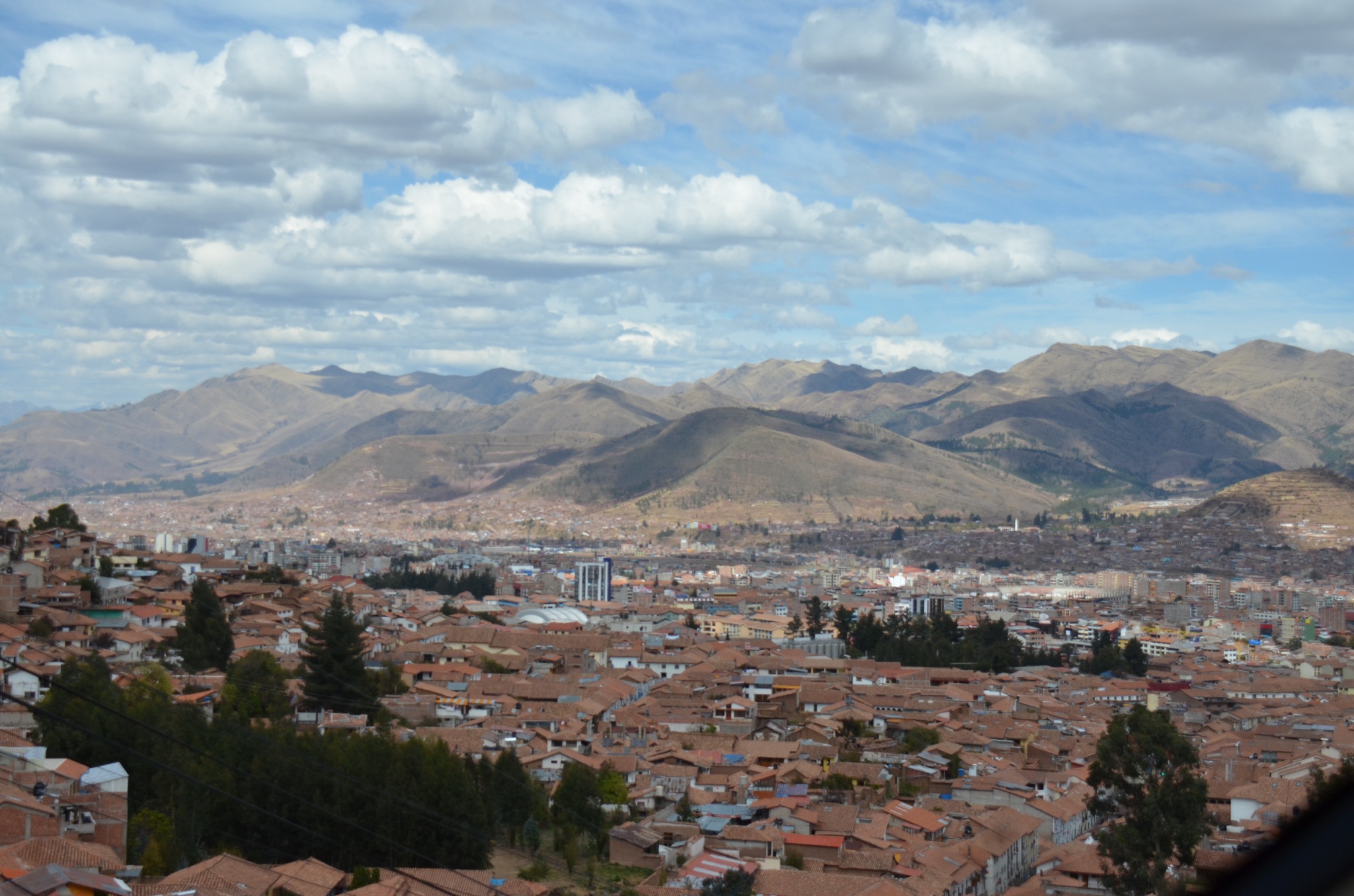
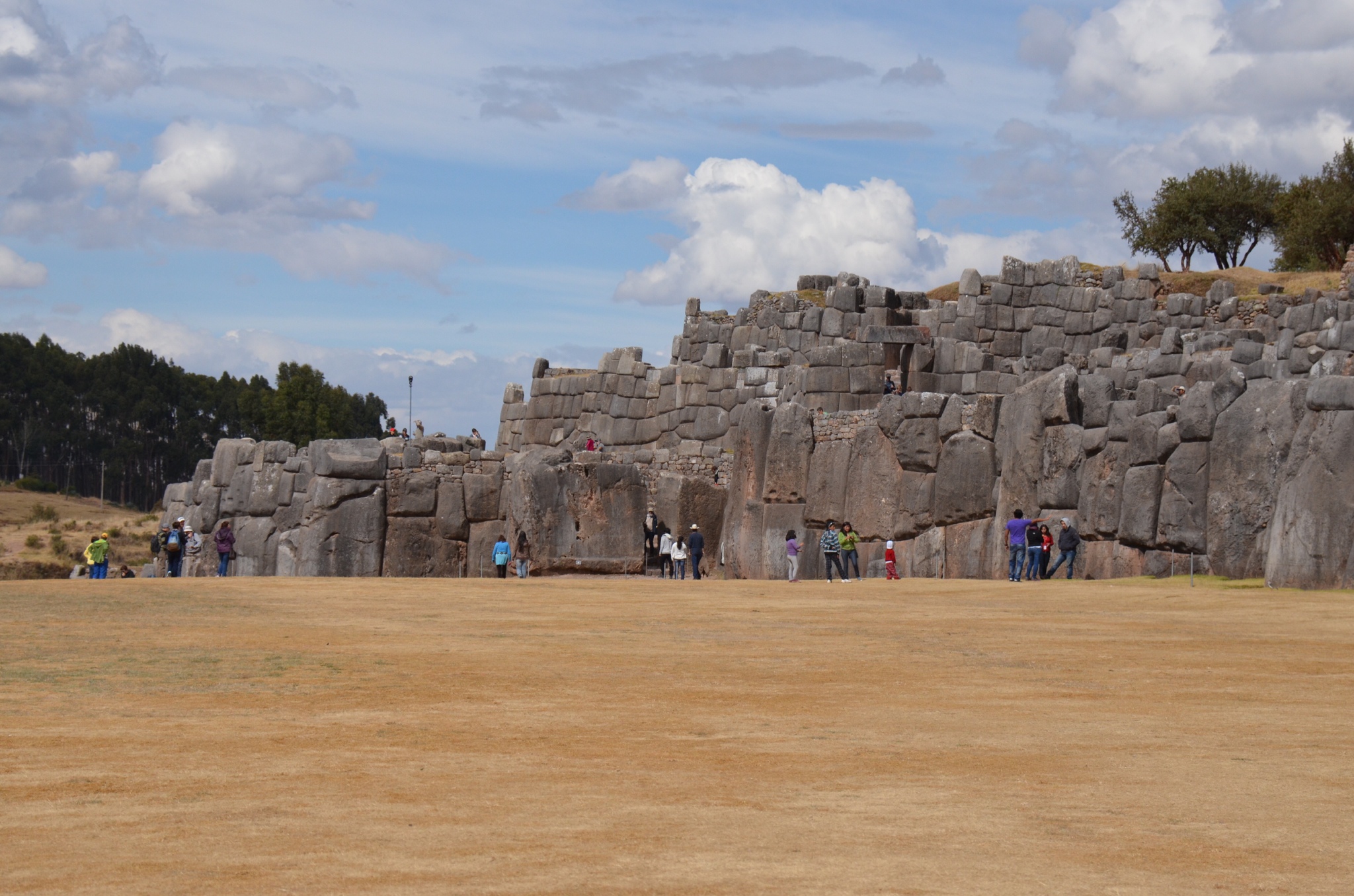
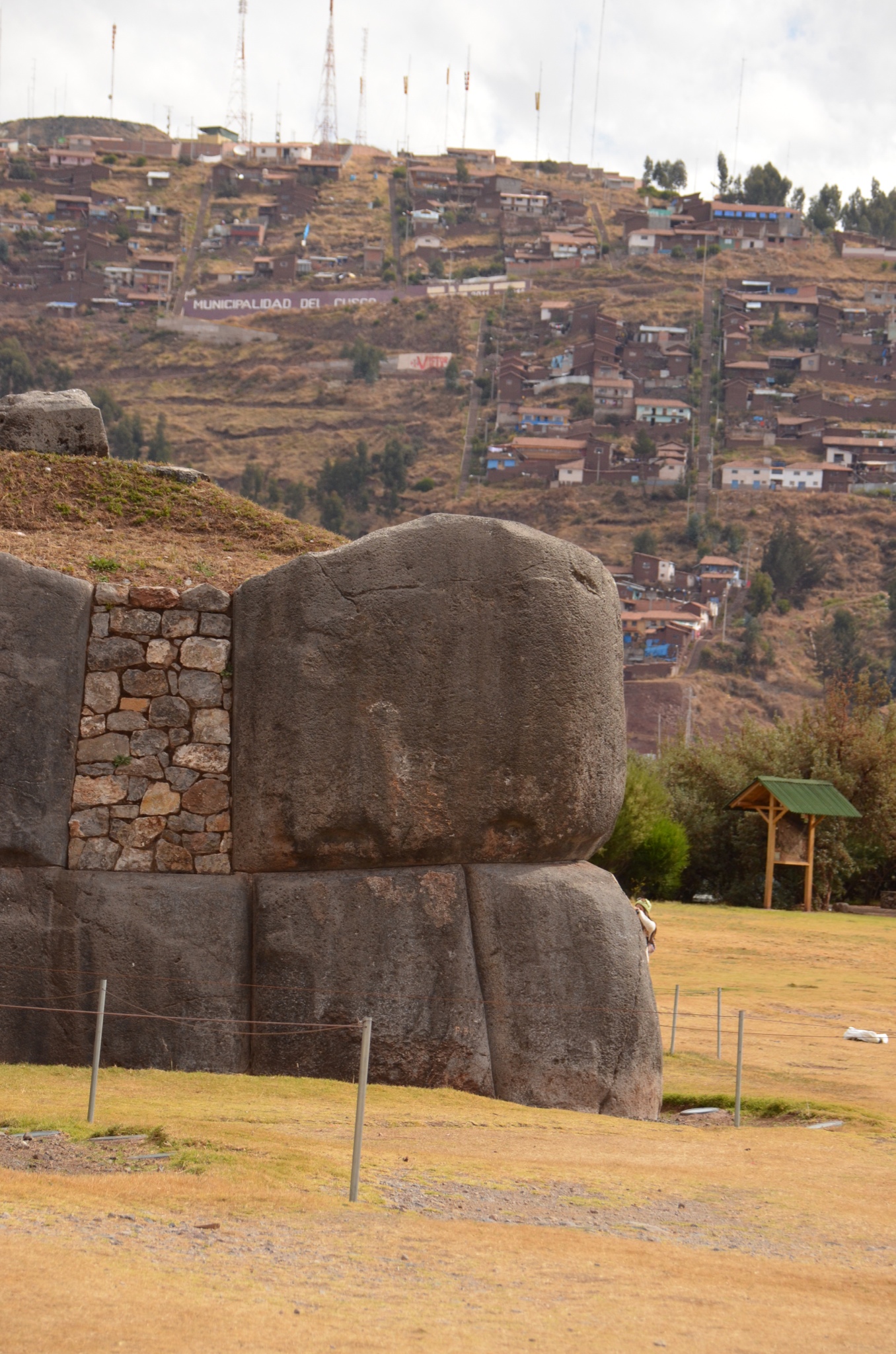
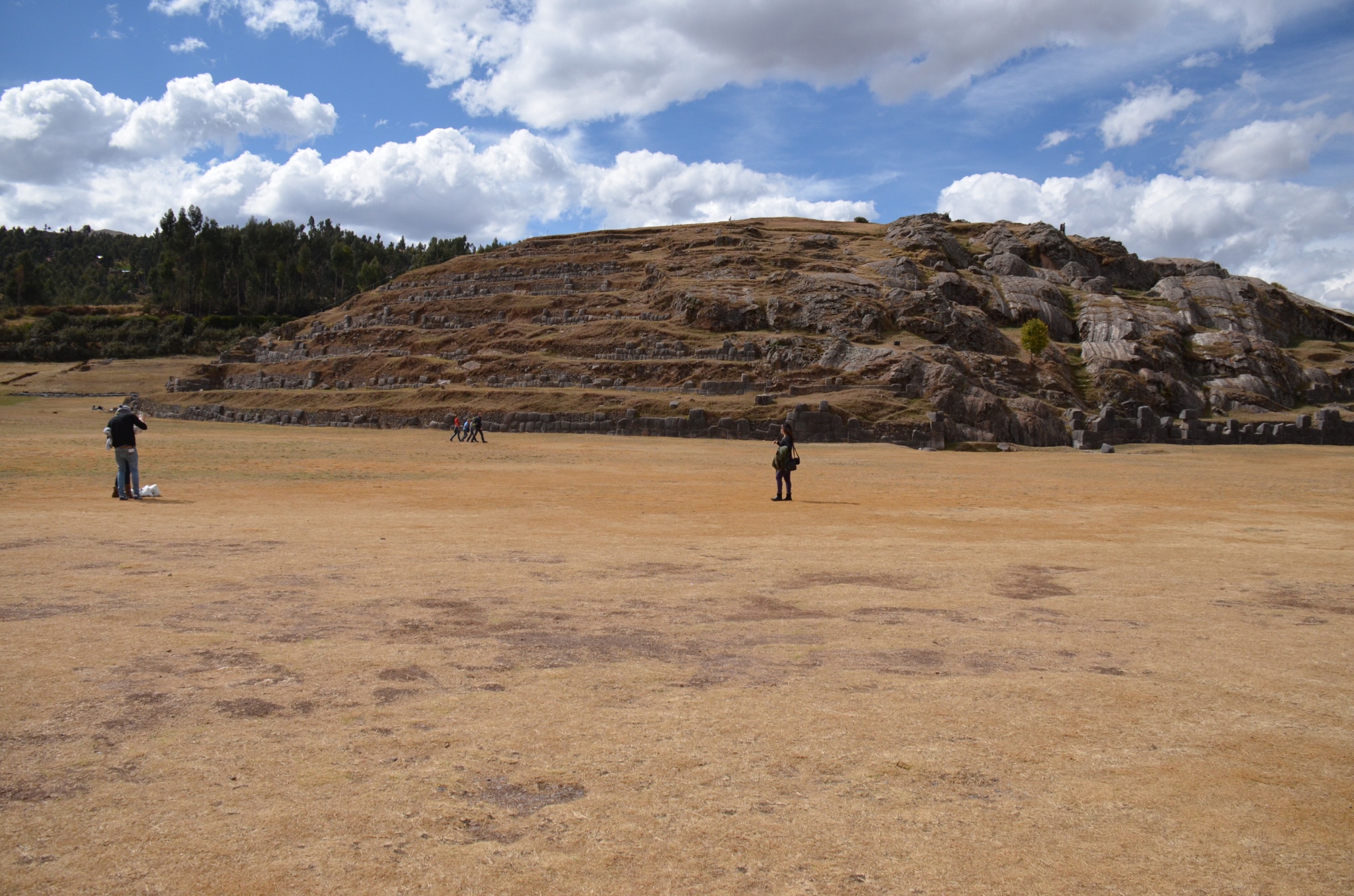
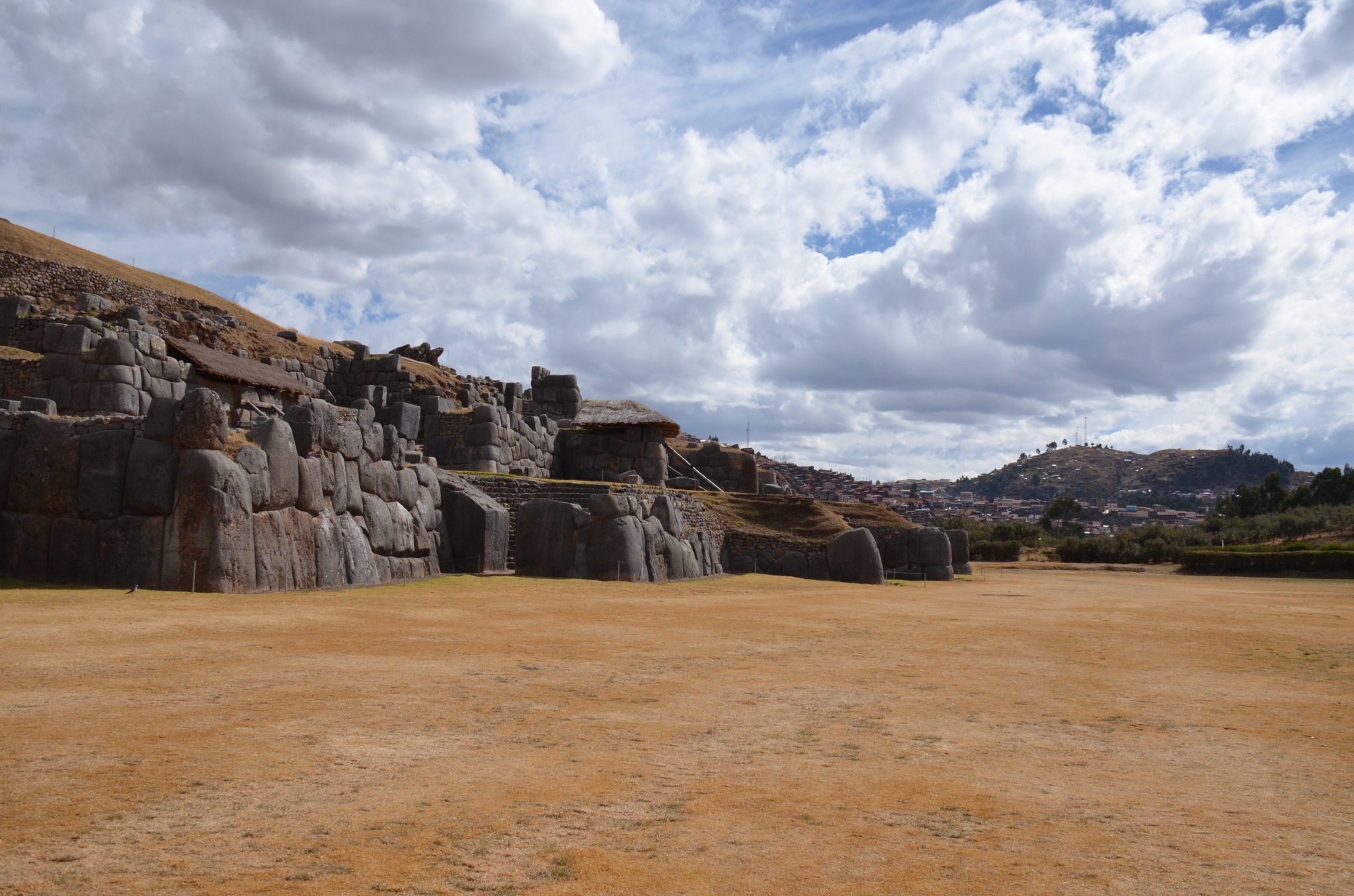
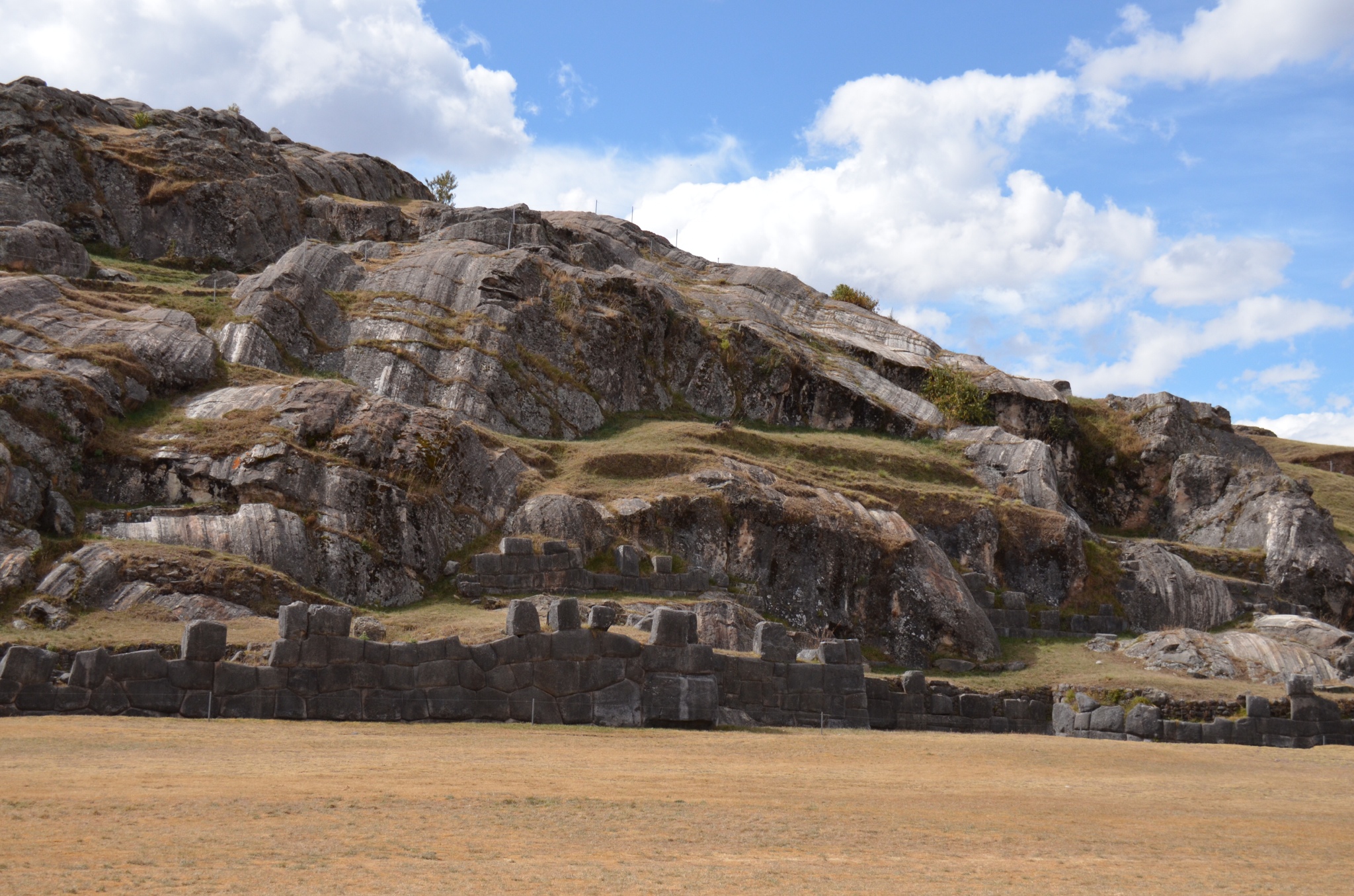
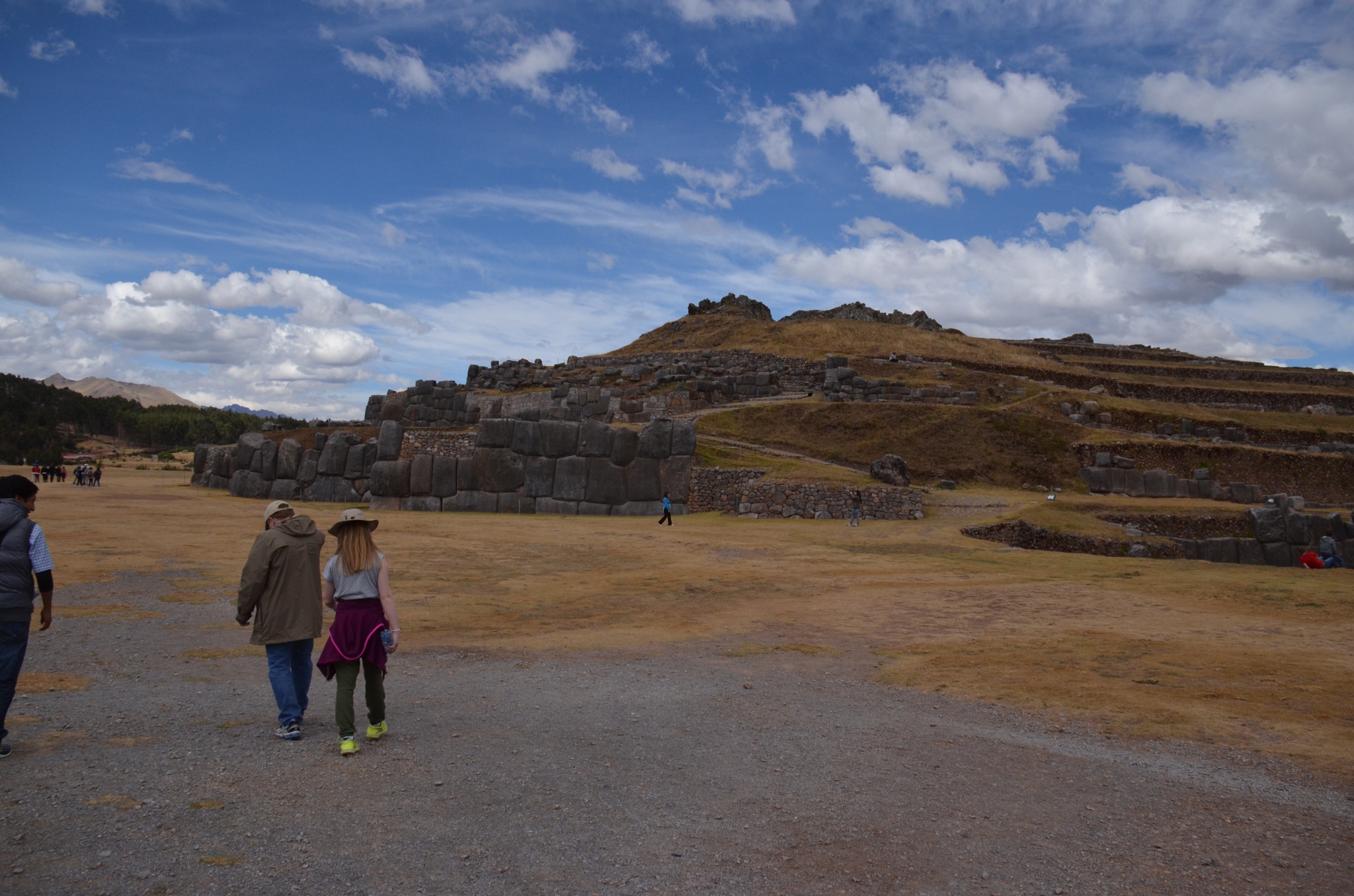
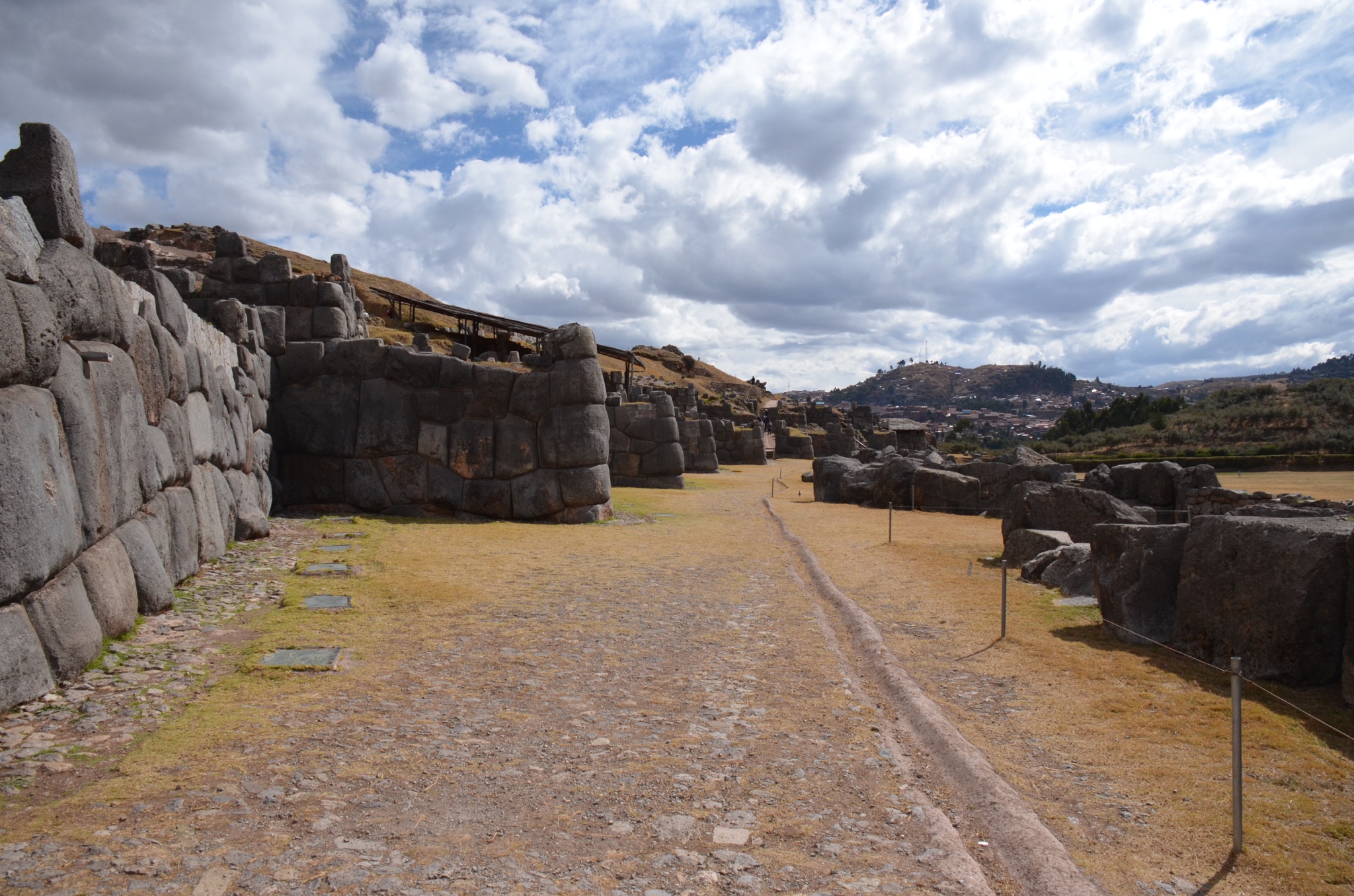
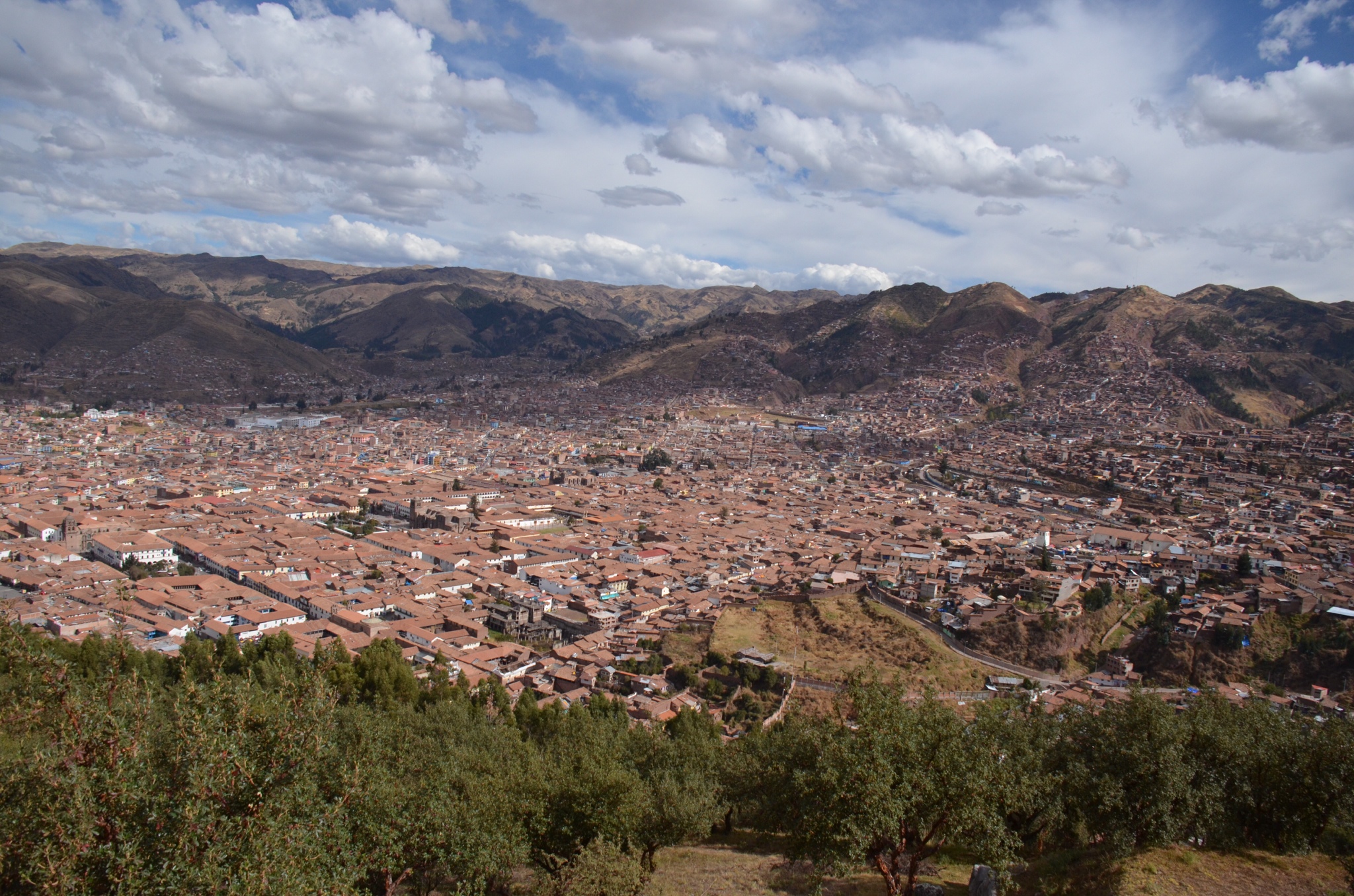
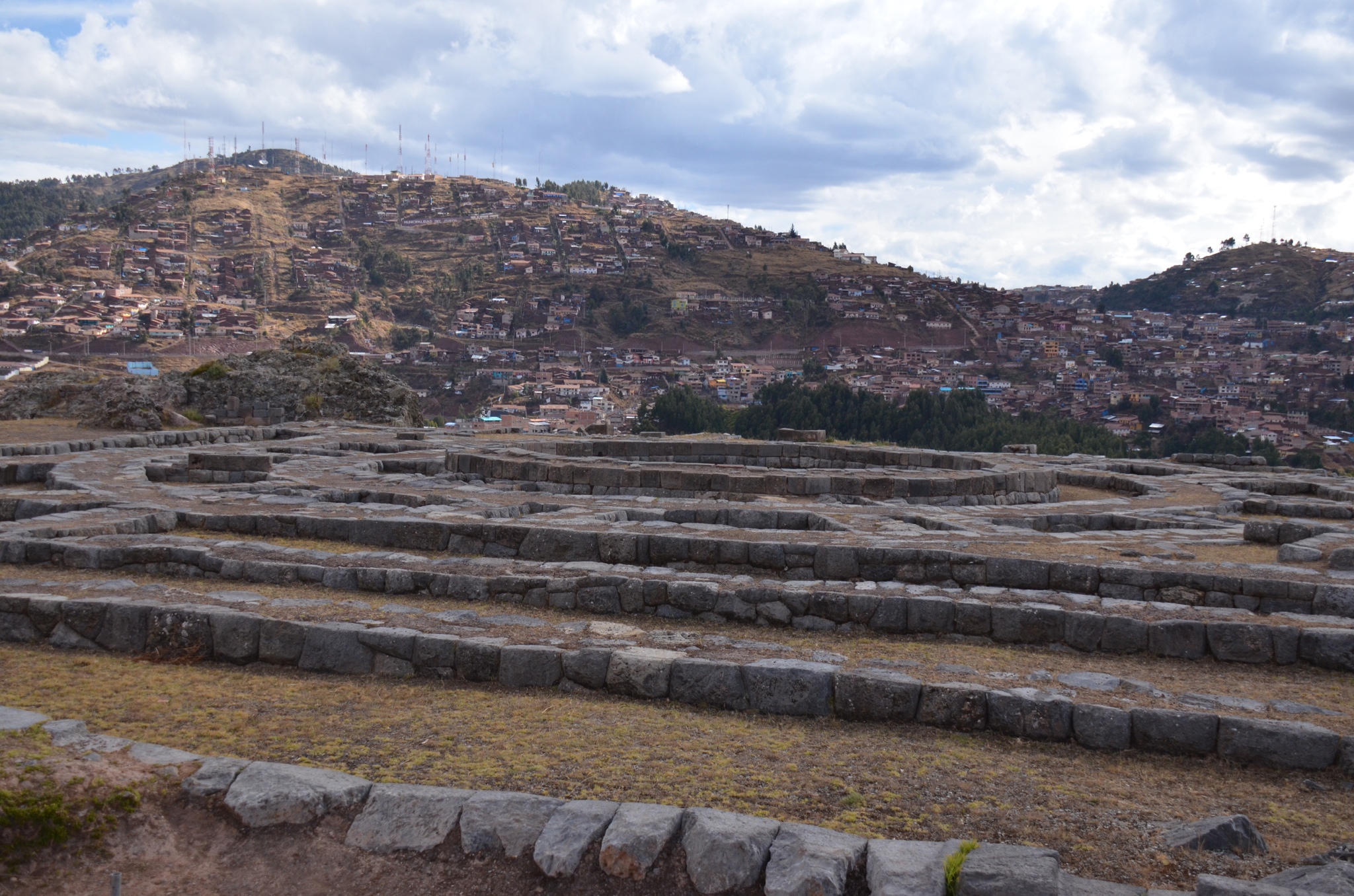
Our next stop was the ruins of Sacsayhuaman, the pronounciation of which sounds almost like “sexy woman.” The ruins sit at the top of a hill with a drop-dead gorgeous view of Cusco below.


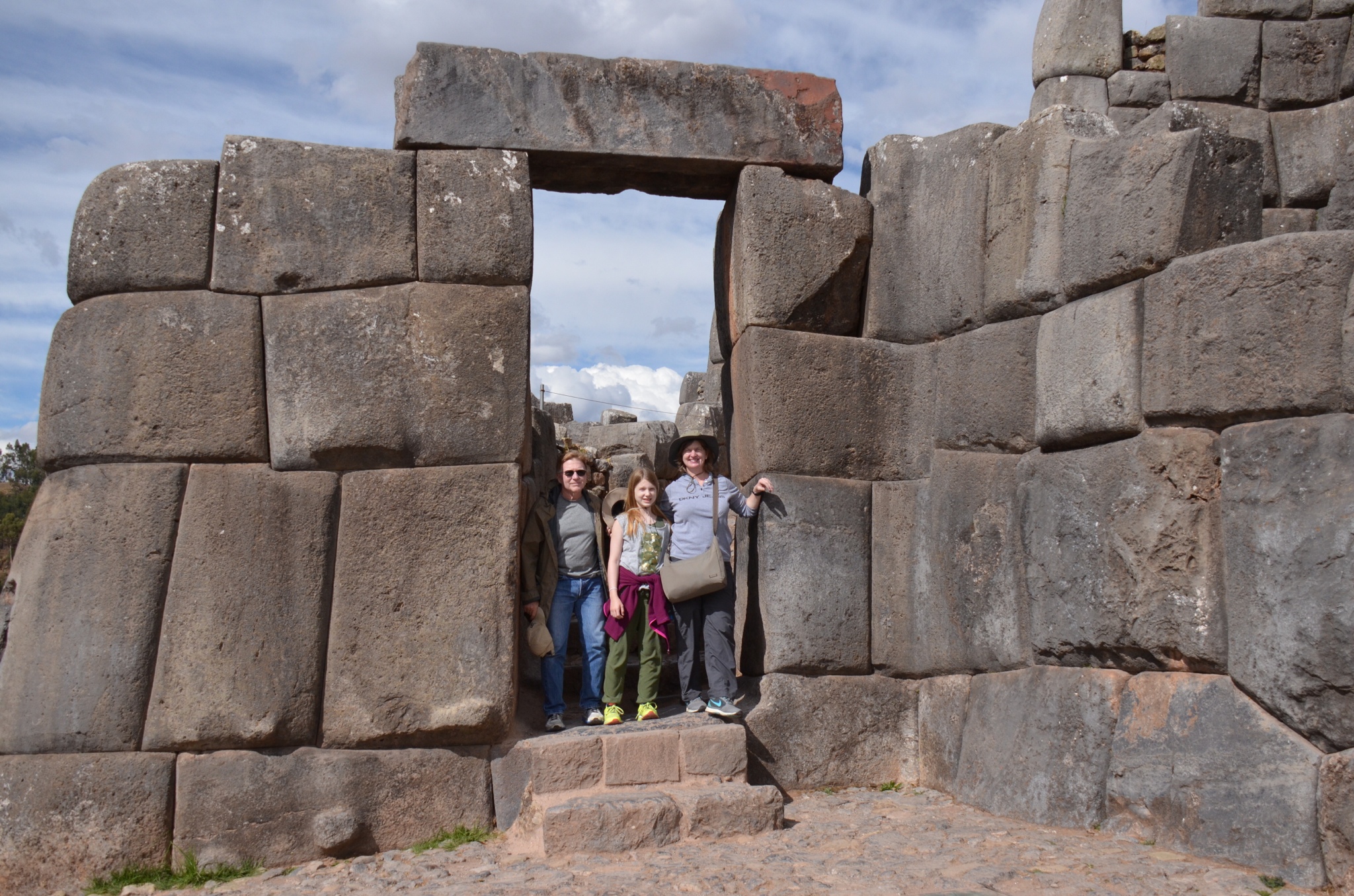
The stones at the ruins are up to 29 feet in height, 16 feet wide and 13 feet thick. They were carved to fit perfectly on top of each other without the use of mortar. The Incans did not have iron, so the limestone was carved with harder stones. Estimates on their weight vary from 125 to 350 tons. Incans did not use the wheel, so the theory is that they rolled the stones to the site with tree trunks and heaved them into place. They also did not have the use of horses, which were later introduced to Peru by the Spaniards. It's no wonder people come up with oddball theories about how aliens helped with the construction. It is difficult to fathom how human power fit these humongous stones together and honed them so tightly that not even a credit card can be slipped between them.


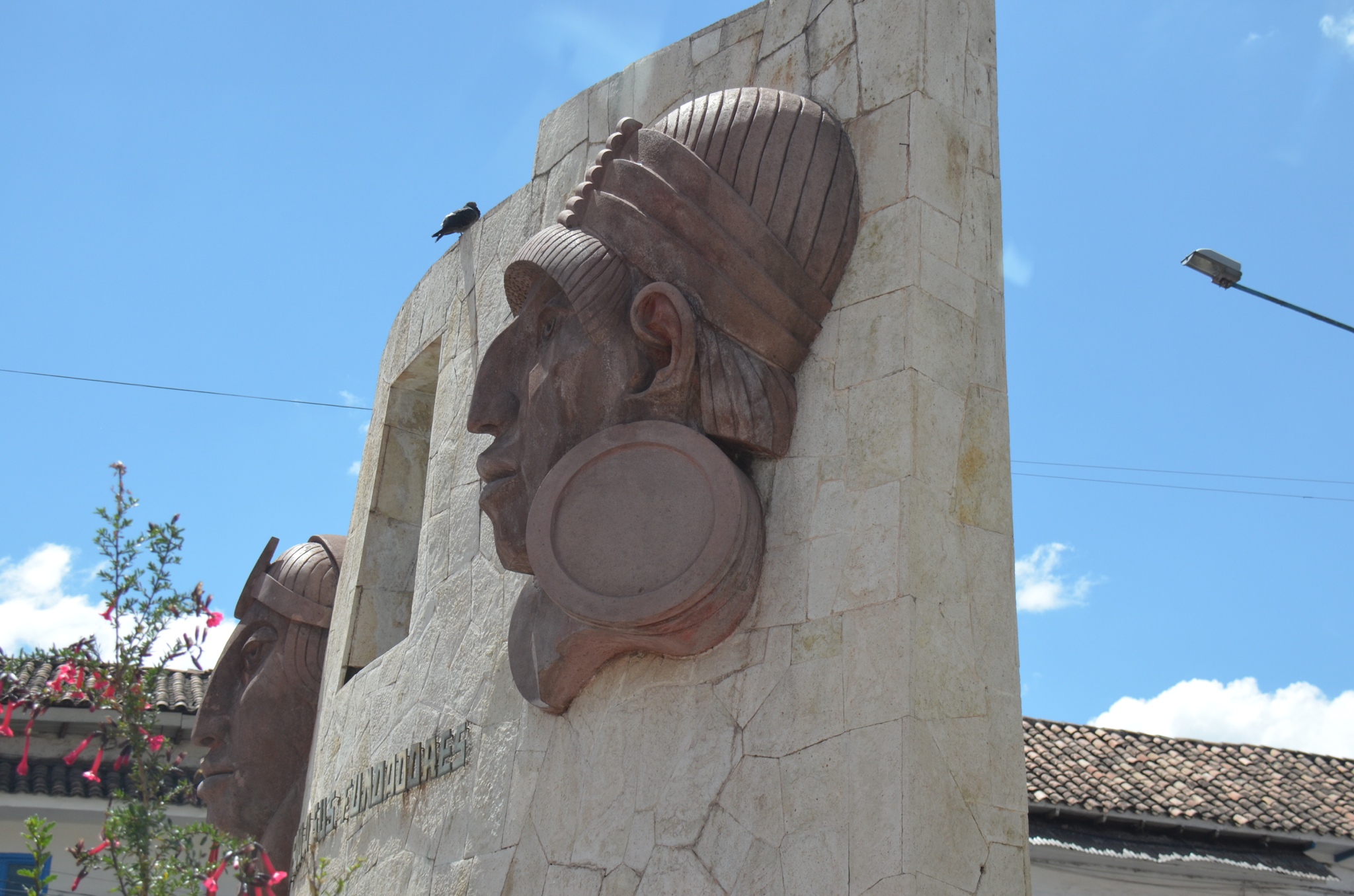
Construction of Sacsayhuaman begin during the 1440's during the reign of the great 9th Incan emperor Pachacutec. There is a statue of this important Inca leader in Cusco, and I got a drive-by shot on the way out of town earlier.


It's estimated that 20,000 workers were used to build Sacsayhuaman. It is believed to be a fortress and a sacred place. It took over 100 years to complete, and the Spaniards came six years after it was done, and the whole place was destroyed and left in ruin.

More photos of Cusco from the ruin site. In the first photo, you can see a glacier in the distance.


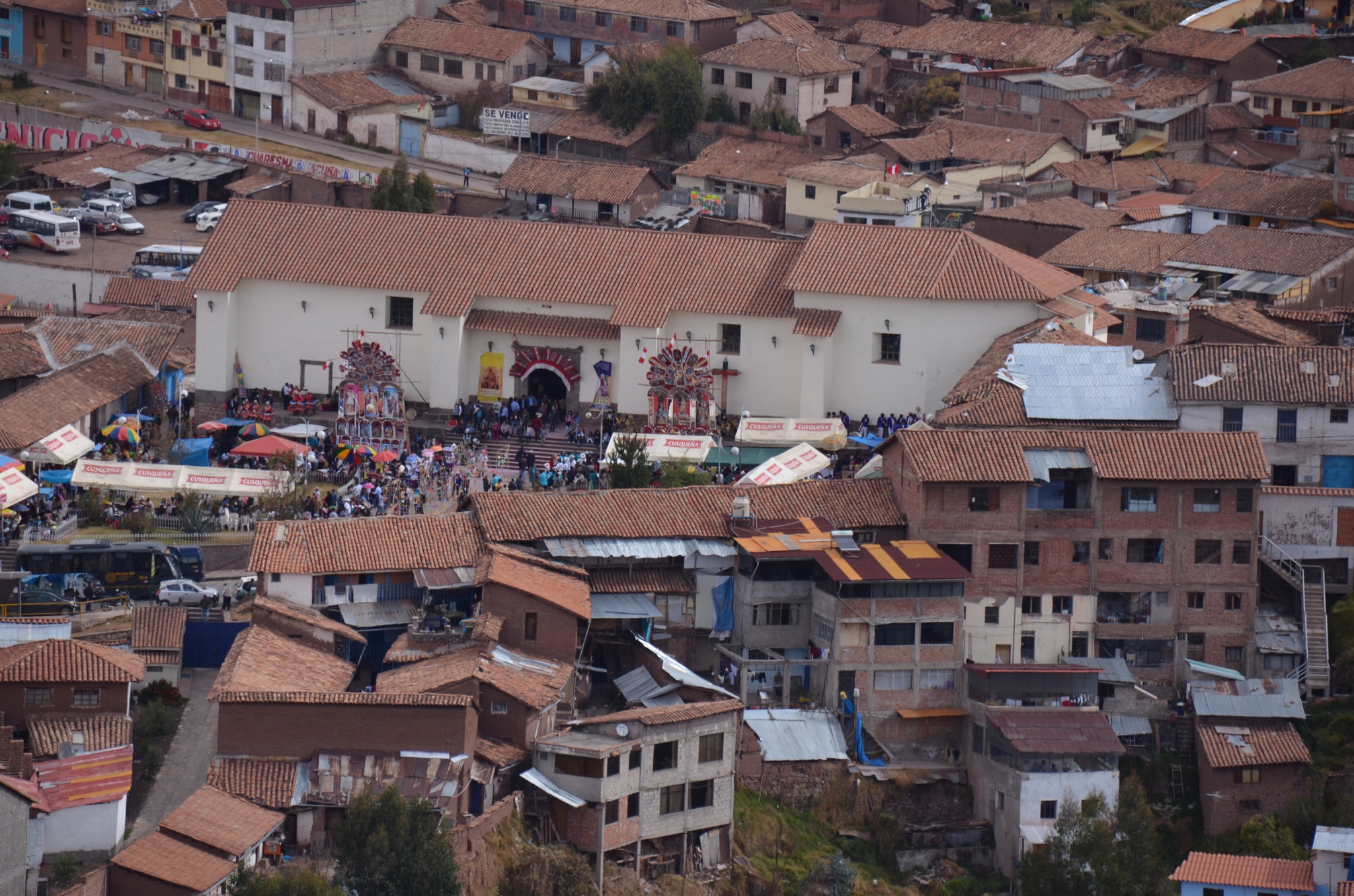
A Catholic festival:


Plaza de Armas from above:
 
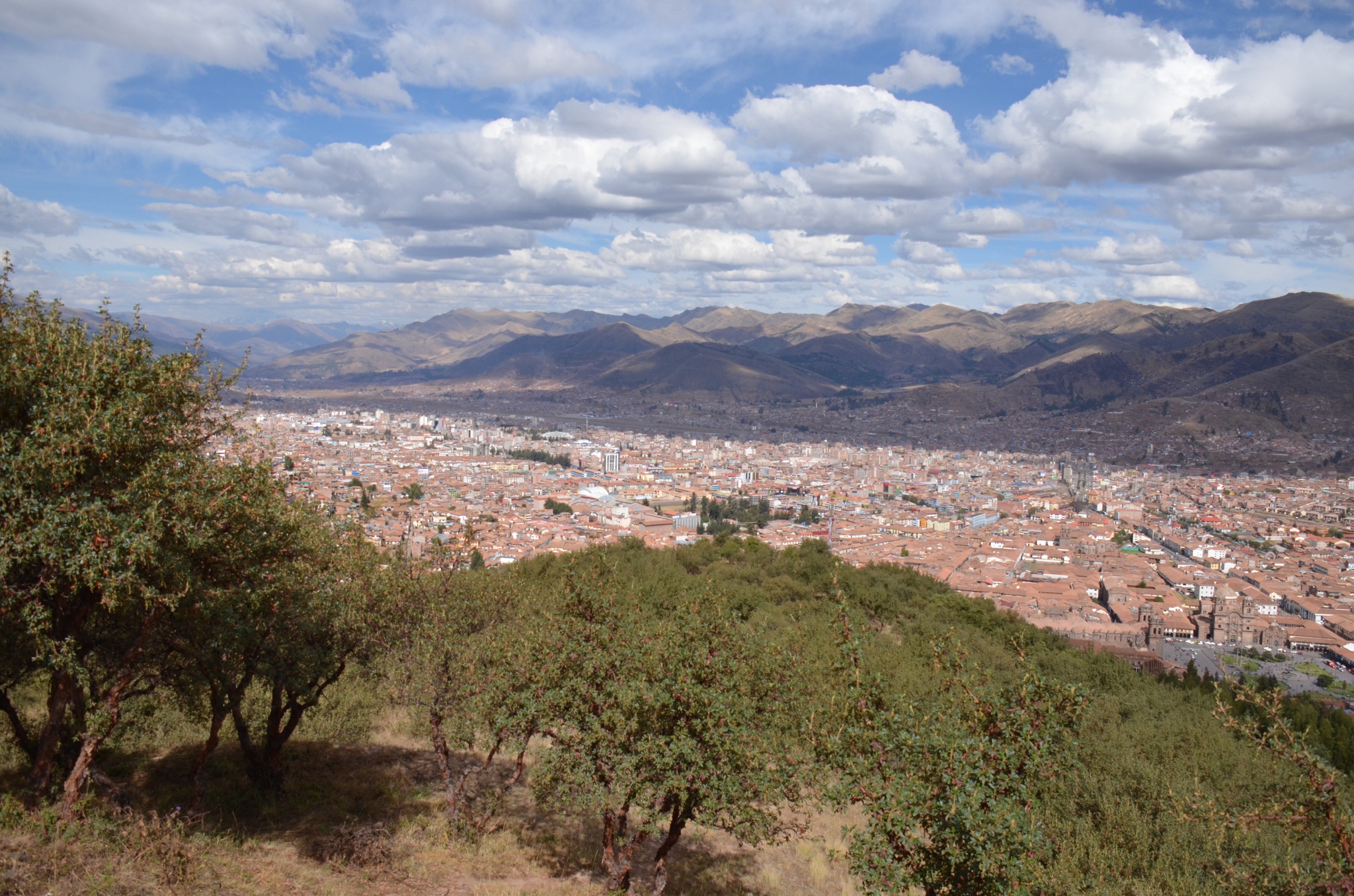
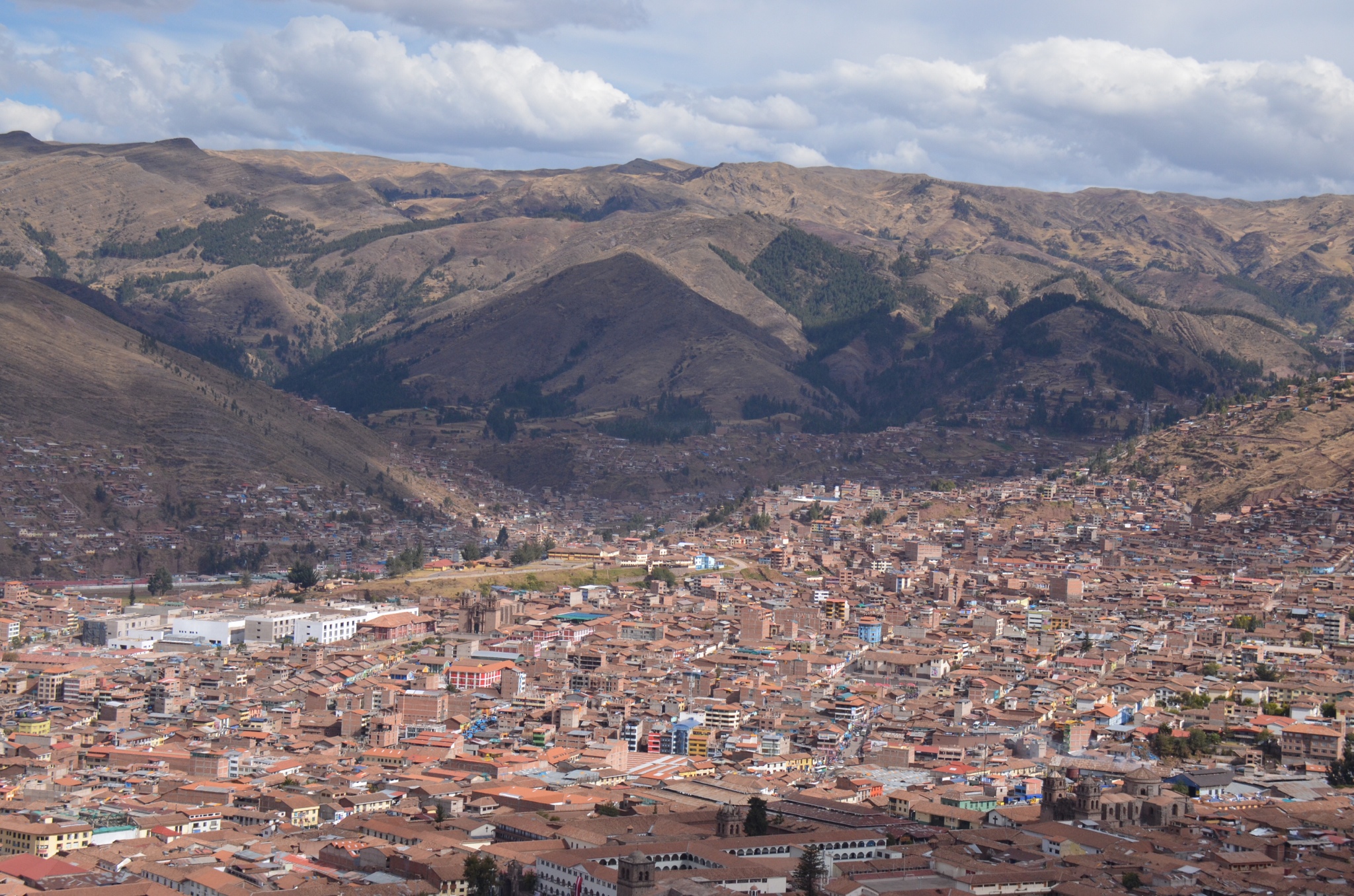
More beautiful views of the city:


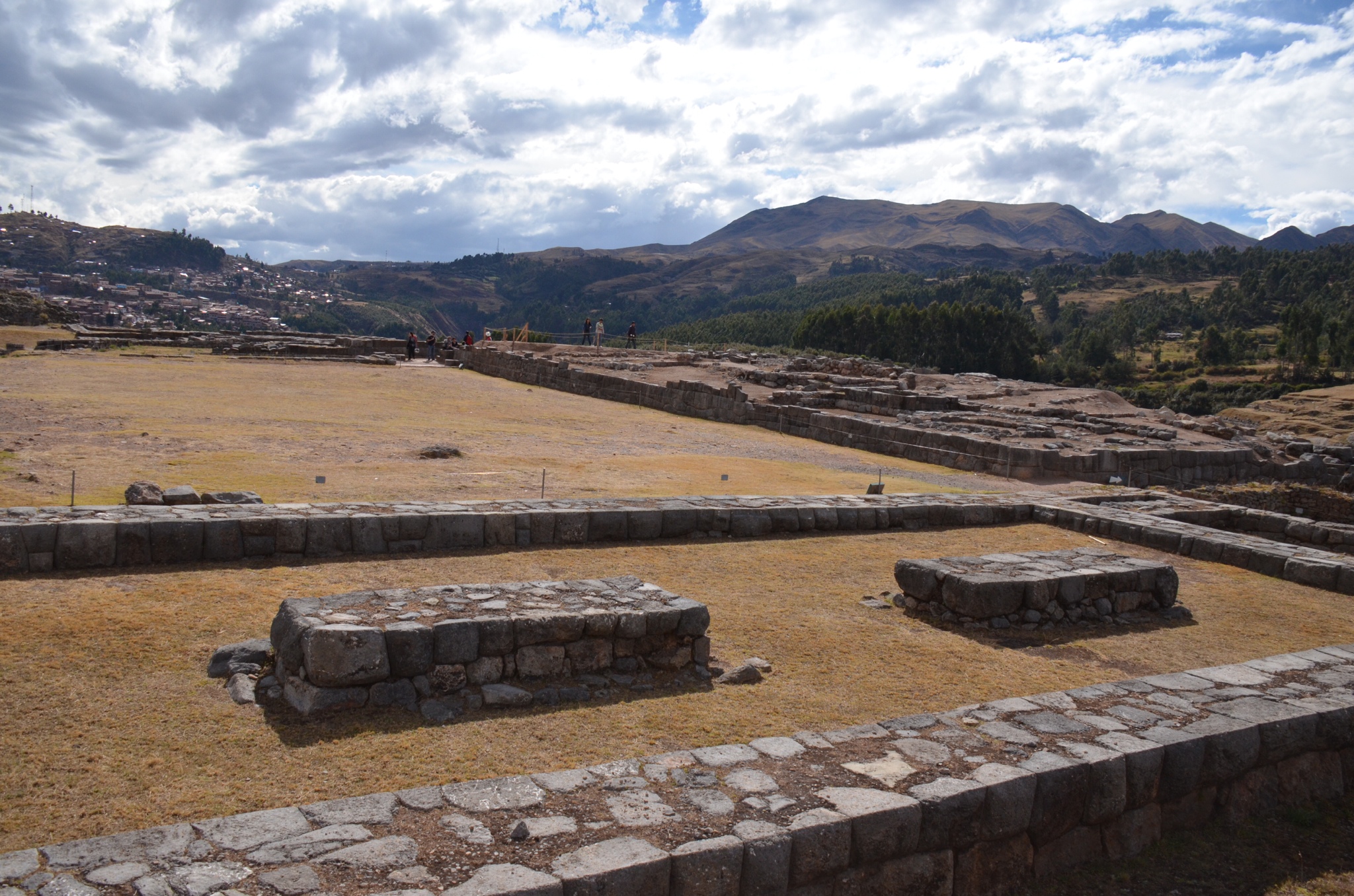
I found it interesting that they are still making recent archaeological discoveries at this site. The Incans did not have a written language, and much of what is known of them is courtesy of Garcilaso de la Vega (1539 – 1616), a chronicler and writer from the Spanish Viceroyalty of Peru. The son of a Spanish conquistador and an Inca princess, he is recognized primarily for his contributions to Inca history, culture, and society. His work was influential and is still used by archaeologists. Through family interviews, de la Vega was able to provide some written recollections of a destroyed civilization. He wrote of three towers at Sacsayhuaman, and archaeologists found and dug out evidence of those towers in the 1980s. Photos of two of the tower bases are below.


It's exciting to think that there are still so many things to be discovered. Carlos says that they are still finding Incan Trails everywhere in the countryside. The Incans actually destroyed some of these trails themselves, to keep the Spaniards from finding all their holy places. That is one reason Machu Picchu was not discovered and destroyed by the Spaniards and then was reclaimed by the jungle to be “rediscovered” by Hiram Bingham in 1912….but I'm getting ahead of myself.

So far, we are having no major ill effects from the altitude, but it is quite noticeable when climbing stairs. We were huffing and puffing on the stairs above Cusco. Carlos is very attentive and has told us we must go slow and acclimatize. The key is not to push oneself in the early going. We are taking him at his word and going easy.

We drove from the hills of Sacsayhuaman to the Sacred Valley. I got some street scenes:


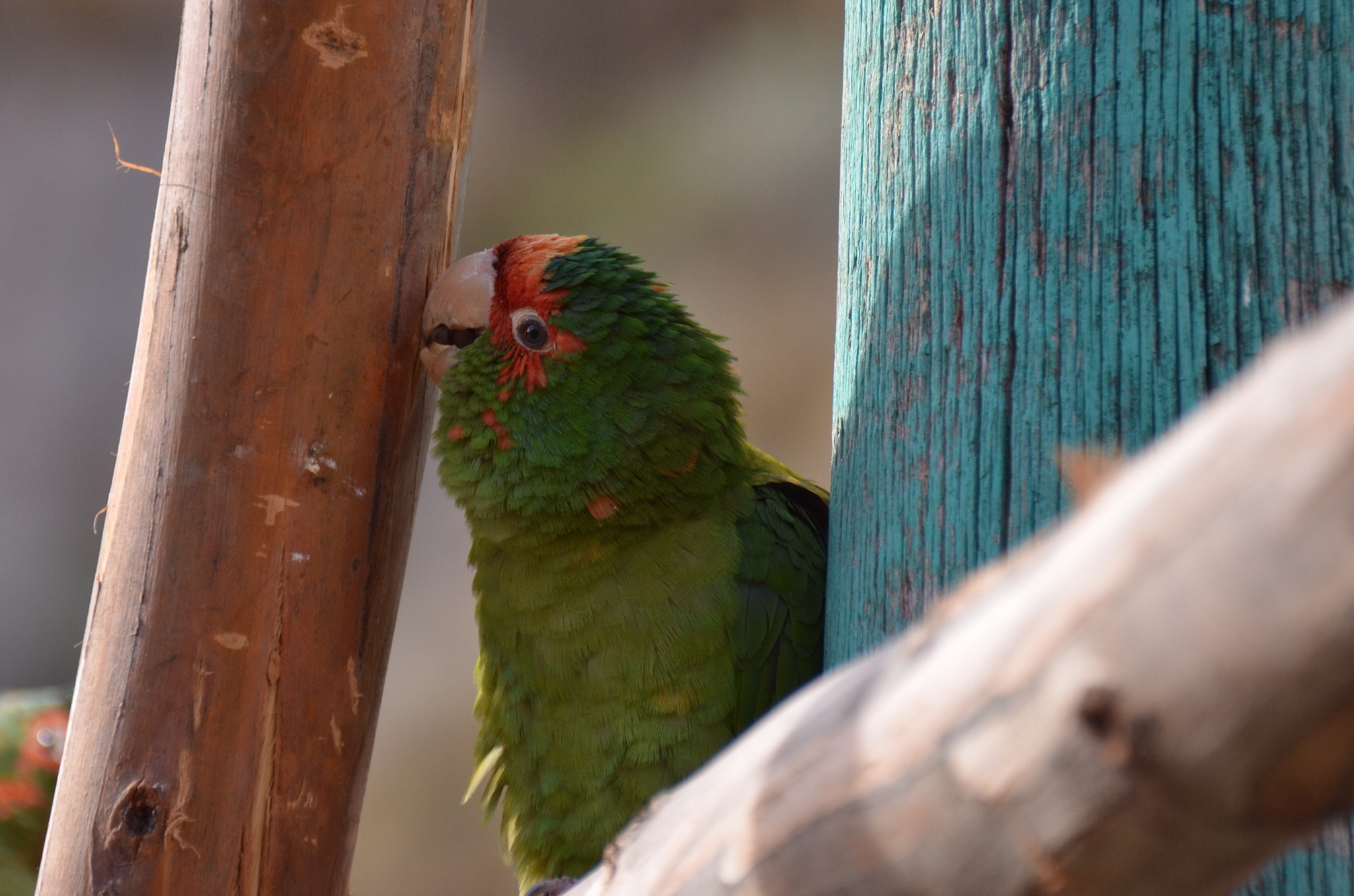
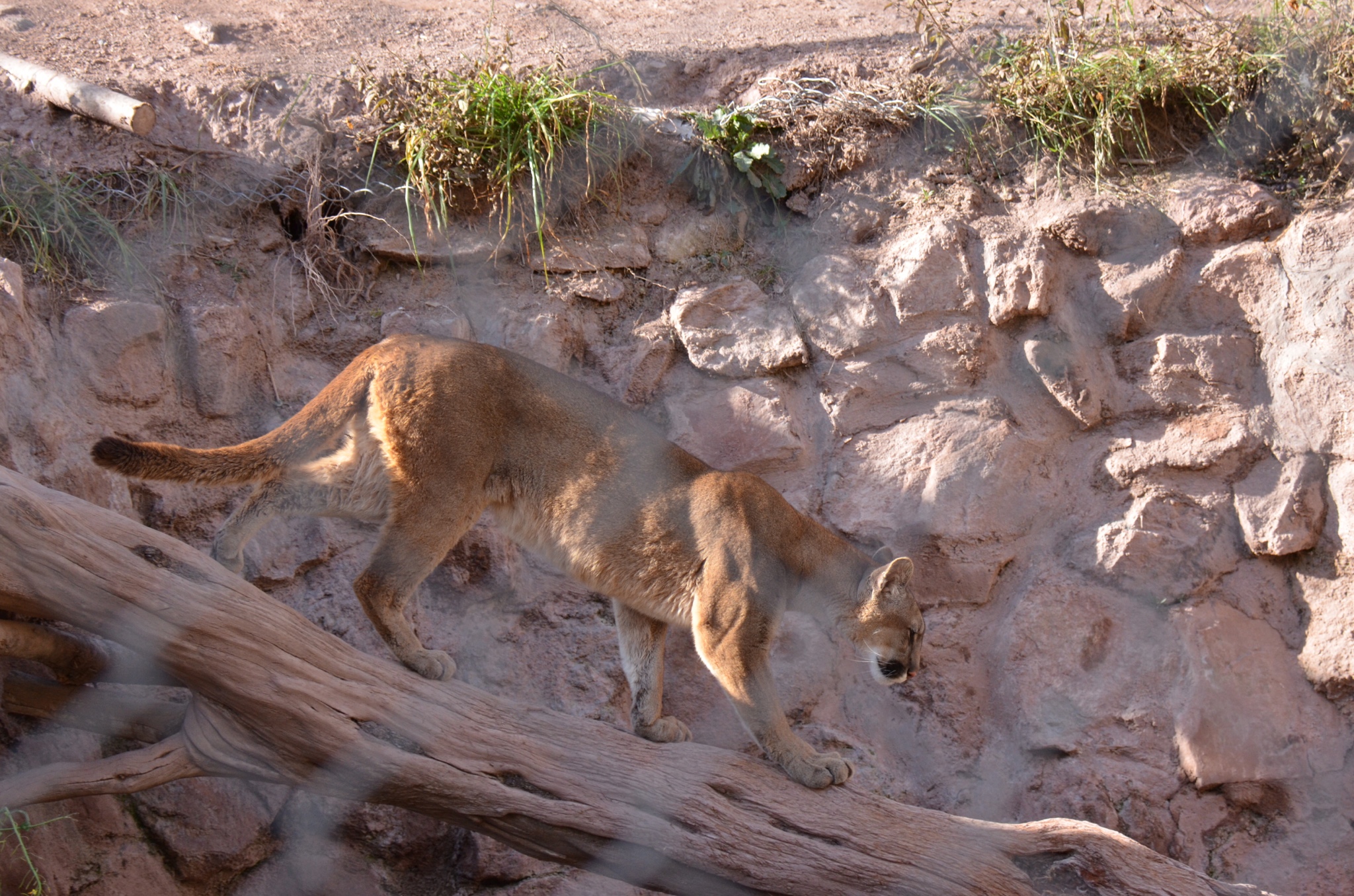
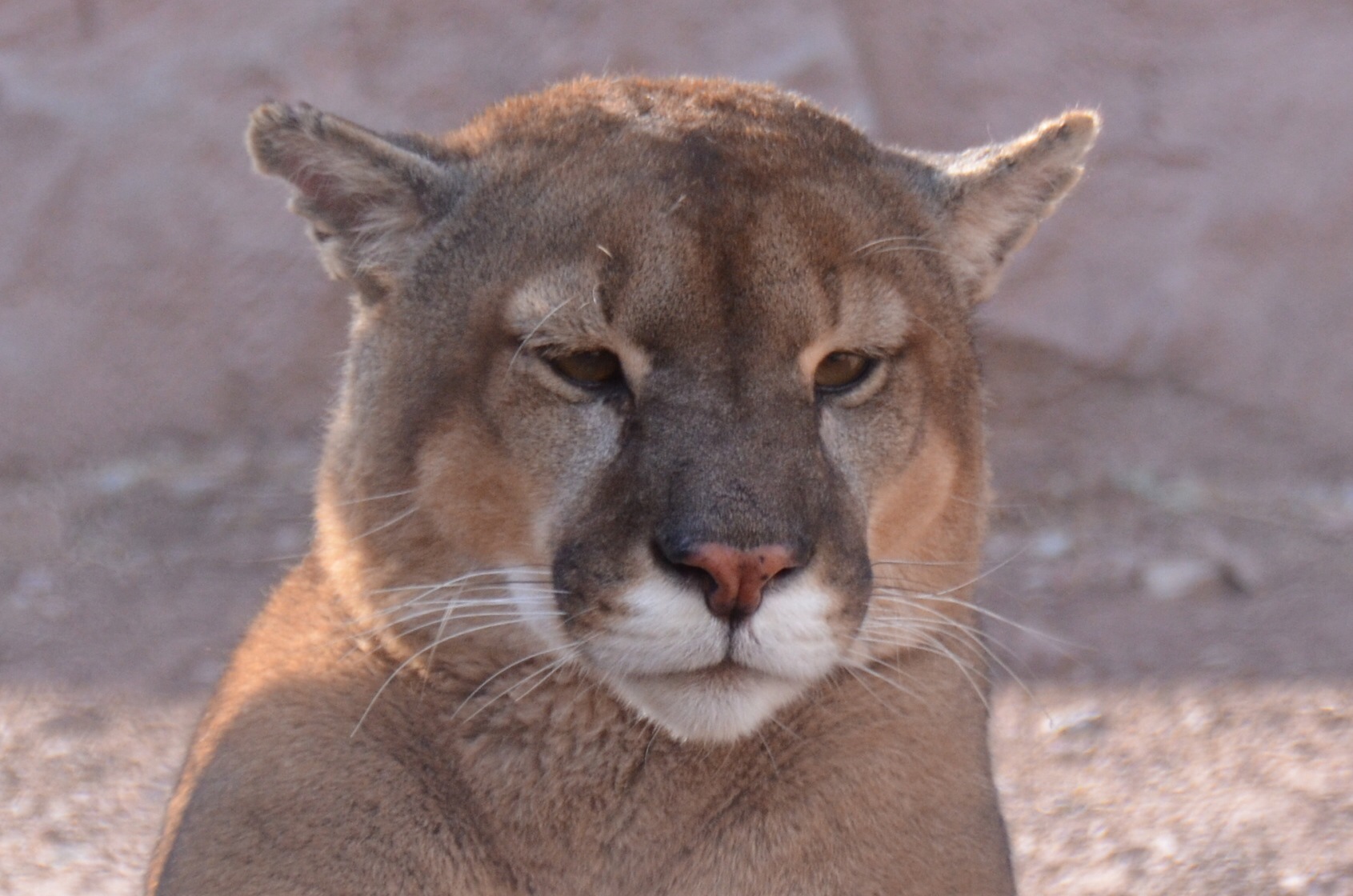
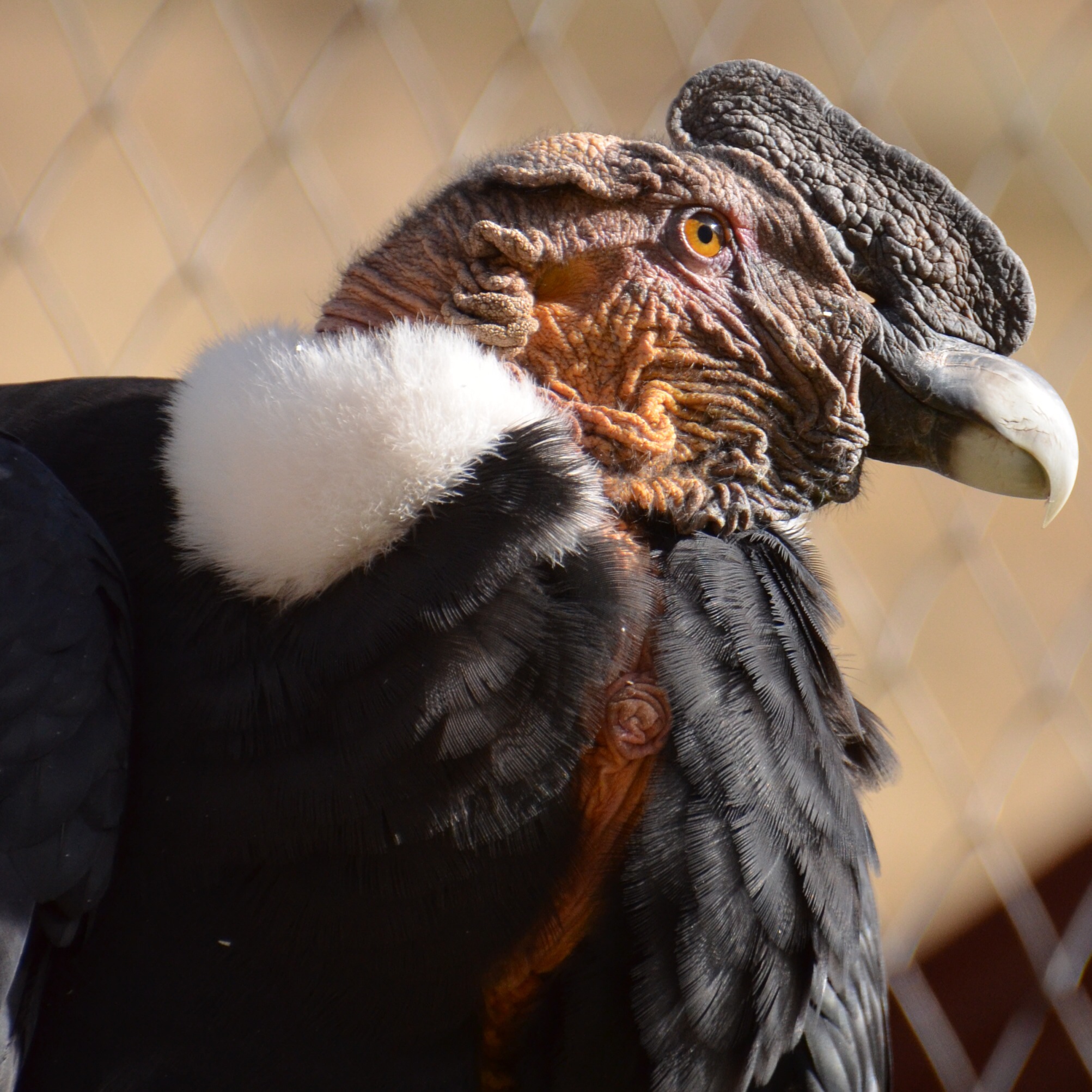
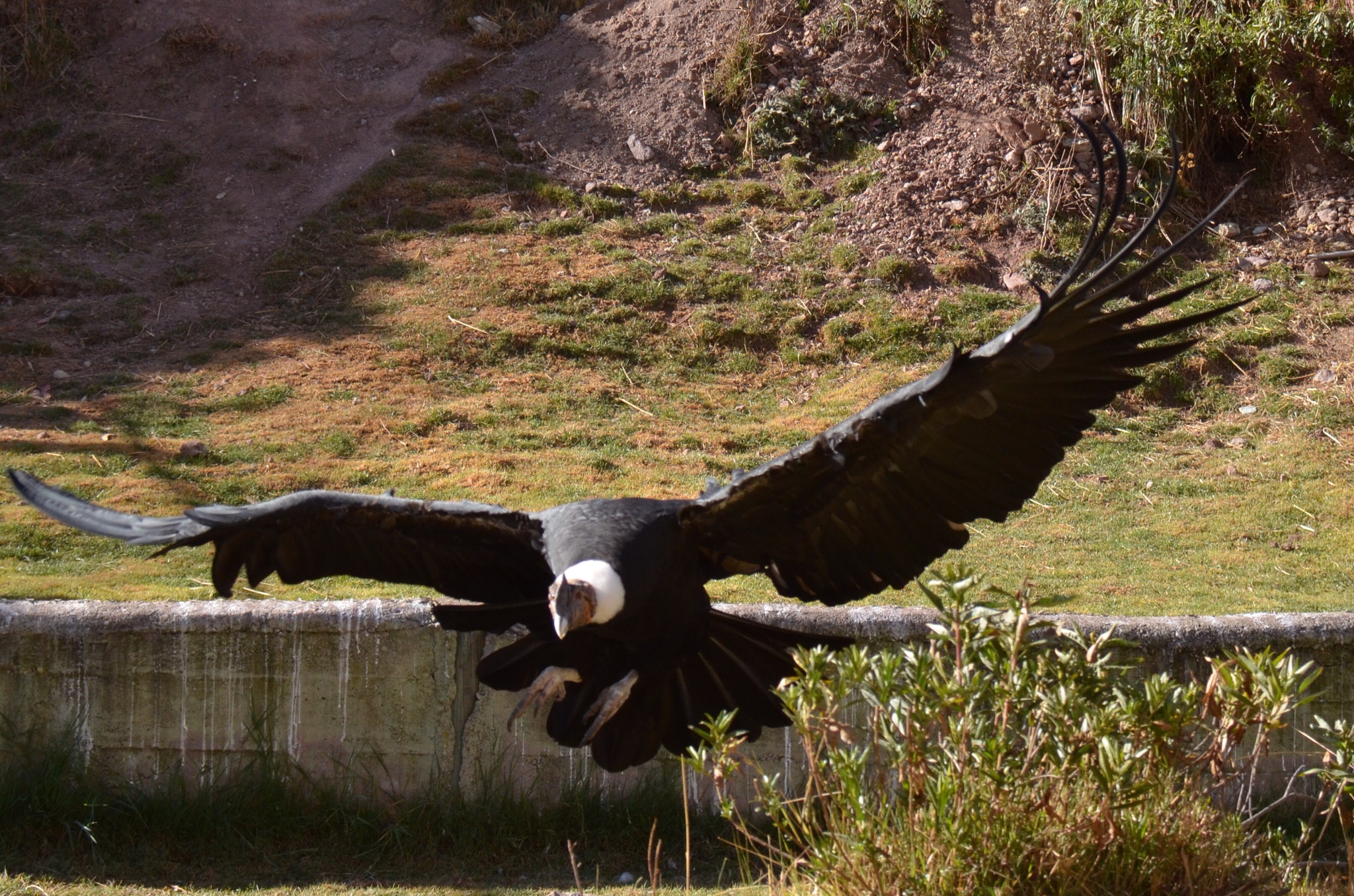
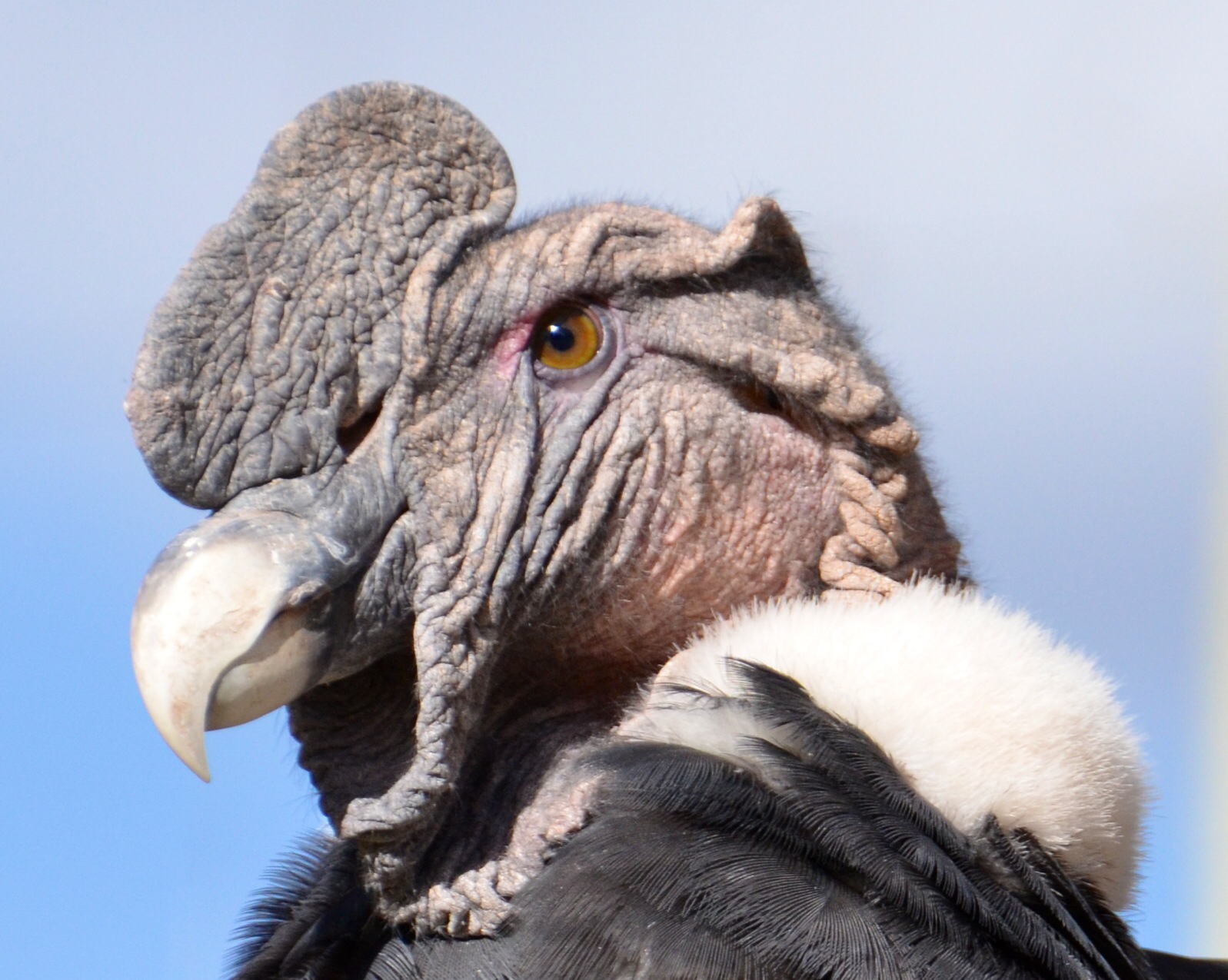
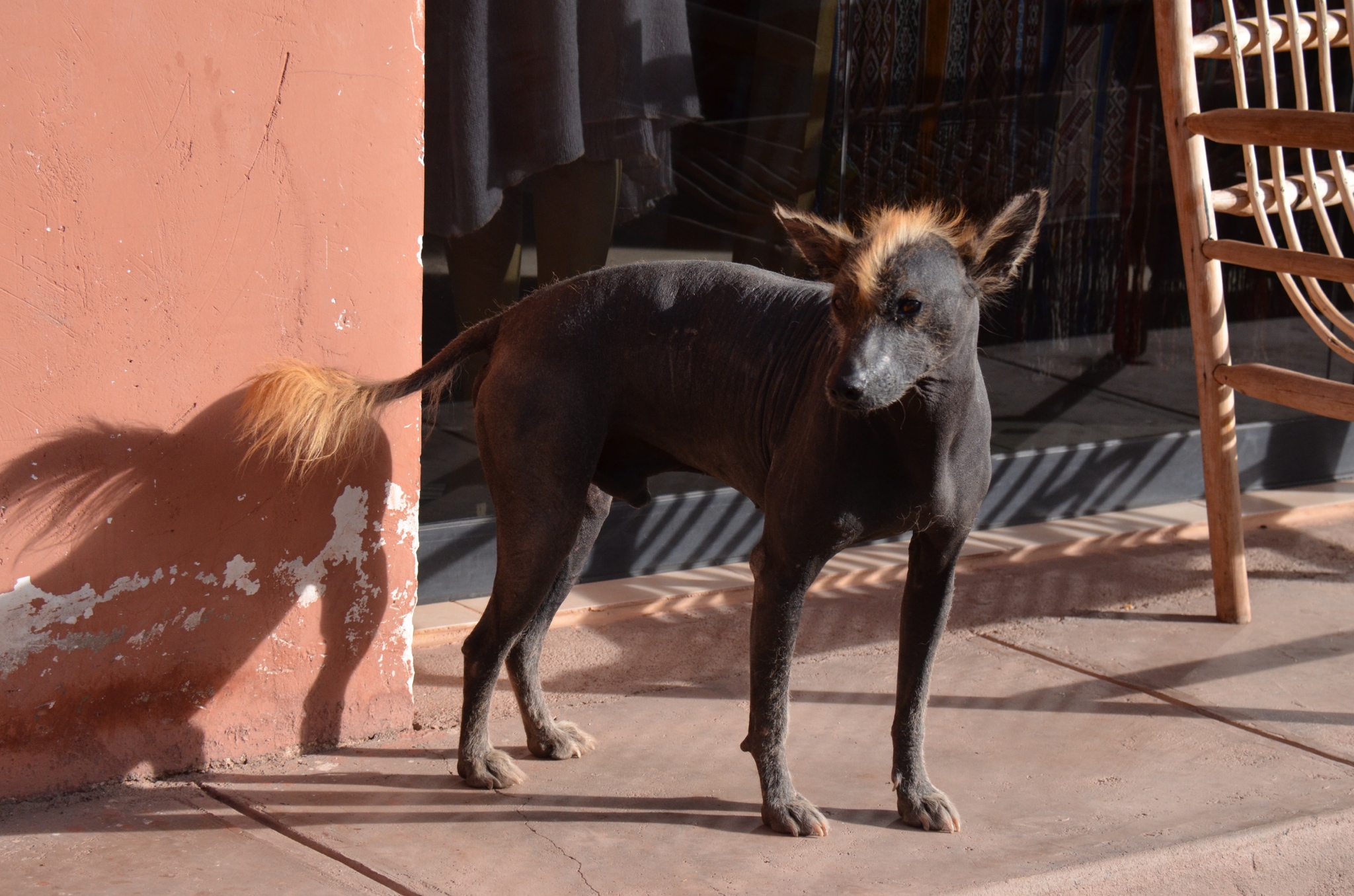
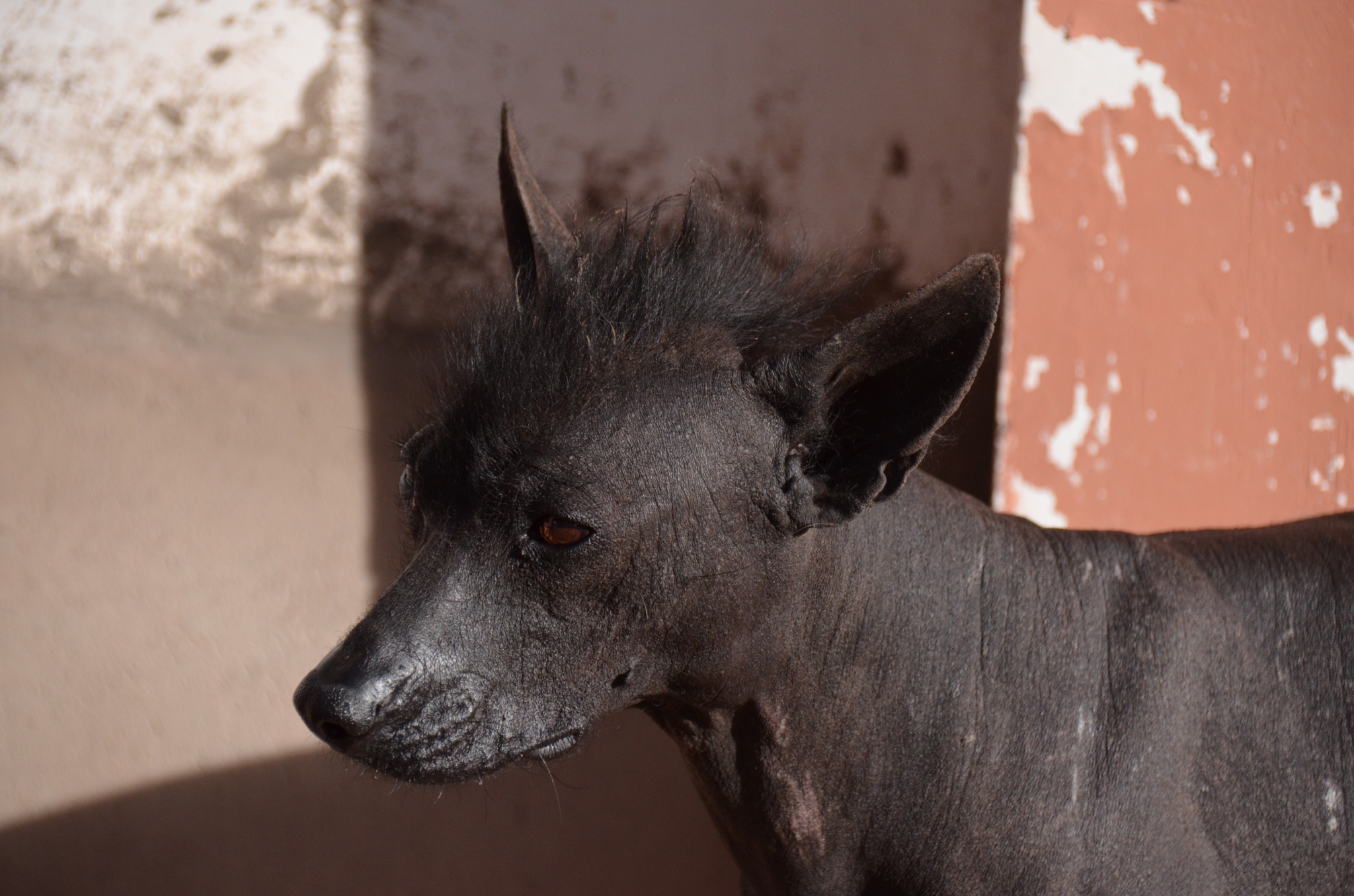
We visited a wildlife rescue and refuge operation at Awanacancha. We heard many sad stories but saw some awesome things too. We saw camelids (alpaca, llama), Peruvian mountain cat, puma, exotic birds, condors in flight, a Peruvian hairless dog.

The llama:


Behind the two exotic birds below, you can see one of the tubes that are used to smuggle them out of the country. Over 90 birds are stuffed into the tube, and at journey's end, only 9 or 10 are alive. The birds are endangered because of our desire to cage and possess them.
 
This mountain cat was the size of a house cat, but he was hissing like crazy at the puma in the next pen over.
 
The puma was rescued from a discoteque, where he provided amusement for patrons. He has been declawed and cannot be returned to the wild.


The condor was perhaps the most impressive. Several of them were at the refuge because they had been poisoned by native people. We received a flight demonstration. They went right over us, and the beating of their wings was clearly audible and a bit unnerving. The Andean condor's wingspan is 10.5 feet.


Genene was scared to get too close to them, but she posed for this picture on the outside of the pen, so that you can have some perspective on the size of these massive birds. You can also see that Genene has gotten a new stuffed animal, an alpaca made from alpaca wool. Genene has decided that the alpaca is a girl, but she does not have a name yet. Miss Alpaca is traveling in style and will fill Senior in on all that he missed.
 
This is some kind of raccoon-like animal. He was rescued from a home because people were trying to domesticate him, but just as raccoons do, he was getting into everything and eating the furniture so he had to go. My mom can probably relate, since she recently had to stop feeding her raccoons when one of them took up residence in the attic and began chewing the electrical wiring.
 
I thought the Peruvian hairless dog was quite fetching. I wonder if Spielburg saw him and got the idea for “Gremlins.”
 
 
An Andean woman and child were weaving at the site.


We were exhausted on the journey to our hotel in Yucay. Everyone except the driver fell asleep at one time or another.

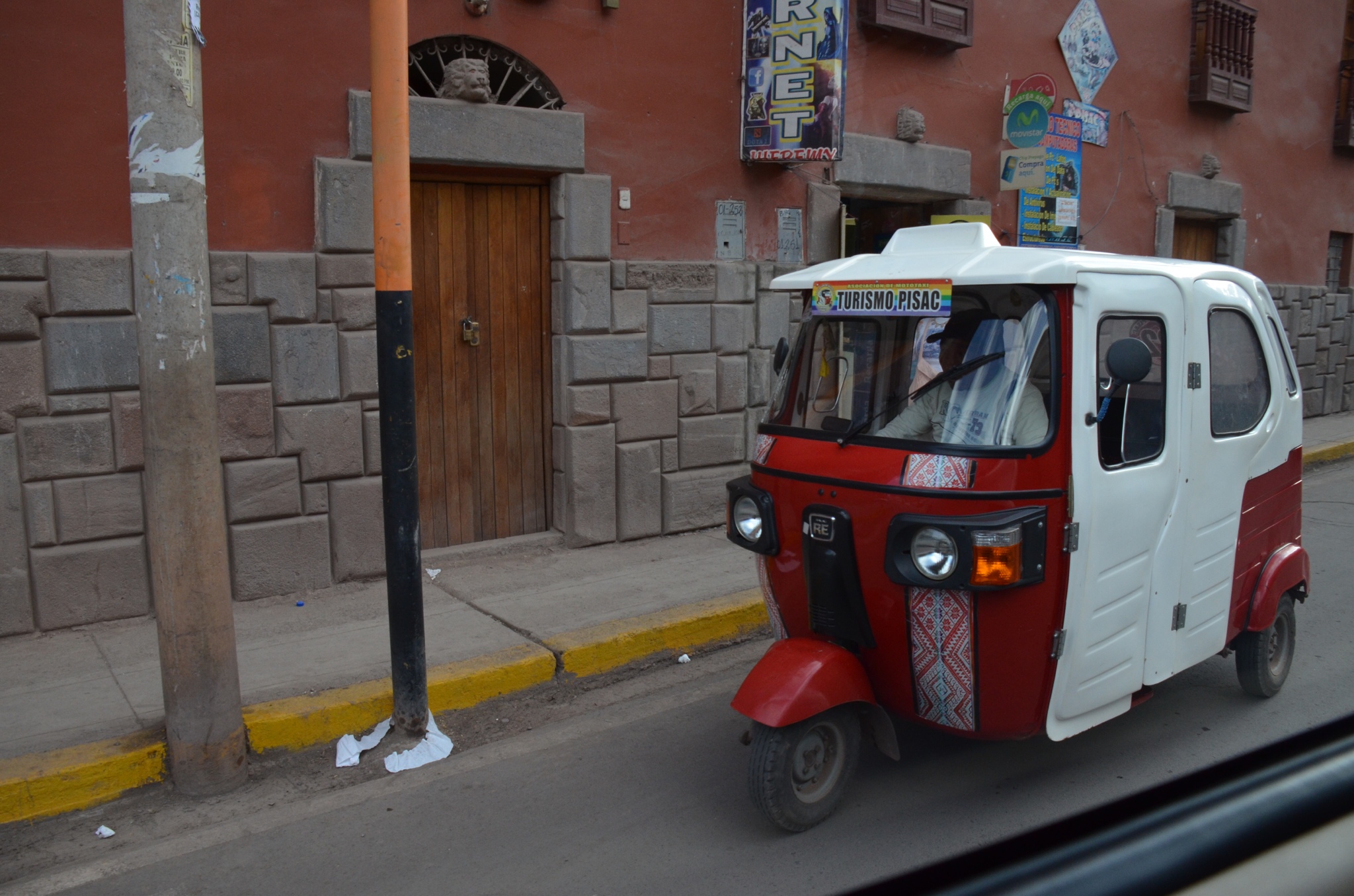
I want to ride in one of these:


Carlos helped us get checked in, and we spent much of the rest of the afternoon unpacking and getting organized. Carlos dropped off our gear bags for the Inca Trail, so we began sorting items to go into those bags. Trail porters will carry the gear we will need while on the trail. We will each carry a day pack. Another bag is going via train to Machu Picchu where it will be waiting at our hotel. Our suitcases will be waiting for us back down the mountain where we will be continue our vacation when the trail portion is over. Logistics loom large.

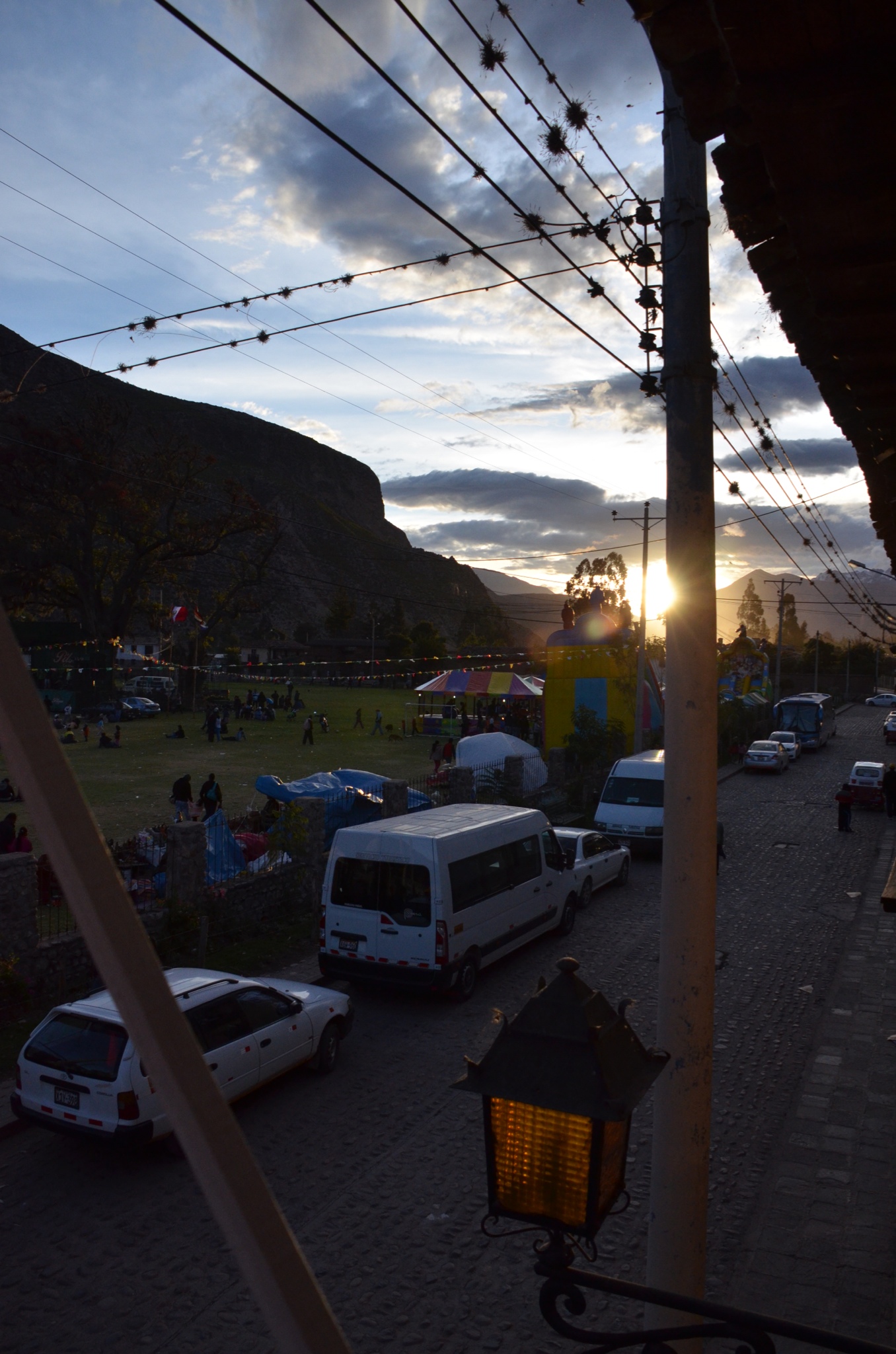
This is the view from our room. There is some kind of festival going on outside.


We had dinner at the hotel. We had ceviche and alpaca, beef and chicken on skewers with barbeque sauce. It was all delicious. For the main course, I had a tradition Peruvian chicken dish with potatoes and rice, while Greg had a fish dish. Genene went for comfort and had sausages and French fries. We are trying to stay hydrated, and alcohol is frowned upon while getting adjusted to altitude. Greg and I had one sociable beer apiece, while Genene had another Inca Cola.
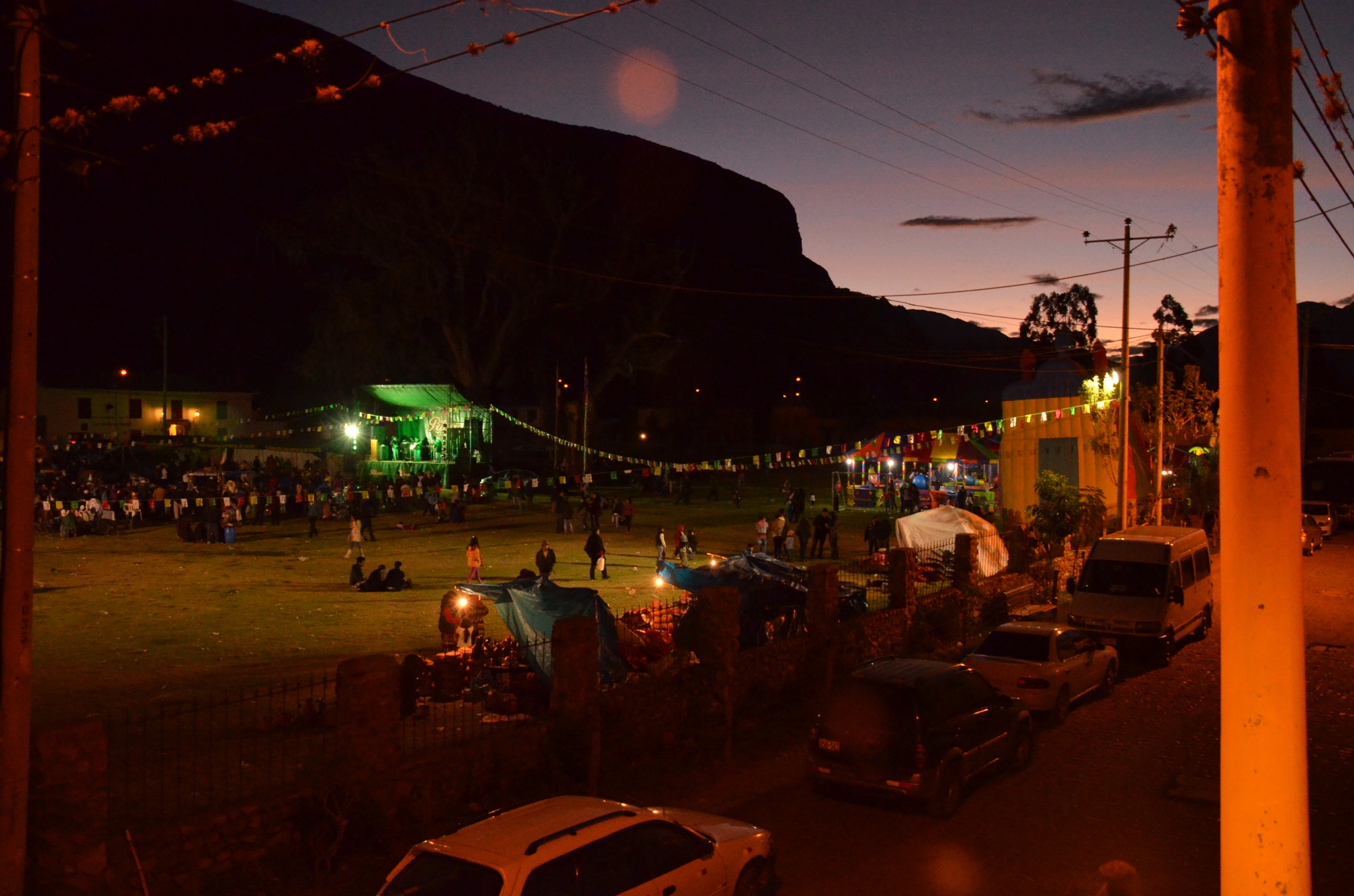
The festival is still going on.
 
I thought the festival was entertaining for a while, but now it is after midnight and they are still singing the same stupid songs, and I am ready for them to shut it down and go to bed. I swear one of the songs consisted of them yelling “sopapilla” over and over, or at least that's what it sounds like to me. I think I'm just getting hungry for my midnight snack. Greg and Genene are snoring away. I will try to join them in a bit.
We have a full day of touring tomorrow but at least we are starting at the reasonable hour of 9:30. I will feel like I am getting to sleep in!


African safari 2013: Part 11 and FINAL!

July 11, 2013

Our last “Jambo Jambo” was at 7:00 AM today. Our three families had breakfast together and left the camp for the last time at 8:30.

Greg and Genene shared a last look out on the eastern Serengeti, and even Senior wanted to take a peek:

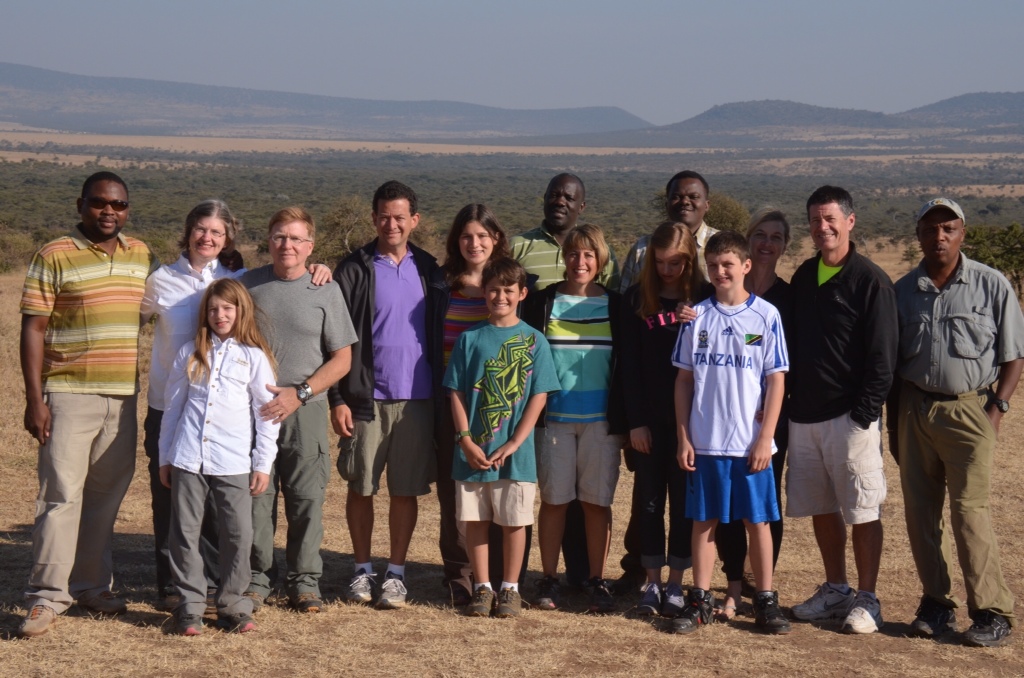
We took a group photo of the guides and families. From left to right they are Head Guide Hasheem, Lori, Genene, Greg, Scott, Ariel, Jordan, Mentor Tom, Jocelyn, Lindsay, Support Guide Simon, Connor, Sheryl, Jim, and Support Guide Harrison.

We left our camp area, and it seemed that all the Thomson gazelle were waving their tails in goodbye to us. We drove past Sukenya School and several boma. I wonder if we shall ever hear from Anjela again. We were taken to an airfield, and I am being generous to call it that. It was literally a grassy field. Our plane came flying in, and our pilot got out to prepare the plane. She looked like she was about 12 years old. We were all a little unnerved.

Our pilot (!) helping to load the bags:

Genene was pretty animated and kept saying, “We’re going to ride in that?”

Our pilot was from Spain. Though we were all dying to know, no one was rude enough to inquire about her age. Scott settled on a less offensive line of questioning and asked her how long she had been flying. She answered four years. Let’s hope that made her at least 22.

It was a 45 minute flight for us to get back to Arusha. Our guides Hasheem, Harrison and Simon were stuck with the job of getting the Rovers back to Arusha, so what would be an easy flight for us would be a seven-hour pounding trek down rough roads for them. We said our goodbyes, gave hugs and thanked them for showing us their beautiful country. Tom the mentor got to fly on the plane with us, and no one ever explained why he got to fly while the others drove. We asked, and the guides claimed that they didn’t know either. I sensed some jealousy.

We boarded the plane, bumped our way across the field and took flight. En route to Arusha, our pilot flew us over an active volcano. Ol Doinyo Lengai, or Mountain of God in the Maasai language, rises out of the Lake Natron area near Arusha. This volcano is unique among active volcanoes: whereas most lavas are rich in silicate minerals, the lava of Ol Doinyo Lengai is a carbonatite. It is rich in rare sodium and potassium carbonates. Due to this unusual composition, the lava erupts at relatively low temperatures. The temperature is so low that the molten lava appears black in sunlight, rather than having the red glow common to most lavas. The minerals of the lavas formed by Ol Doinyo Lengai are unstable at the Earth’s surface and susceptible to rapid weathering, quickly turning from black to grey in color. The resulting volcanic landscape is different from any other in the world…. or so says Wikipedia.

The Spaniard banked the plane over the rim hard and gave us a 360 degree look at the volcano:

 We arrived in Arusha at the local airport (not Kilimanjaro):
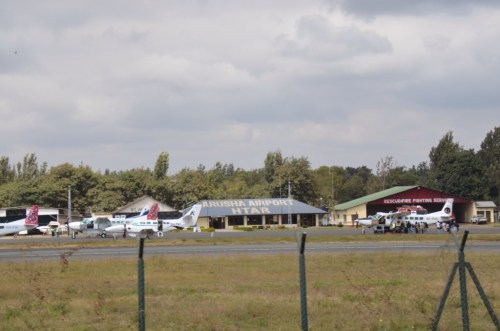
I kept thinking I might see John Wayne loading up some zoo animals. Alas, many favorite movie stars from my youth are dead.

We made a quick stop at an art gallery. Jim and Sheryl had admired the work of an artist whose paintings adorned the walls at Gibb’s Farm, and they had arranged to purchase some. It was a great stop for all of us. The gallery had many beautiful things. We had given ourselves a generous cash liquor budget for the trip, but most nights we were too tired to have more than a beer or a glass of wine at most. As a consequence, we had some cash burning a hole in our pocket. The gallery helped us out with this problem.

A typical street scene in Arusha:
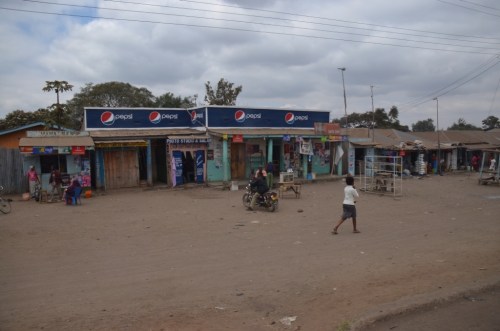
We made a final stop at the Cultural Heritage Center, the site of our first souvenir stop. Jocelyn and Scott found the beaded bowls that they wanted, at better prices than the Maasai would give them at the decision table in the middle of the field in the Serengeti.

We had our last lunch together as a group in Arusha at River House: we had delicious ginger and carrot soup, green beans, carrot salad, potato salad, chicken, fish and beef on the grill, African barbecue style. They also served a fried zucchini blossom that was delicate and delicious. For dessert we had chopped fruit and chocolate-covered coffee beans.

We said our goodbyes to Jim, Sheryl, Lindsay and Connor. They were leaving on different flights to go to Zanzibar, so we would not see them again after the lunch. Genene particularly enjoyed Connor, I think. They played together well and had a good time. All of the kids were patient with our youngster and treated her wonderfully.

Our flight from Arusha was not leaving until nighttime, so we were taken to a dayroom at the Mount Meru hotel. We took long hot showers, did final packing, had some snacks and waited for our ride to the airport.

Mount Meru as seen from our dayroom:

Our driver showed up promptly and took us to the airport. The shy mountain, Kilimanjaro, peeked out of the clouds for us en route, and I got this picture with my iPhone:

Genene says she wants to summit Kilimanjaro when she is 12. We reminded her that the guides had to carry her on a three-mile walk. She is undeterred. She says she will practice and get ready. Our driver was proud of her for saying so and said to call him back when she was ready. He had summited four times and said it was something never to be forgotten. Of the seven peaks (the tallest mountains on each continent), Kili is said to be one of the more accessible for an ordinary person. You have to have rocks in your head to try Everest, but Kili can be done by young and old. It does not take special climbing skills or equipment to summit. It just takes time. Our driver told us that people in their 30s in great shape usually have the most trouble climbing Kili because they take it too fast. He said the key was to go slow to get to the top. Taking your time gives your body a chance to adjust to altitude. Given Genene’s pokey walk, I think she’s got a shot. We met a family from Boston at the first Serengeti nyumba. They had all summited Kilimanjaro earlier that week and were relaxing at fireside. The father told me that both his sons, 14 and 18, had made it, but it was difficult for him as a father to watch his younger son suffer. The boy got headaches at altitude, and apparently it was pretty rough going. He counseled me to get Genene to wait as long as possible. Another friend of mine from the states said, “Don’t wait too long. The snows are disappearing from Kilimanjaro, and she should see that.” Who knows? I know we will be back. I don’t know when.

We got to Kilimanjaro International Airport with plenty of time, and exiting the country was a little more organized than entry. Jocelyn, Scott, Ariel and Jordan were taking our flight as far as Amsterdam, so we visited with them a little longer. We also ran into Andy and Mary Jane, the older couple we met at the post-balloon flight breakfast. That was a treat, and we got to ask them how the rest of their safari had gone and get all the details of their travels. People become fast friends in the bush.

Our plane loaded almost on time, and we said our goodbyes to Arusha. Genene complained that she was not going to be able to sleep on the flight and then passed out in mid-sentence. I was not far behind her. For a change, Greg was our light sleeper and stayed up reading. The plane stopped in the Tanzanian capital, Dar es Salaam, and dropped off a ton of people and picked up a corresponding ton. I was a bit annoyed because I had already gotten into a deep sleep, and it seemed to take forever to unload and reload the plane. Soon everyone was aboard, and we left African soil….for now.  I went back to sleep and slept through the night.

July 12, 2013

We arrived in Amsterdam at 6:30 AM. I told Greg we were going to be strategic in our maneuvers. Usually we cannot wait to hit the restrooms when we get off the plane, and that’s always a mistake. The entire plane unloads, and everyone gets ahead of you in the passport control line. I told him we could potty later; let’s HIT the line. We had the seats with the extra legroom, which are close to the front of the plane, so we were first off after the first class customers. We raced through the Amsterdam airport like O.J. Simpson (without the bloody gloves and knife) and got to the line with about six people ahead of us. The Netherlands is a supremely civilized place, requiring absolutely NO paperwork to enter their country. The guy at the booth asked us what we were going to do in Amsterdam, and Greg replied, “Drink Heineken.” The man gave us a cross look and said, “Just Heineken? We have many good beers here.” He made some suggestions, stamped our passports and sent us through. We walked to baggage claim, and our bags literally popped off the conveyor belt. We had nothing to declare to customs, so we went outside and found a cab.

We enjoy striking up a conversation with the cab drivers, if the language barriers are not insurmountable. The drivers are typically immigrants themselves and can teach you things about a new city that you can’t get from a guidebook. Our driver was from Afghanistan and spoke Dutch, English, Persian and Indian. He had lived in Amsterdam for 16 years and goes back to his home country once a year. There are so many stories everywhere.

Remarkably, we were at our hotel in the heart of old Amsterdam by 7:30 AM. Our room was not ready, but the hotel breakfast was. We sat down gratefully and had the longest breakfast I have ever had. I did not want to get up. The coffee machine made individual cups to order (cappuccino, espresso, cafe au lait, Americano, etc). The continental breakfast was absolutely delightful, reminiscent of those we have had in France or Italy. After 12 nights in Africa and a long overnight plane ride, it was heavenly to drink out of the bone china and listen to the happy gurgling sounds of the espresso machine.

We stowed our bags, washed our faces in the downstairs bathroom at the hotel and headed out onto the morning streets of Amsterdam. We ambled down toward the Central Train Station and took a canal tour. Years ago, my law partner and friend Jim Murdaugh advised me that upon arrival in any new city, we should look for a boat tour. Most important cities are important because they are on a river or a seaport or some other body of water, and the tours are a good way of getting oriented. Jim’s advice is sound.

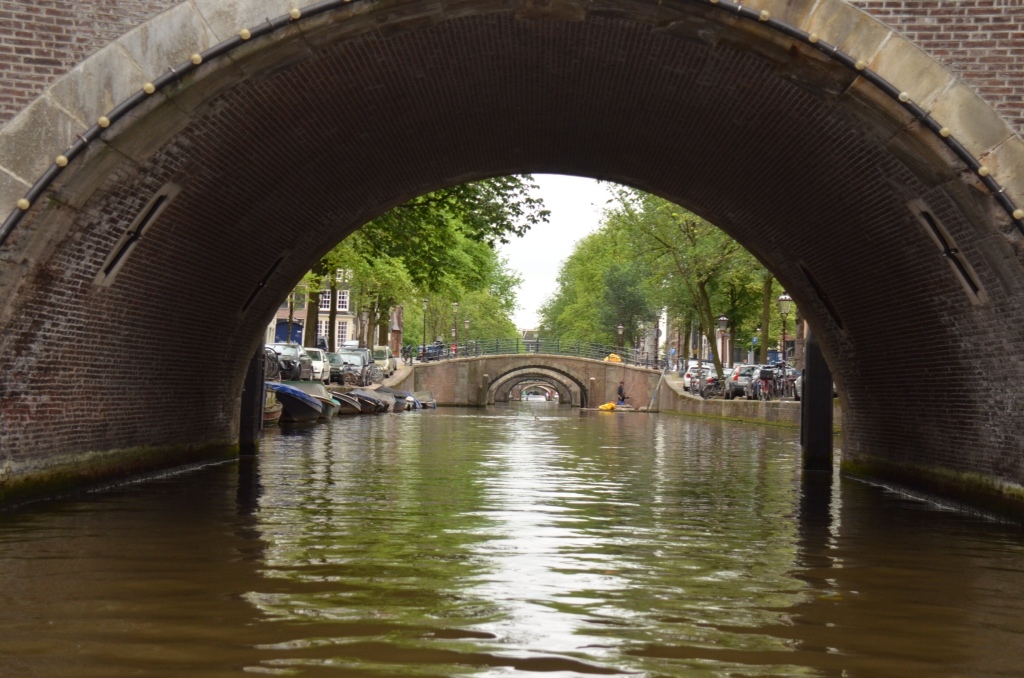
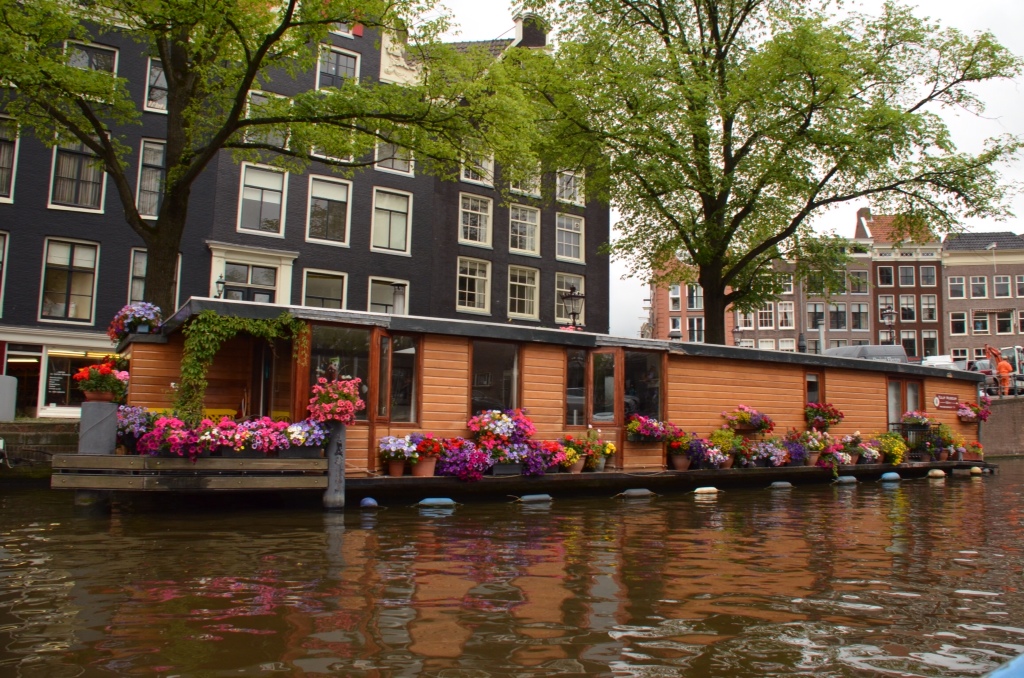
Amsterdam has a series of ringed canals, and our boat captain deftly moved us through many of them. It was relaxing just to float along and see all the beautiful buildings and boats passing by.

The cruise took about an hour and gave us a good lay of the land. We found Amsterdam much easier to navigate than, say, Rome. The Roman streets are like spaghetti in a bowl. Amsterdam, with its perfectly ringed canals and streets along both sides of them, was much easier to comprehend for me.

After the tour, we walked back up to our hotel and found to our delight that the room would be ready in a few minutes. We had a delicious lunch at a nearby sandwich shop and came back to gather our gear. We took our things upstairs, unpacked a few items, showered and hit the streets again.

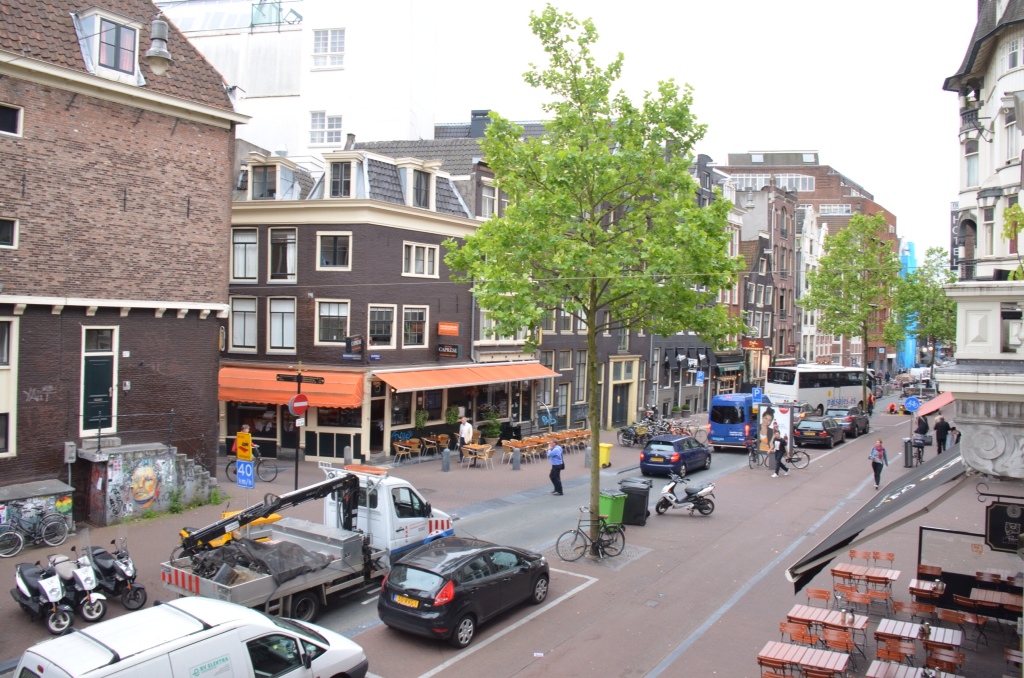
This is the view of the street from our hotel room:
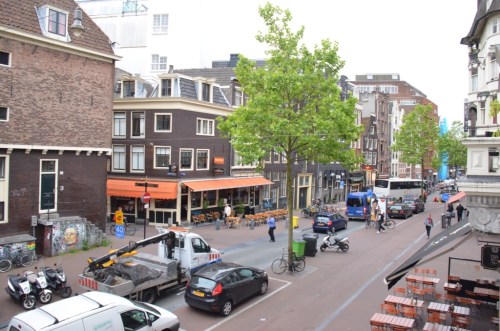
The view looking the other direction:

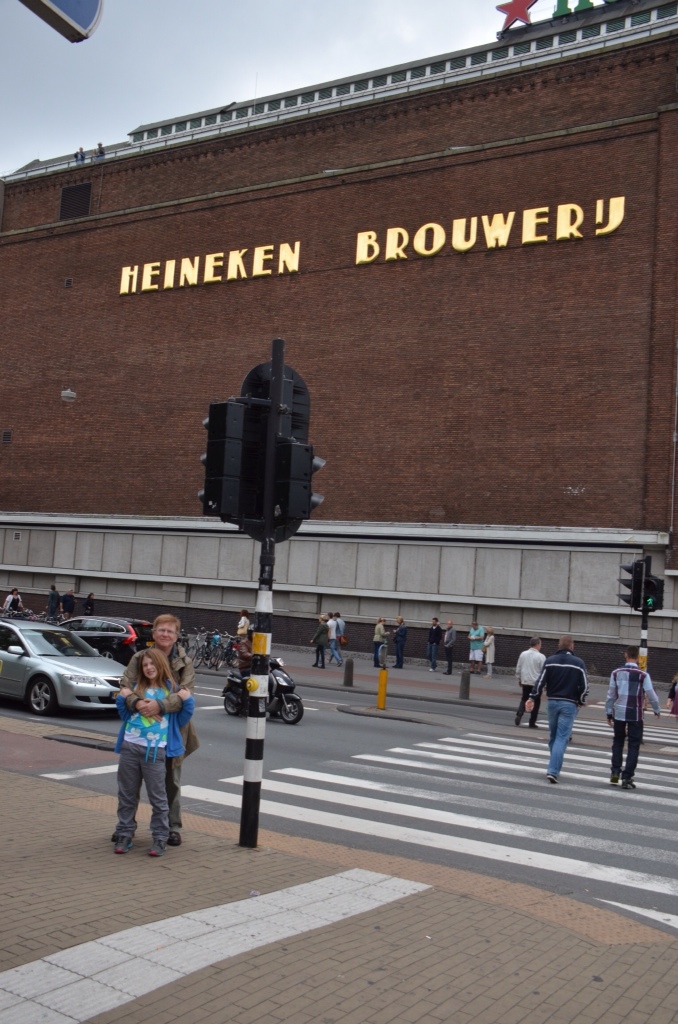
We decided to walk down to check out the “Heineken Experience,” a building devoted to the brewing of the famous Dutch beer. It was about a 20 to 30 minute walk, and I took some photos of the canals along the way. Here is one of the better ones (I did not like the light at this time of day; I’m getting to be picky with my photography):


Greg and Genene were interested in the Heineken attraction. To me, beer is beer is beer. To Greg, the connoisseur, such talk is blasphemy. Beer is as different as night and day in his world: pilsners, ales, stouts, IPAs. The man loves his brew. Genene does not like beer, but she likes her daddy. Also, she had a really good time at the Guinness brewery in Dublin and wanted to make comparisons…..so off we went.

We enjoyed ourselves at Heineken, but the experience did not measure up to Guinness. The Irish have it right. Heineken’s exhibits had this forced feeling of party and fun. It was loud and a bit on the obnoxious side. Also, it went on a little long. Guinness was more sedate in their presentation; less cute, more facts. Genene made a hit, as usual, by paying attention and answering all the questions right. The guys behind the counter told her she deserved a reward for being so attentive, but all they could give her was a cool glass of water. She was fine with that. They gave us our free beer at the end, just had Guinness had done. At Guinness, we were at the top of a building with glass on all sides, giving a stunning view of Dublin. At Heineken, we were in a darkened room with a disco ball and TVs blaring adverts for Heineken. The floor was sticky. Dublin 1, Amsterdam 0.

We passed by a playground on the way back and gave Genene a chance to blow off steam:

The afternoon light was a little better, and I got this fair shot of one of the canals:

We strolled back to “our” neighborhood and dined at an Italian restaurant. The food was good, but the service was very leisurely and we were pretty exhausted. We went back to our room and discovered that it was directly over a “coffee shop.” As most stoners know, marijuana is legal in Amsterdam and is smoked or eaten in space cakes in these shops. The smell of pot filled the air and wafted up through the open window into our room. I wondered if I might get a contact high, but I was too tired. The streets were loud. The days are long and the sun stays out until well after 9:00 PM. Amsterdam comes alive in the evening, and people stay up late walking the streets, laughing and talking. We did not care. We were exhausted and slept hard.

July 13, 2013

This is our first trip to Amsterdam, and our main purpose was to break up the return trip from Africa and get a taste of the city. Our only “must-see” agenda item was the Anne Frank House. Unfortunately, we had a laser-keen focus on the safari but had not paid much attention to our itinerary in Amsterdam. We did not have tickets to the Anne Frank museum, and we began to wonder whether this would be a problem. Many people who go on safari take an Amsterdam break before or after, so we had talked to several people along the way who had already been. Their first question was invariably: Do you have tickets? When we would reply no, they would tsk-tsk, wince and shake their heads slowly. We even tried to get tickets when we had wifi in Africa, but a printer was required and so we gave up.

Our concierge at the hotel suggested that we would be okay if we got up early and hit the line before the museum opened. We took her advice and got there by 8:15 before it was to open at 9:00. We were so lucky. There could not have been more than 40 people in front of us. Even better, the museum opened early at 8:45 so we got in before the people who had bought tickets on-line.

We had been reading the diary together as a family. I read it many years ago, as had Greg, but we did not want Genene to read it alone. We only got about 1/3 of the way through before we left for safari. We took the diary with us under the foolish misconception that we would have some time every evening in the tent to read. We had been so exhausted every night that we never dug the book out of our bag. Before going to the exhibit, I asked Genene if she wanted to know how the story ended. She said that she did. Then I asked her to tell me how she thought it would end. She said, “Well, I think that they get captured and that they die.” I was proud and sad at the same time. Even a year ago, I think that Genene would have expected the “happy ending.” It was a revelation to me that she is growing up and beginning to realize that not everything works out the way it should.

Touring the house is an incredibly moving experience. I cannot recommend it highly enough. We walked where they walked. We stepped through the passageway behind the moveable bookcase and into the Secret Annexe. Photographs were not allowed, so my words will have to suffice.

We walked through the rooms where the eight people lived in hiding for more than two years before being betrayed by persons unknown. They were sent to various concentration camps where all except Anne’s father, Otto Frank, perished. The details of their two-year ordeal are well-known to everyone, but it really made an impression upon me to walk through those rooms and think about having to stay there, essentially imprisoned, living in fear. And all for naught. In the end, they perished anyway. In particular, I was struck by the story about how quiet they had to be during the day while work was going on downstairs in the warehouse. They were not even allowed to run water or flush the toilet all day, for fear of making a telltale sound. Just imagine having one toilet for 8 people that could not be flushed all day. It had to be less than ideal. It’s those little details that stick with you when you move through the house. The windows were shaded so that no light would come in or be seen from outside. The darkness….

Anne’s words: “I long to ride a bike, dance, whistle, look at the world, feel young and know that I’m free.”

One display that resonated with me was a two-minute video of Otto Frank discussing the diary. He said that he knew of its existence and knew that Anne wrote in it, but he had promised her never to look, and so he did not. After the war, when he returned and found out that his family had all died, Miep Gies, one of their helpers, gave him the diary. He was astounded by its contents. He had no idea that his daughter had such “deep thoughts” or such self-criticism. He said that this was not the Anne he knew. In the end, he was left wondering if any parent ever truly knows his or her child.

I was also struck by the fact that the diary is clearly something that Anne worked on, as author would work on a book. It began as a journal, in which she chronicled the boys she liked, activities at school (before the family went into hiding), and other mundane details of being a young teenager. As the family stayed in what was essentially captivity for more than two years, she rewrote major portions of the diary. She had heard a radio program in which Jews were asked to chronicle their experiences, and she took this charge seriously and went to work. The diary is no accident. In my opinion, it is the determined and inspired work of a young genius whose voice was extinguished far too soon.

On July 15, 1944, Anne wrote: “It’s twice as hard for us young people to hold on to our opinions at a time when ideals are being shattered and destroyed, when the worst side of human nature predominates, when everyone has come to doubt truth, justice and God….It’s difficult in times like these: ideals, dreams and cherished hopes rise within us, only to be crushed by grim reality. It’s a wonder I haven’t abandoned all my ideals, they seem so absurd and impractical. Yet I cling to them because I still believe, in spite of everything, that people are truly good at heart. It’s utterly impossible for me to build my life on a foundation of chaos, suffering and death. I see the world being slowly transformed into a wilderness. I hear the approaching thunder that, one day, will destroy us too, I feel the suffering of millions. And yet, when I look up at the sky, I somehow feel that everything will change for the better, that this cruelty too will soon end, that peace and tranquility will return once more. In the meantime, I must hold on to my ideals. Perhaps the day will come when I’ll be able to realize them!”

Less than three weeks later, the police raided the Secret Annexe. Anne died of typhus at Bergen-Belsen concentration camp in March of 1945.

There was an interesting exhibit at the end of the Anne Frank tour. Museum attendees were given little vignettes or scenarios and asked to vote. For instance, in one of the scenarios, we were told about an extreme political party in a European country, whose platform focuses on discrimination against non-natives of the country. Should the party be banned? The questions were difficult ones in my mind, balancing free speech rights against human rights and hate speech. It was thought-provoking, and Genene enjoyed getting to express her opinion by voting.

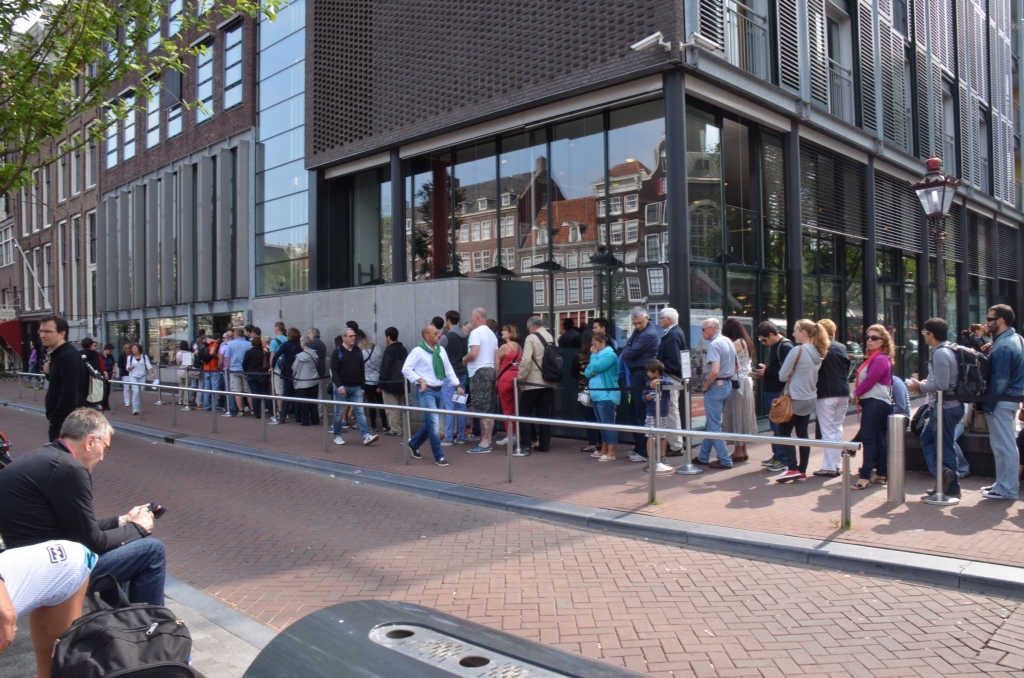
We left the museum, and this was the line at the door:

 And around the corner:
 

And back down the block:
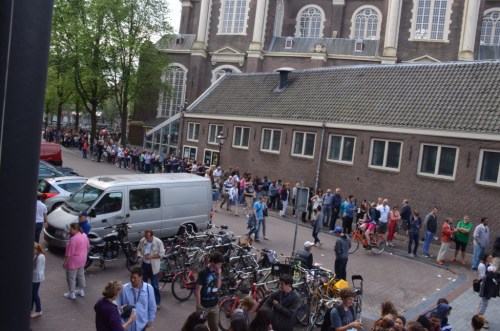
And around the plaza!
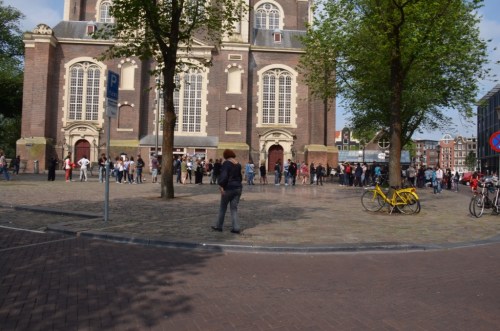
We were grateful that we got there early!

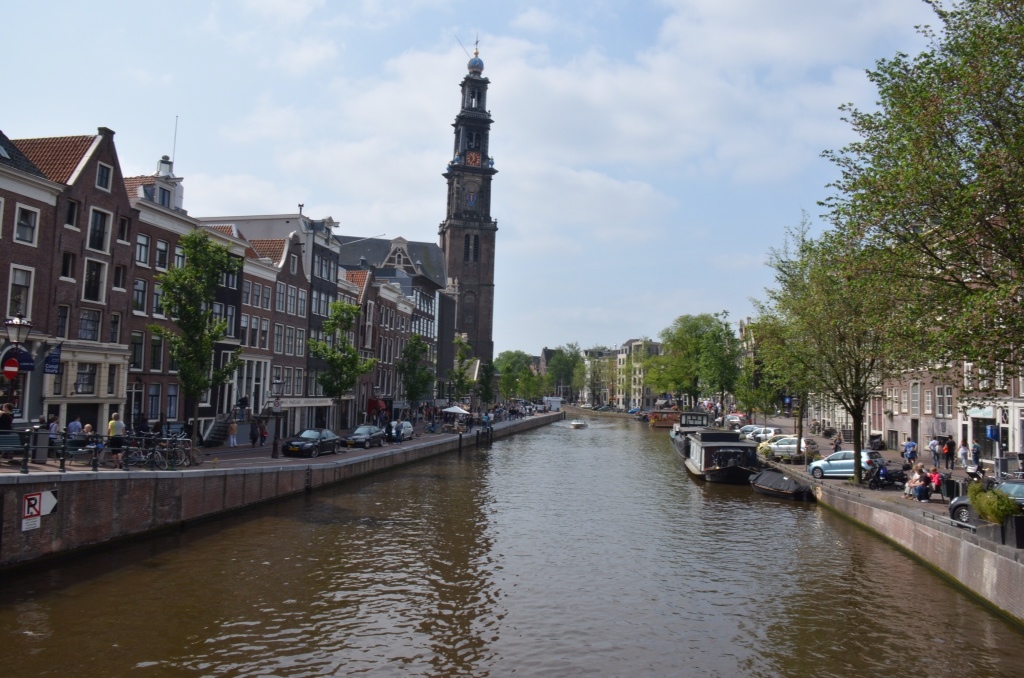
We strolled around the city. We tried the traditional pickled herring at an outdoor stand in the shadow of Westerkerk Church.

A pigeon enjoys the water fountain at Westerkerk:

We went inside Westerkerk, and Genene lit a candle for her grandfather.

We strolled aimlessly around the city. Amsterdam is a good place to do that, but you must be careful: the bike riders will run you down!
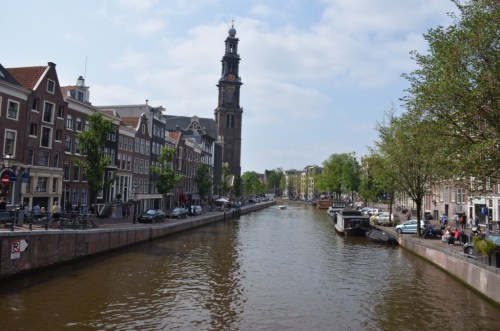
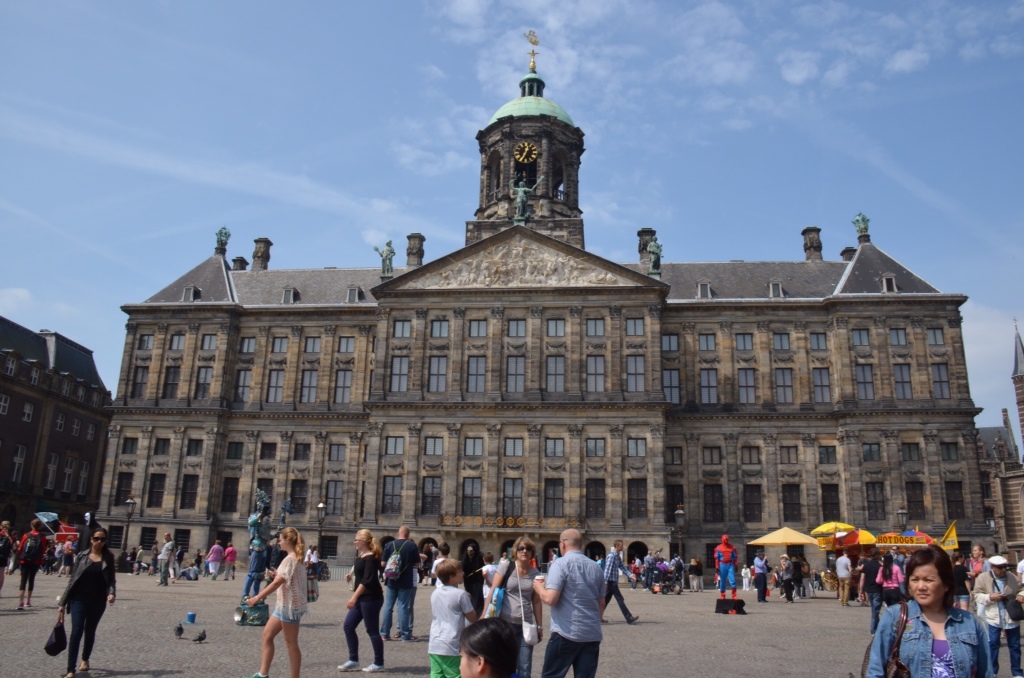
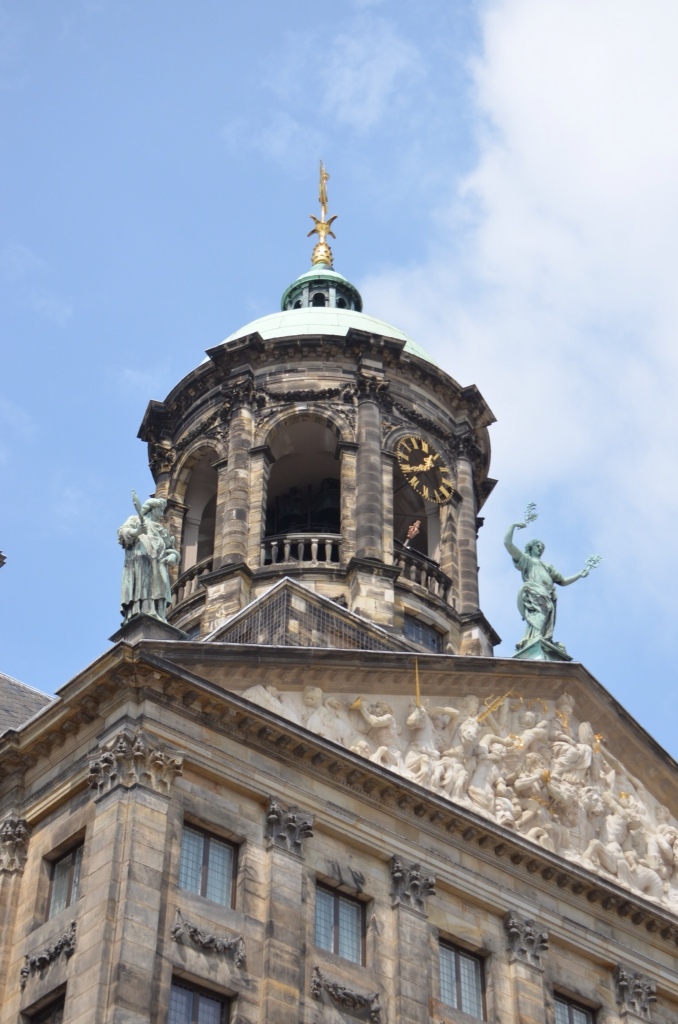
We went to the Royal Palace, where all the usual spectacles were going on: people in the plaza dressed like statues, superheroes, and jugglers.
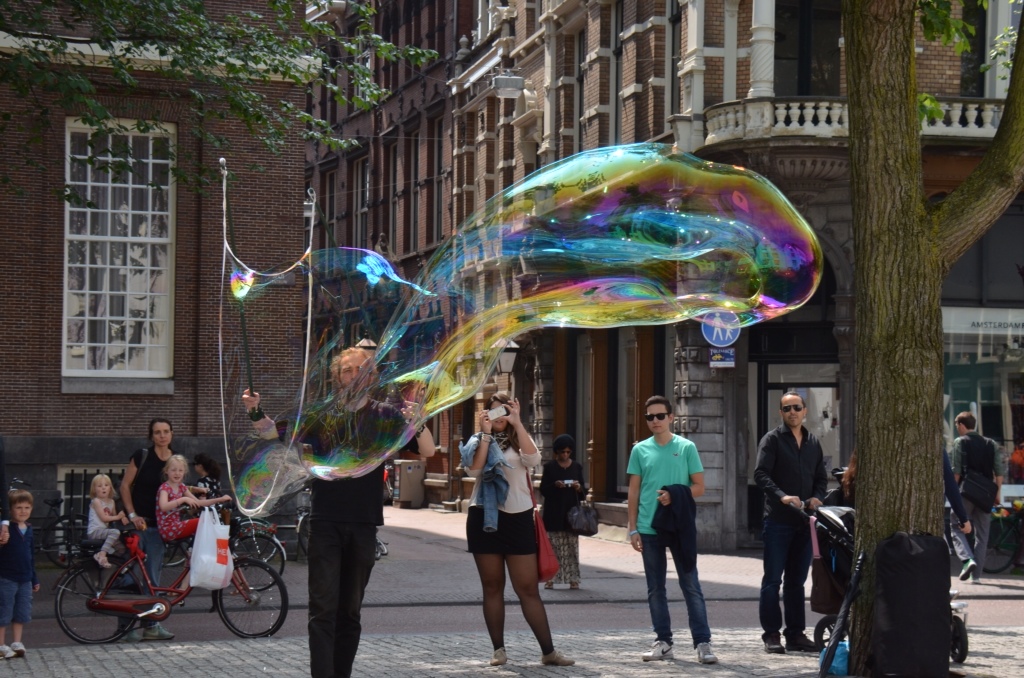
Around the corner, a man delighted the kids by blowing giant balloons:
On the recommendation of a barmaid (we stopped for a libation), we had lunch at a place called Kantjil en de Tijger. Greg wanted to try the Indonesian rice table, Rijsttafel, and it was delightful. We were served many small servings of Indonesian food, most of it bathed in delicious sweet peanut sauces.
 
We waddled back to our hotel for an afternoon nap.
 
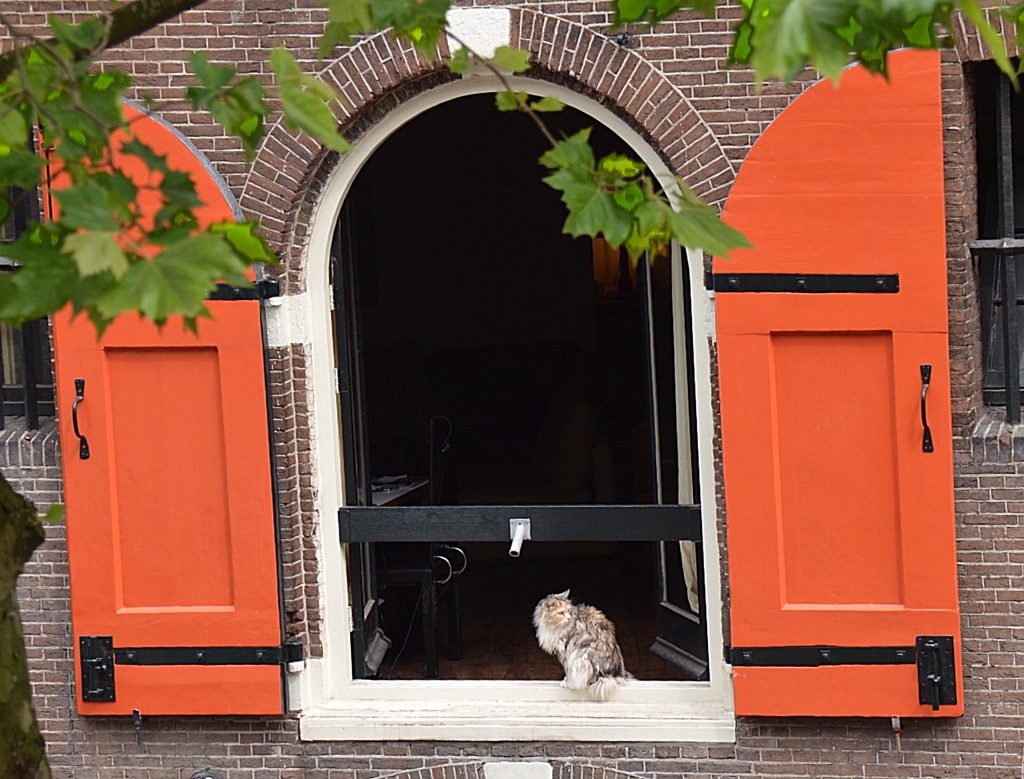
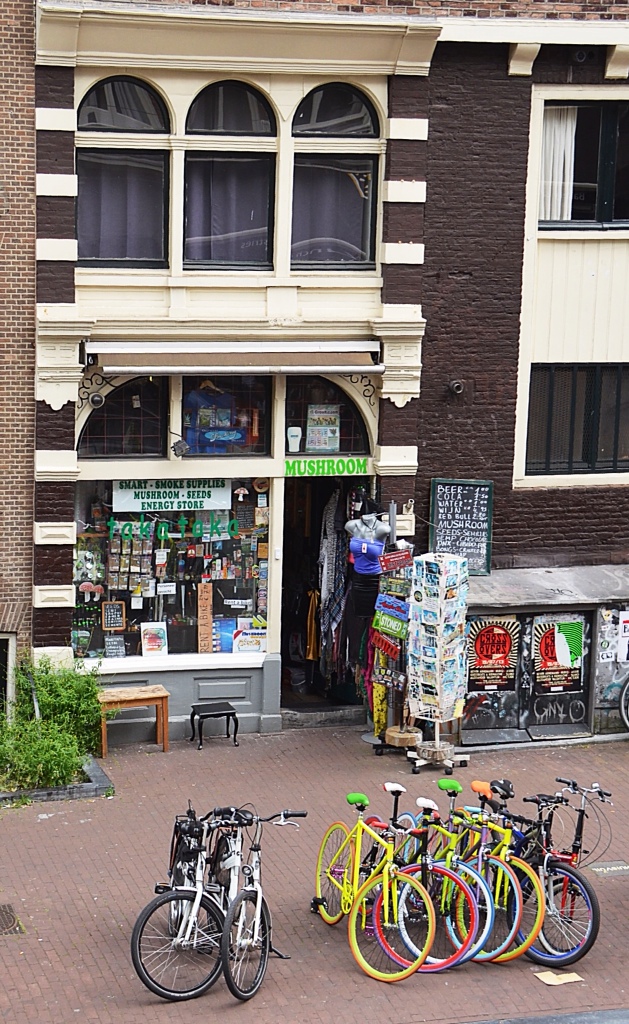
Along the way, I got this fun shot of a big kitty in the window of a nearby building:
 

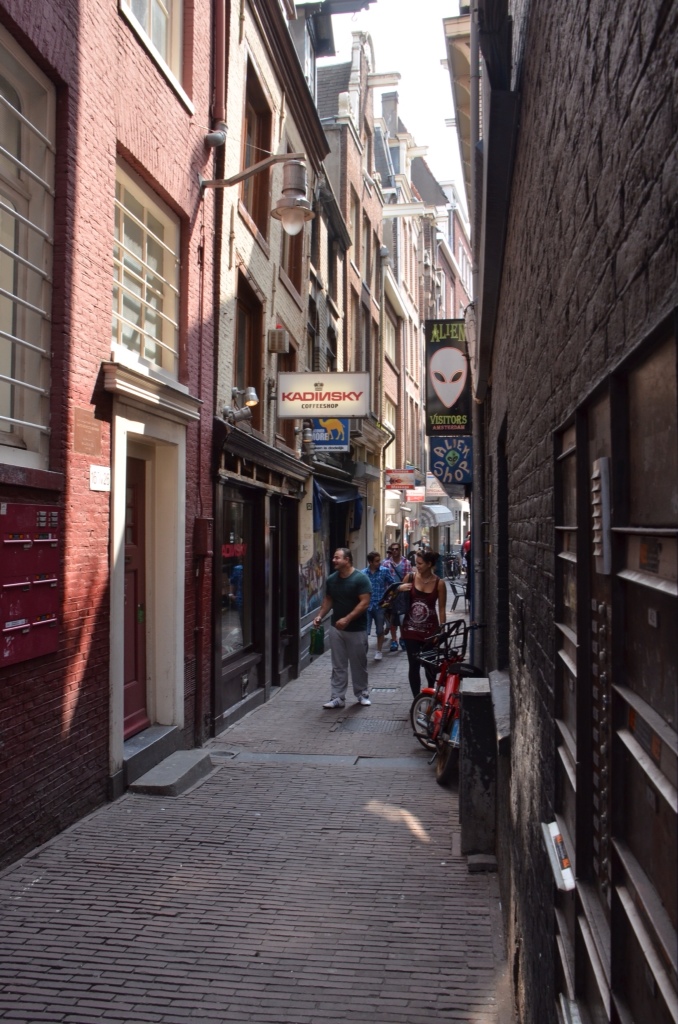
Would you like to have some magic mushrooms and ride the psychedelic bikes?

We awoke late in the day and strolled to a local pub for a beer. We struck up a conversation with an Amsterdam man, and he steered us to a place called Oesterbar for dinner. It was a highlight of Amsterdam. It was one of those places that flies in fresh oysters twice a day. We selected a half-dozen on the half-shell from Vendée, on the west side of France. They were salty and delicious. We followed it up with eel, shrimp and smoked salmon appetizers. Genene had gamberoni (giant shrimp) with fries. Greg had mussels and cream, and I had a black pasta with fresh tuna. We ordered a simple dessert, but I guess we must have been good clients, because they brought a tray of desserts. We made hogs of ourselves and then happily waddled back to our hotel.

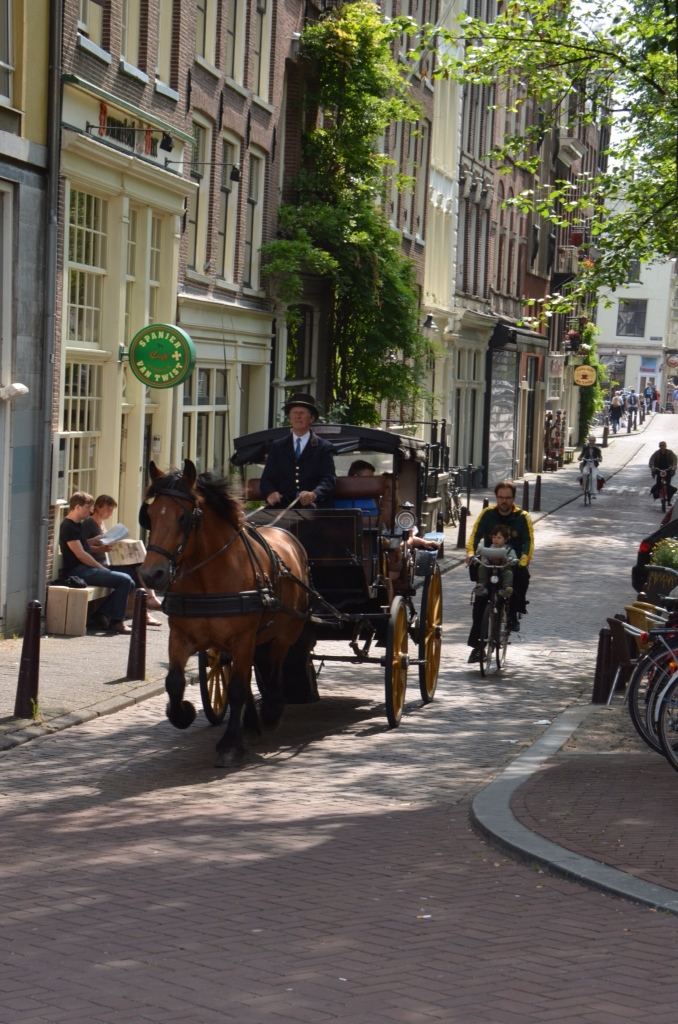
Apparently Saturday night is the big horse and carriage night in our neighborhood, and they all lined up for some kind of parade. I have never seen so many at once: there must have been over a hundred carriages and for several minutes, all we could hear was the clop-clop of hooves on the street. We were tired and not tempted to go down, but it was pleasant to lean out the window and watch them go by. We enjoyed the last whiffs of pot coming up from downstairs and went to bed.

July 14, 2013

Our cabbie arrived on time to whisk us to the airport. He was Turkish and told us that he liked Amsterdam and had lived there for 35 years, but Istanbul was the greatest city on earth. We will have to add it to our list.

Our flight was uneventful, though I was a little concerned when we returned to Houston. US Customs uses dogs to sniff out contraband, and their little beagle stopped a LONG time to sniff our bags. I was afraid that he was getting a whiff of some of that Amsterdam ganja weed, but in the end, he walked on. I was later told that the beagles are mainly used to sniff out fruits, vegetables and seeds that people try to smuggle into the country. Who knows what the little guy got a sniff of?

We arrived home Sunday afternoon, exhausted and glad to be back. Vacations are fun, but it is good to sleep in your own bed. Our home remodeling project was in full flower, and the downstairs was essentially demolished. We had no washer and dryer, which makes cleaning up after a safari pretty challenging. We did not even have hot water on Sunday, but the contractor sent someone over to light the water heater pilots so that we could at least get a shower. It’s going to be an interesting process.

PARTING THOUGHTS:

I have so many things left to say. (I know that everyone finds that difficult to believe, given the volume of what I have written already.) At the end of each day, I was just too tired to tell all the stories and jokes. Greg and Genene have reminded me of a few odds and ends that slipped through the cracks along the way.

We have finished taking our anti-malarial medicines, and Houston life is returning to normal. Many people experience vivid dreams while taking the drugs, but I just experienced my usual sleep disruptions. Greg, on the other hand, got the promised dreams. On our first night at the Tarangire nyumba, he dreamed that he was some kind of FBI agent and was being chased by an ax-wielding bad guy. He was fending the guy off, and he woke up and found that he was holding the bedside lampshade by its gooseneck. We laughed and laughed at him about that, but I was secretly grateful that I didn’t wake up to find his hands around my throat.

Our African guides were cognizant of the differences in our cultures and experiences. Most of them have been sent to America by Thomson Safaris, so that they will have a frame of reference with which to deal with their clientele. We would drive down the rough, almost non-existent roads, and Simon would say, “We are now heading down the Serengeti Freeway.” He also referred to our bumpy rides in the Rover as “African massages.”

Cultural differences were not limited to us versus the Africans. One morning, Greg was salting some watermelon, and the other guests–all from Seattle–just about came unglued. Not one of them had ever seen someone salt a watermelon. All my Razorback friends know that Hope, Arkansas grows the best melons in the world, and everyone I know tosses a little salt on top to get that yin yang, salty-sweet effect. I guess that must be a southern thing, because the folks from the Pacific Northwest were having none of it.

I keep thinking about the many needs of the people in Tanzania. A working water well seems to be a luxury in many parts of the country. Near the Sukenya School, I saw an out-of-service well. Simon explained that it had not worked in many months, and they were hoping to gather up the money to get someone out to work on it. In my job, I talk about water wells on almost a daily basis. They break, and my water district clients fix them and put them back into service. I wished that I could beam my friend Mark Ivy to the spot of the broken well. I figure he would have it up and running in a few hours. There is so much to be done.

We talked with Simon candidly about how to help, and he told us that government corruption was a big problem, even in a relatively stable democratic republic like Tanzania. Money or items sent for aid frequently disappear before getting to their destination. I asked him how I could help, and he counseled that it was best to help locally, whenever possible. Get to know someone at a school, and contribute to the school’s needs. Perhaps I can focus on Sukenya School. Again, Anne Frank’s words: “How wonderful it is that no one need wait a single moment before starting to improve the world.”

Tanzania was a magical place. The animals roam free, and a thousand dramas–large and small–unfold daily on the merciless brown plain of the Serengeti. The people live in relative harmony, in spite of tribal and religious differences. The land goes on forever.

Going on the safari was a dream come true for me. I spent my childhood watching Marlin Perkins wrestle crocodiles every Sunday night on “Mutual of Omaha’s Wild Kingdom.” I am certain that we will go back. I want to see the Serengeti in the wet season. I want to see the Great Migration. I want to go with Genene to the top of Kilimanjaro, if she still wants to try. I want to see Anjela go to college. I want to see a lion take down a zebra on the Serengeti. I want to see that well near Sukenya School pumping water again.

I saw so much, but there is so much more to see.

Thanks for coming on the adventure with me. I hope you enjoyed the photos and descriptions of this spectacular place.

Kwaheri, kwaheri, mpenzi kwaheri!

Tutaonana tena, tutikajariwa!

(Goodbye, dear friend! We’ll meet again, God willing!)
Link

July 10, 2013

It was our last full day on safari, and our itinerary was to be a bit different. The focus for the day was on the people of Tanzania. After a hot cup of coffee, we started with a long walk around the property. As usual, we were accompanied by armed escort.

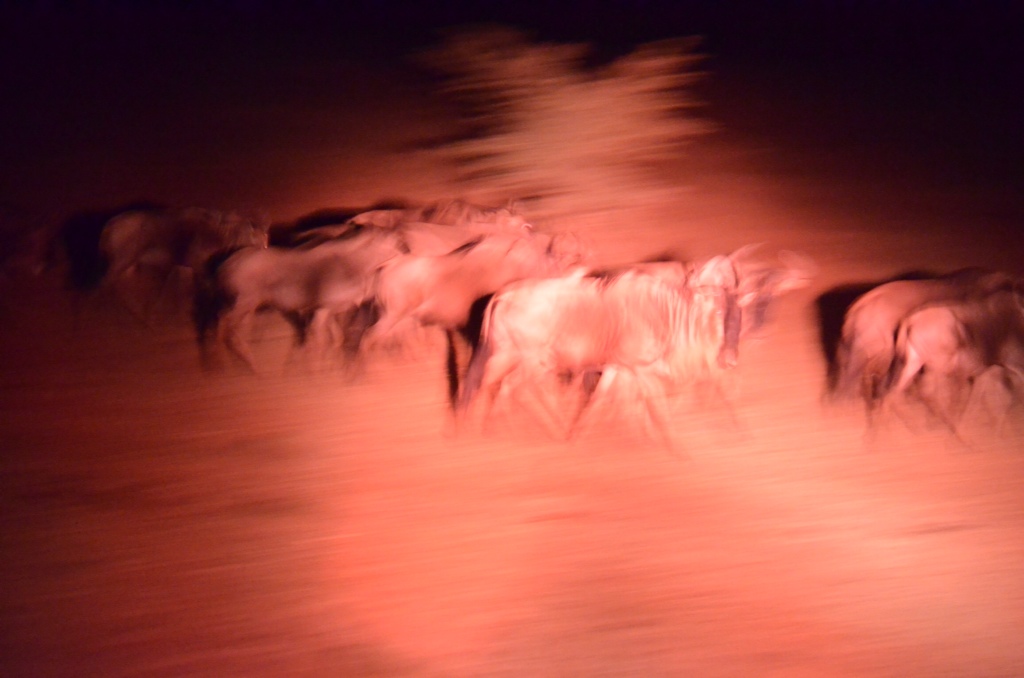
It was exciting to see the wildebeest on the run:

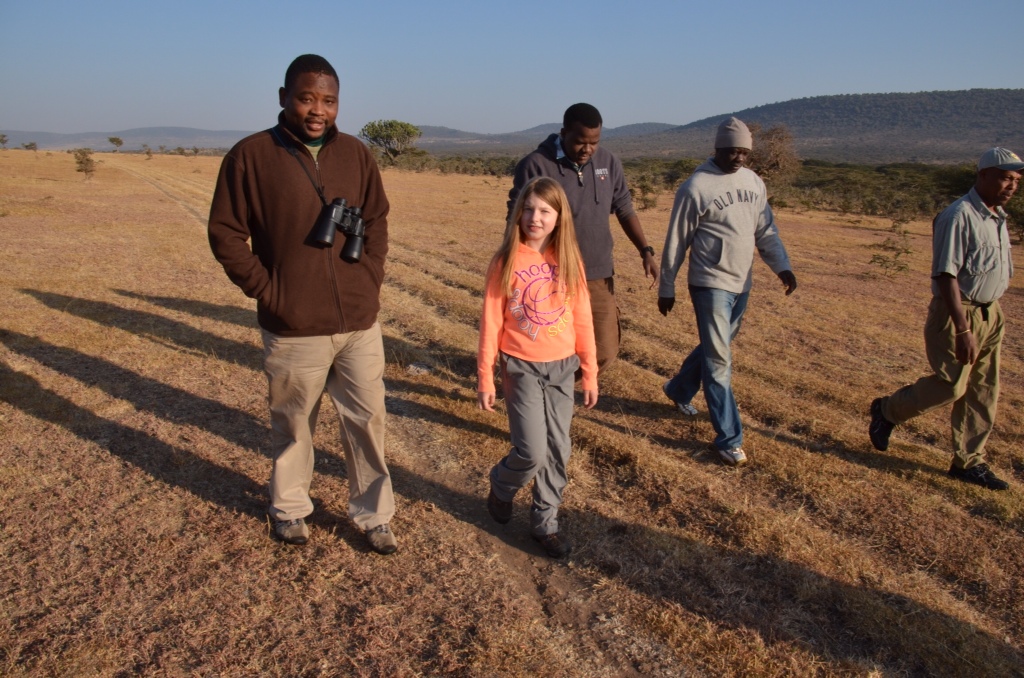
Genene was the slowest one in the group, but the guides did not seem to mind. They stayed back with her while the others in the group raced ahead. Here is a photo of Genene with all her escorts: Head guide Hasheem, our support guide Simon, the kids’ mentor Tom and the other support guide, Harrison.

Genene and Simon strike a pose together:

After about three miles, Genene began to flag quite a bit. I started to have visions of death on the plain:

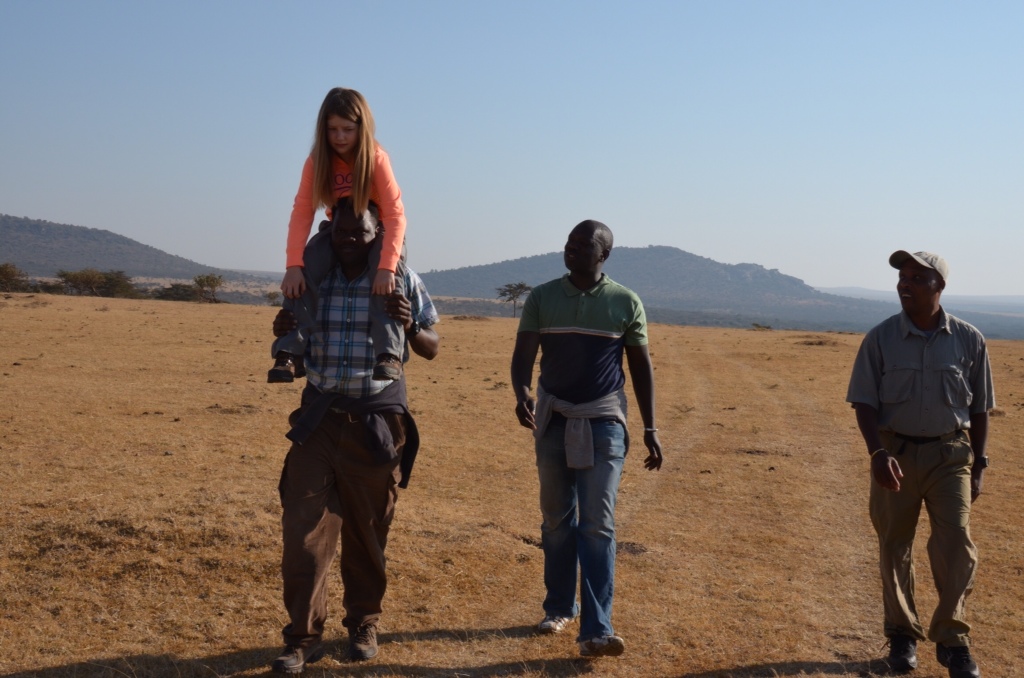
Greg tried to carry Genene for a little way, but she is getting to be a big girl and Greg is not a big boy, so he did not make it far.
 
Hakuna matata! The guides saw the problem and stepped up immediately. Tom hoisted her onto his shoulders and off they went.
The other guides all called out to Tom in Swahili, and Tom explained that they were all offering to take a turn. (I hope they weren’t actually cursing us!) Simon took his turn, and they all laughed about how heavy Genene is. She looks pretty delicate, but she’s actually quite muscular and there was some huffing and puffing from the guides. Simon is a member of the proud Chagga tribe. They live at the base of Mount Kilimanjaro, and Simon has personally summited Kili twice. However, he confessed that he had spent too much time in America on his breaks and had grown “soft.” He did not look soft to me. The men all commented that they had a new respect for the porters of Kilimanjaro, who routinely carry 80 pound packs on their heads up the mountain.

No one had to carry Genene too far. They called for a Rover, and Genene and I hopped in while Greg stayed with the rest of the group to finish the walk. We did not have to ride far to our surprise: breakfast in the bush! Our hosts had surprised us with a beautifully set table and all the fixings: eggs, cereal, pancakes, coffee, tea, fruit. It was a very nice treat.

After breakfast we went back to the nyumbas for a moment to gather our gear. These tents were designed exactly like the tents at our other two camps, but because we were on Thomson land, they were set up on foundations. It made for a nice vantage point from which to watch the sunsets.

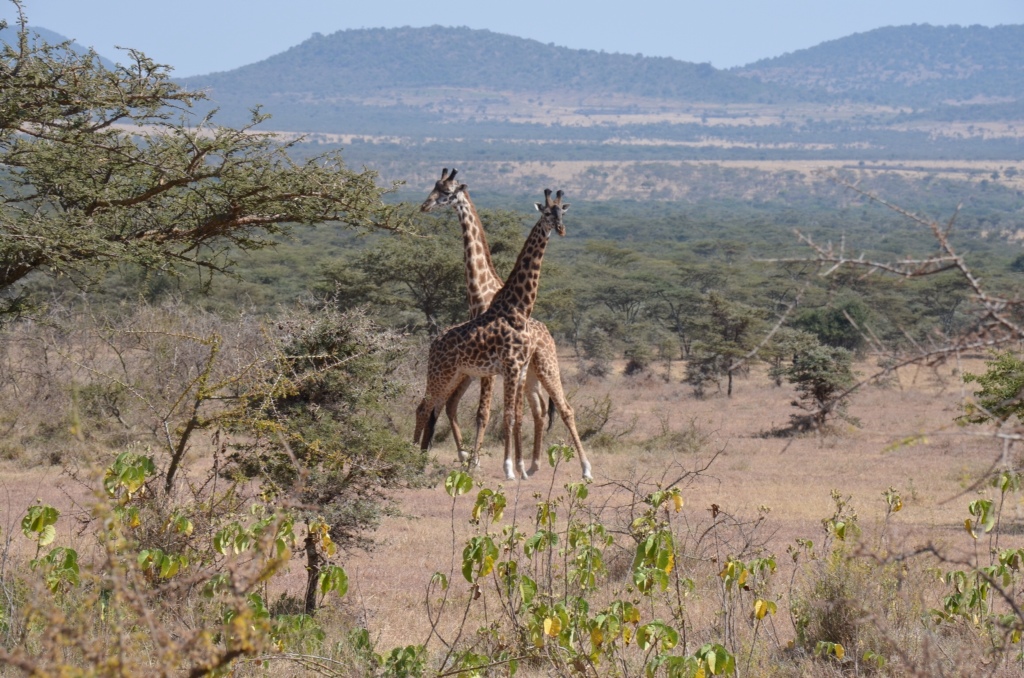
We headed toward Sukenya School. On the way, we saw two giraffes banging their necks together. There is always something going on.

We rode to the school as a family, and our car picked up the Maasai translator, who used the English name Johnson.

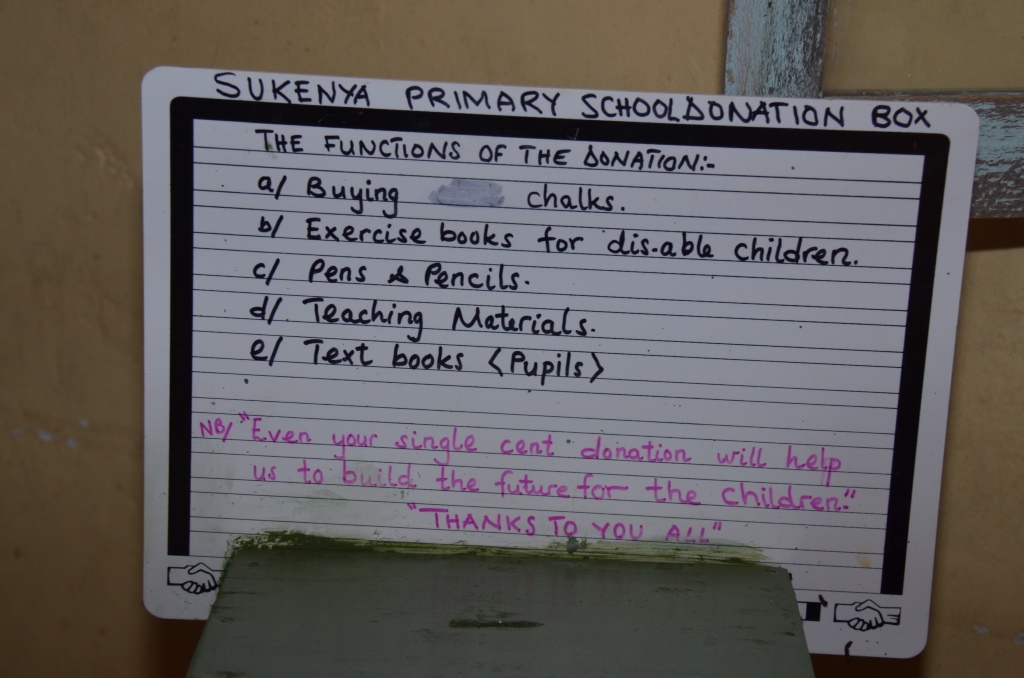
Sukenya School is set in the Enashiva Nature Refuge and serves the Maasai people in the Sukenya area. The primary school serves seven grades, and I only saw one teacher. There must have been more. Thomson Safaris has a philanthropic arm known as “Focus on Tanzanian Communities,” and the charity provides some subsidy to the school. We were encouraged to bring school supplies and so we filled a duffel bag with boxes of chalk, notebooks, crayons, books, bookpacks, and so on. Their needs are so great and so basic. The teacher seemed very grateful for the bag of goodies.

It has apparently been an uphill struggle to bring education to the Maasai. They are a pastoral, semi-nomadic people and have enjoyed (or endured) their lifestyle for eons. Our guides had explained that the smart, industrious children of the tribe do not go to school. They are sent to the fields and the plain to tend the livestock and gather wood. If a child is considered dumb or lazy or incompetent at tending cattle, he or she is sent to school.

We toured their front office:

The supply room:

After touring the facilities, we were led into the classroom of seventh year students. They sang their national anthem for us and their school song. They told us of their ambitions. One little girl said she wants to be a doctor. I hope she makes it. Then they turned the tables on us and began asking us questions, and they requested a song from us. Our ambitious group tried to bang out the “Star Spangled Banner,” but we were pretty bad. I smiled as I remembered Tony Kushner’s line from “Angels in America”: “The white cracker who wrote the national anthem knew what he was doing. He set the word ‘free’ to a note so high nobody can reach it.” The kids loved our effort though. I can tell because of how much they giggled, pointed and laughed outright.

At long last, Genene got to meet her pen pal. When we signed up for this safari, Genene was given a chance to write a letter and get a pen pal, and she took full advantage. She and her new friend from Sukenya, Anjela Paulo, traded several pieces of correspondence. They shared their experiences with school, homework, housework, and all that goes into being a kid in Africa and America. At the end of our classroom visit, the teacher called Anjela forward, and she and Genene exchanged greetings. The safari consultants had encouraged us not to give any kind of extravagant gift that could create jealousies or problems for the children. Instead they asked us to focus on the cultural exchange and on homemade items. Genene gave Anjela a small painting that she had made of a giraffe (Anjela’s favorite animal). We also bought every postcard from Houston that we could find and printed several photographs of Genene doing typical American things: Christmas, Halloween, afternoon at the pool. Their meeting was a genuinely warm, though very brief, moment, and Genene now says it was a highlight of the trip for her. We will remember Anjela. I hope she will remember us.


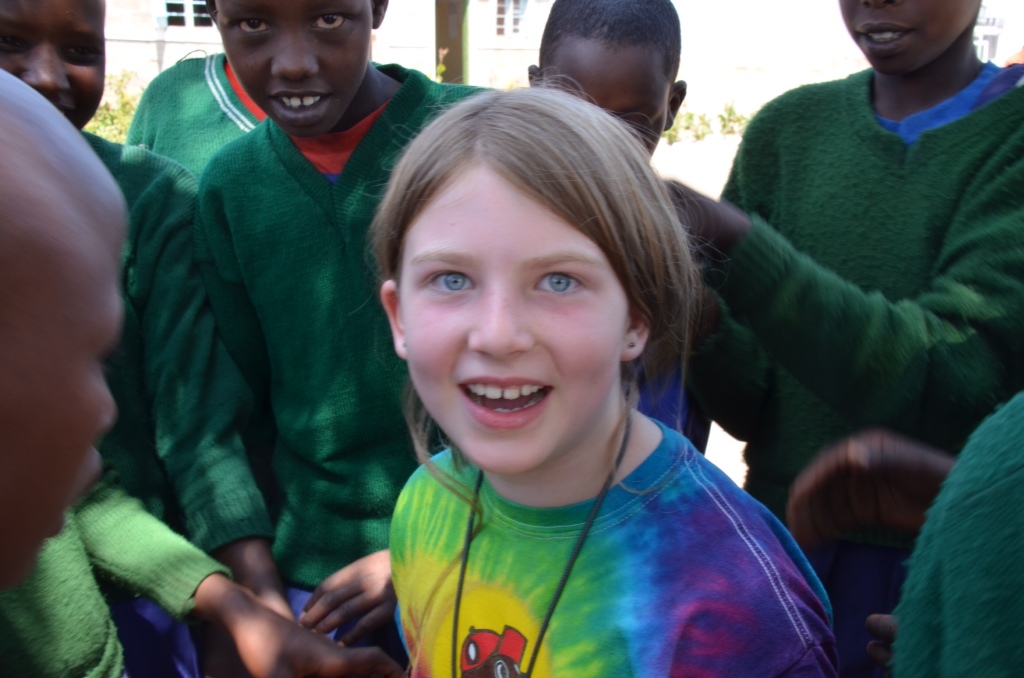
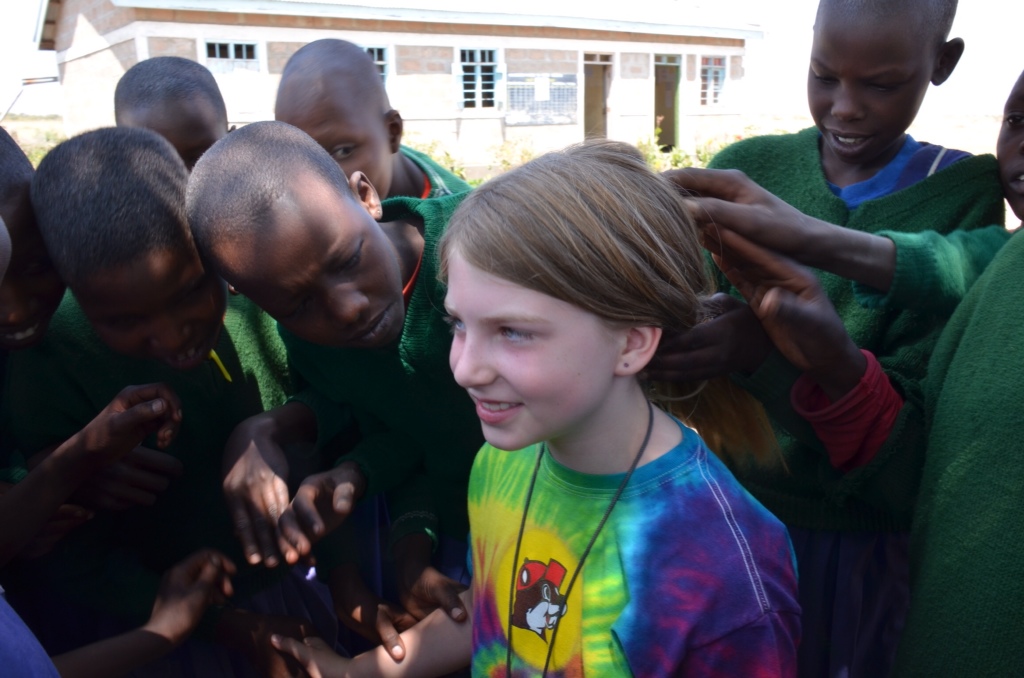
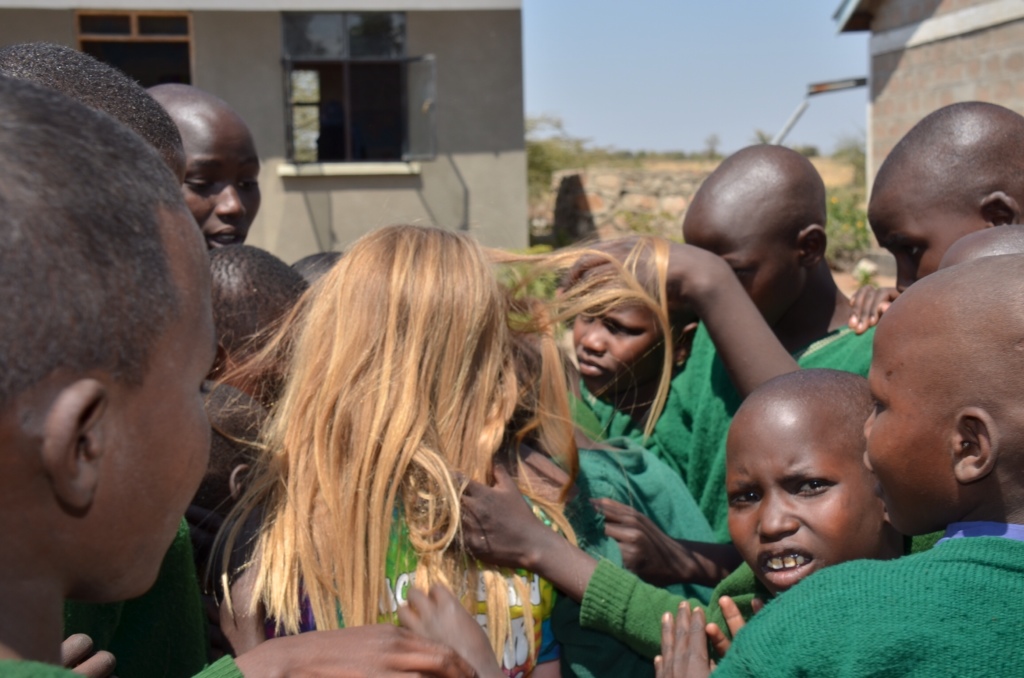
We went outside for a few minutes, and the bell rang for recess. We were mobbed! Genene and her long blonde hair were an absolute sensation. The kids ran their hands through it, touched her ears and earrings, and played with her camera. Genene bore it all fairly graciously though it was a bit disconcerting. I guess it is probably disconcerting to the kids when we come in their classrooms and take pictures of them, too.

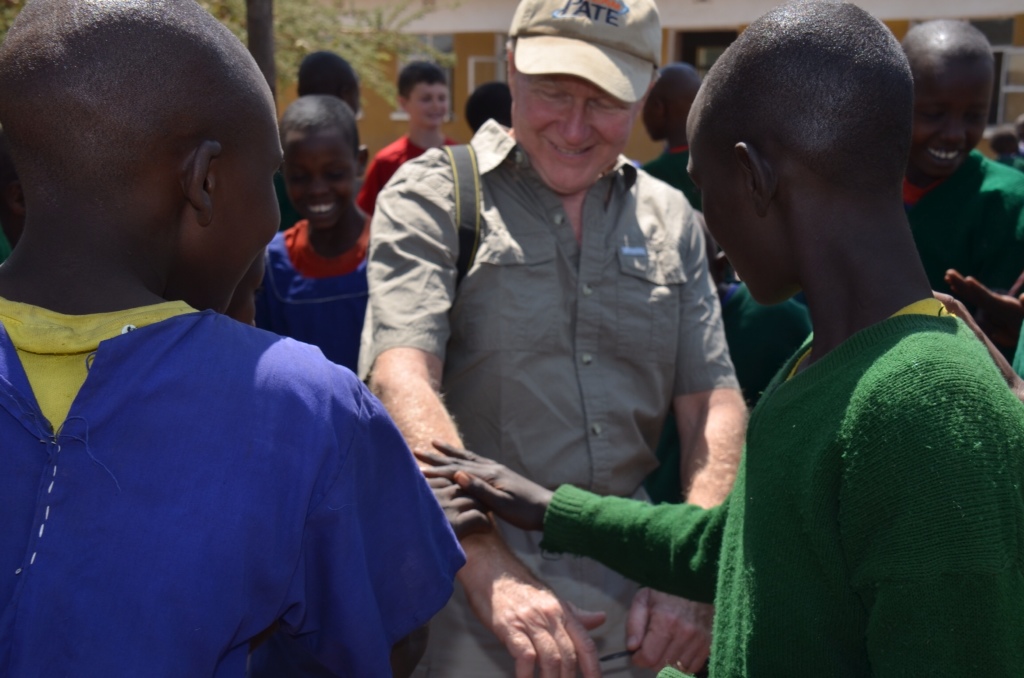
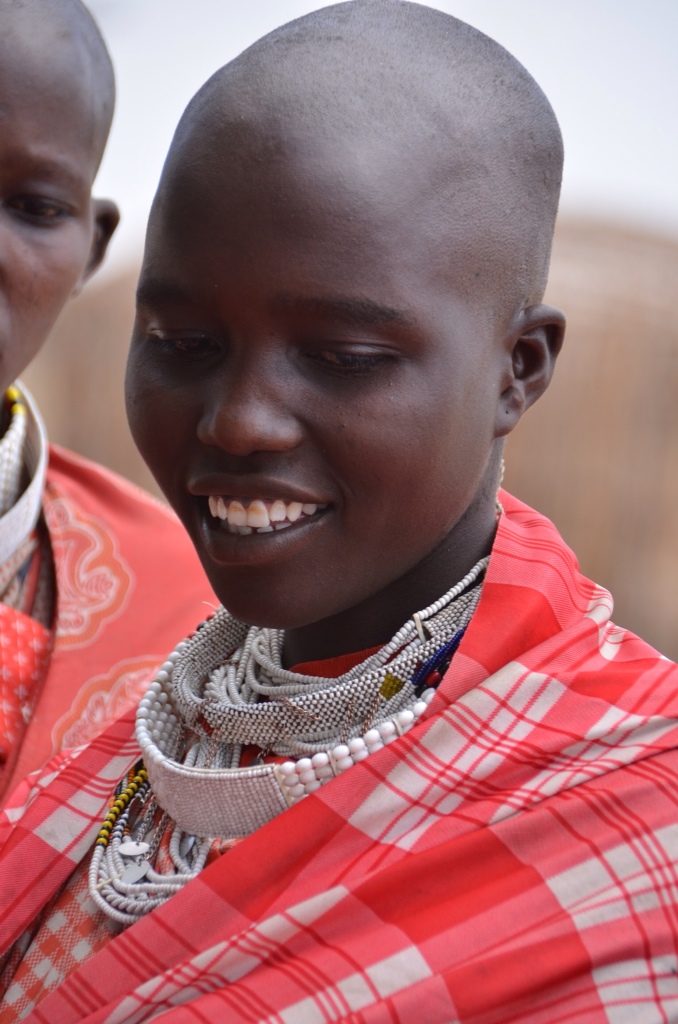
The Maasai people are smooth (not hairy), and both men and women shave their heads. Greg’s arm hair was even a hit, though he had to tell them to stop pulling it. At one point, I knelt down so they could touch and feel my hair. One little girl must have touched the bobby pin in my hair, and she recoiled, screamed and ran away. Perhaps she thought I was a cyborg.

The kids loved to pose for the camera and then wanted to see their photos on the display screen.

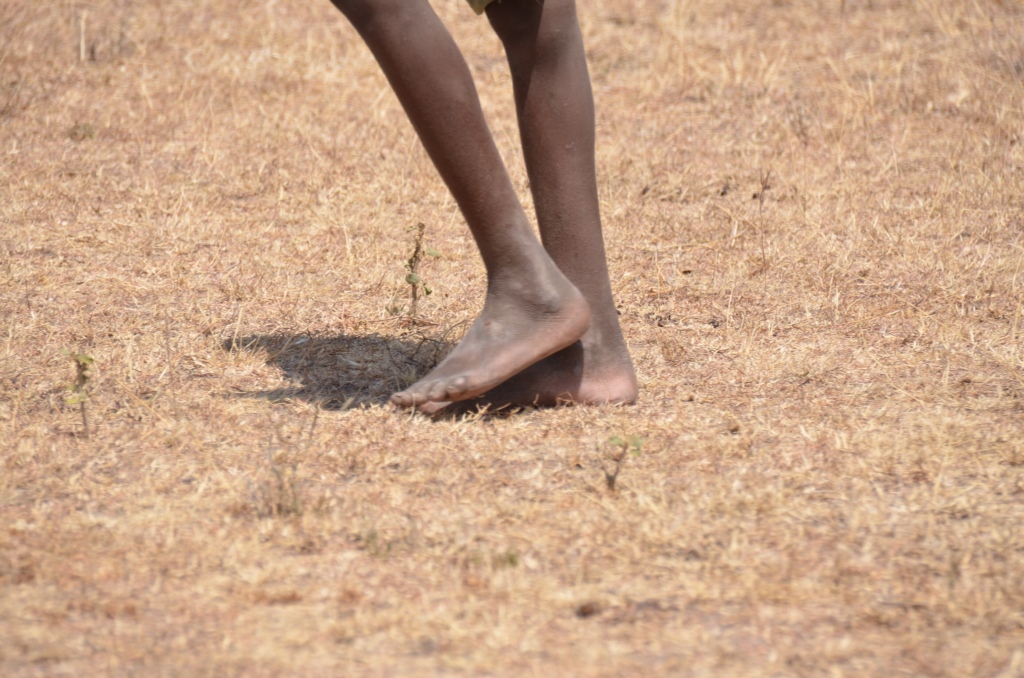
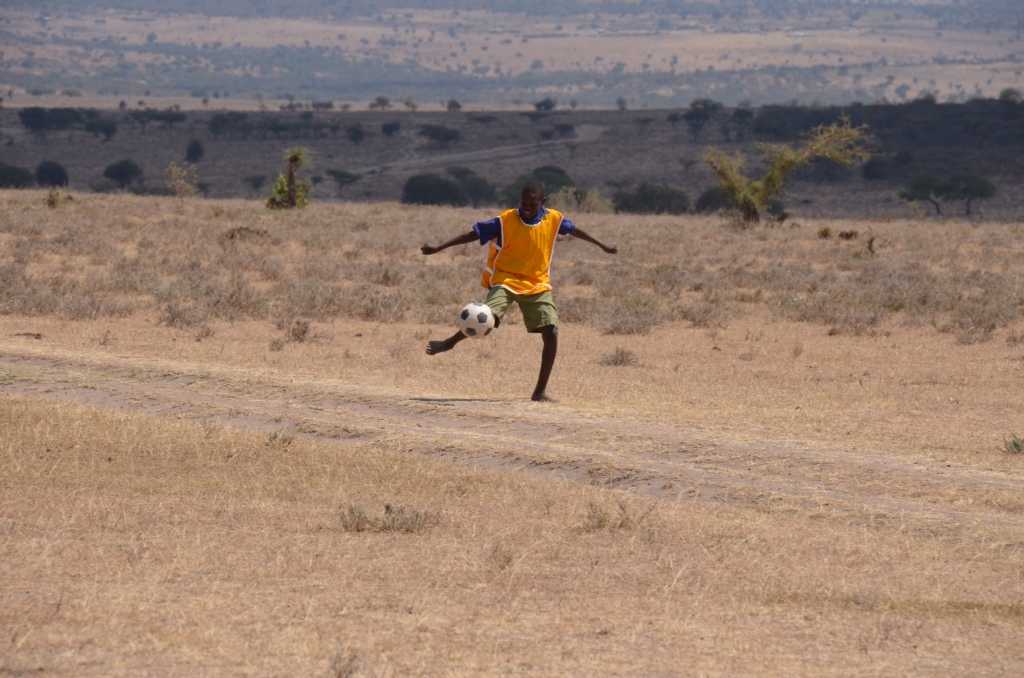
A soccer game was arranged, and the Americans were soundly defeated.

The next picture shows the only bad moment of the safari for Genene. The ball was in play and came down right toward her. She instinctively reached up and caught it. Everyone was laughing good-naturedly, but Genene felt as if they were laughing at her and so she cried. It was her only melt-down of the trip. Tom brought her to the sidelines for a little time with me. I told her to rub some grass on it and get back in the game. She finally composed herself sufficiently to play the last two minutes.

The kids shook hands and showed traditional post-match good sportsmanship.

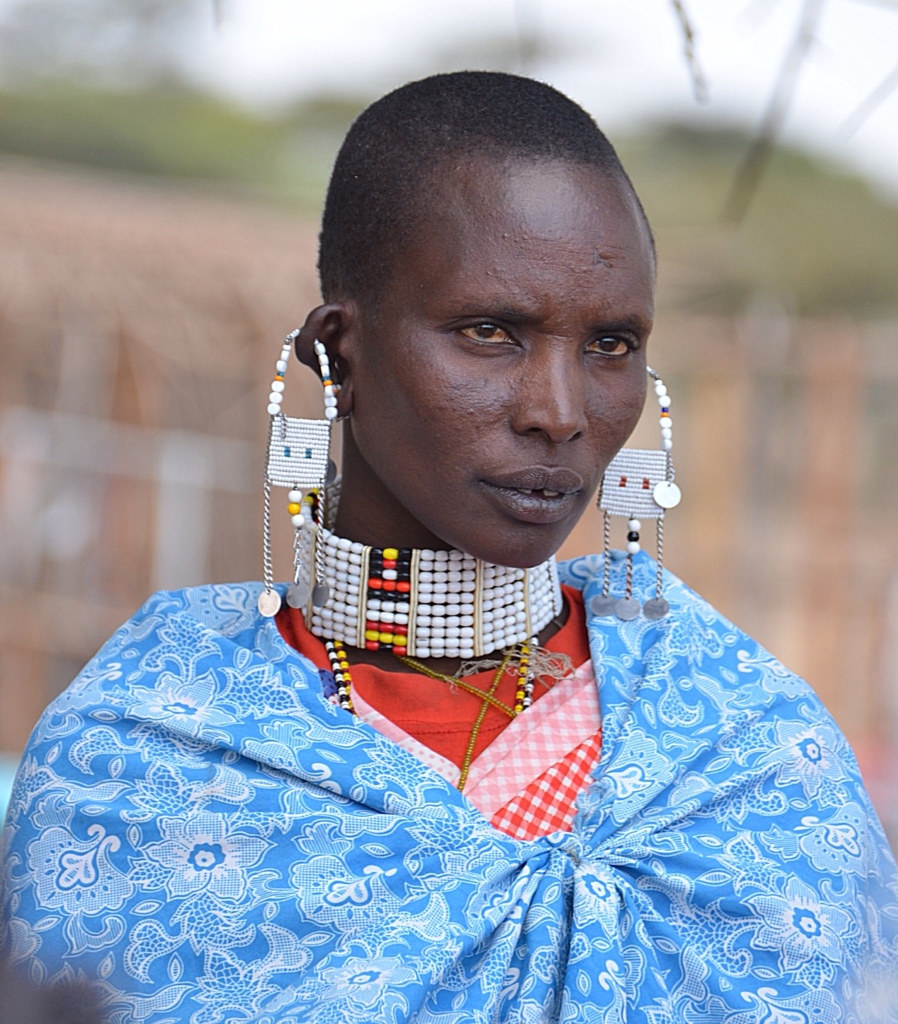
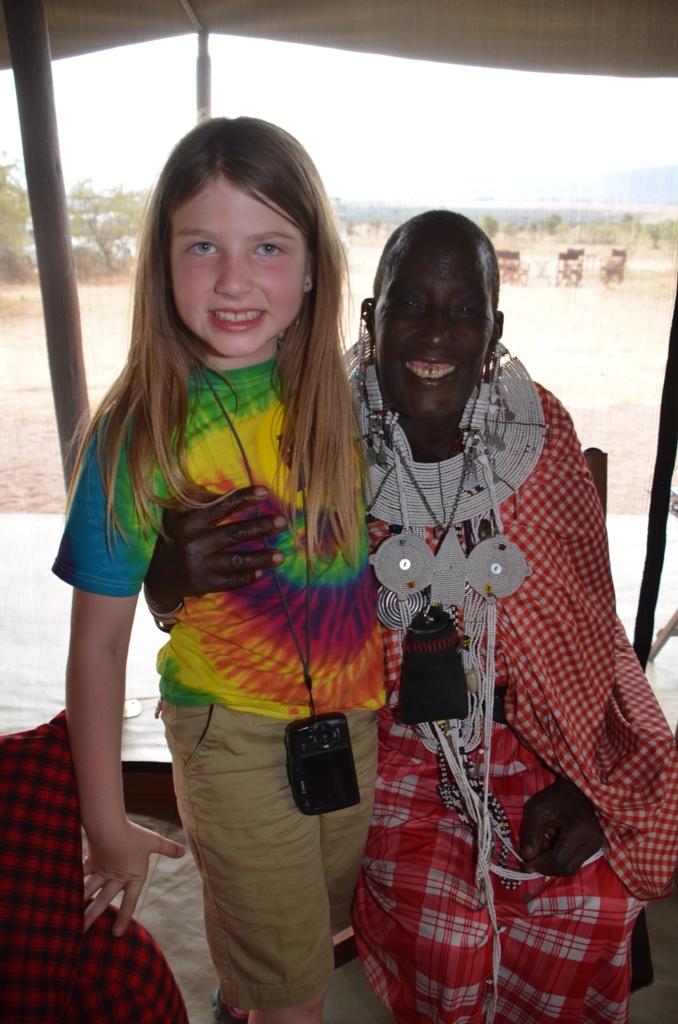
After the school visit, we stopped at a Maasai women’s collective to buy beadwork. The ladies welcomed us with a traditional dance.

The tables were set up in a large circle in a field. Johnson, our translator, explained that we were to make the rounds through all the tables and could pick up anything that interested us. When finished, we were to take everything to a spot in the middle, the “decision table.” All of the different artists would gather around and name their respective prices.

We picked out these items:

Johnson gave us the prices for each item, and negotiations commenced. I am not much of a bargainer in these kinds of settings, and in the end I figure that what seems like a few dollars to me is a lot more to them. I cycled through one round of offer and response, settled on a sum, and all the ladies clapped. The other two families went through their own set of negotiations. Sheryl and Jim managed to settle on a good price, but Jocelyn and Scott thought they had seen better prices back in Arusha and left empty-handed. In spite of that, I think that everyone enjoyed the experience.

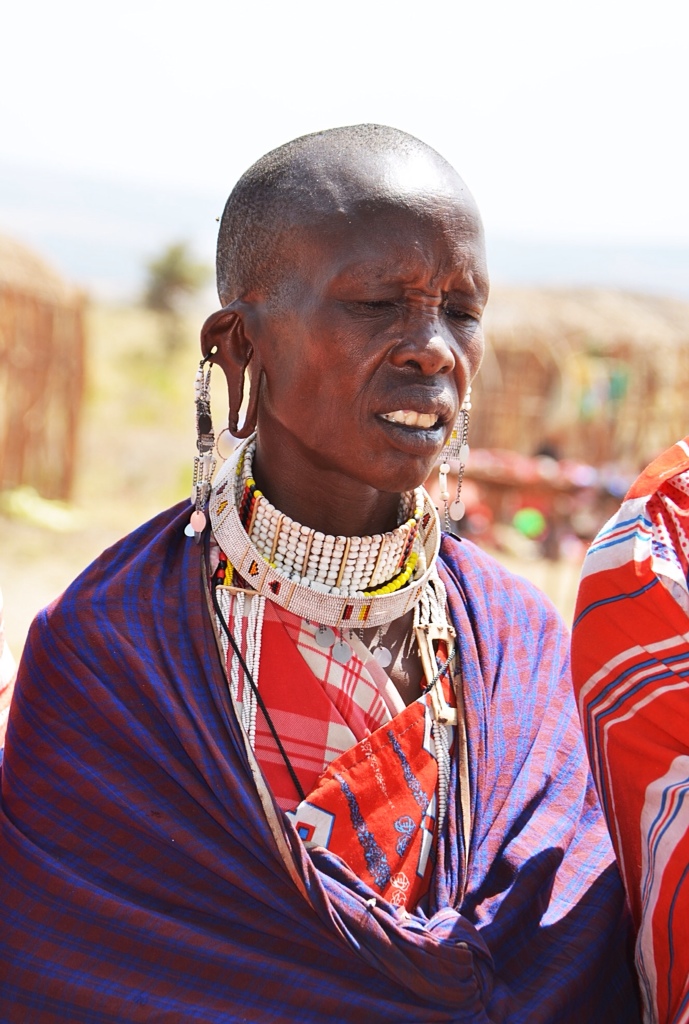
I find these women to be very interesting.


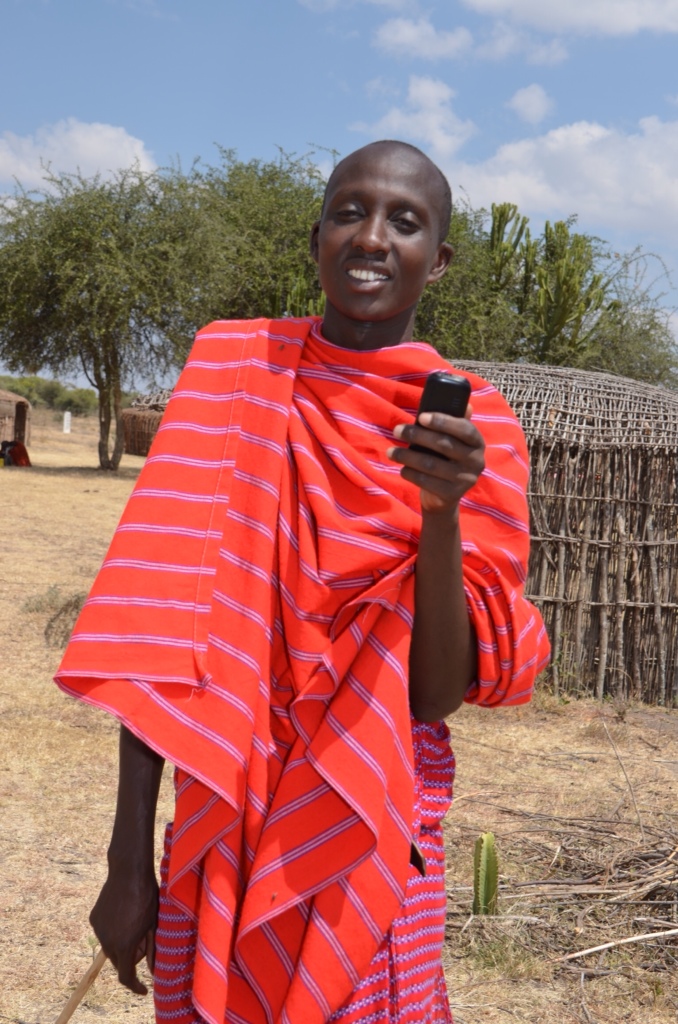
Johnson pulled out his cell phone and called for a ride. Even the Maasai are plugged in:

We took the short drive back to the nyumba for lunch and then had another delightful treat. A Maasai storyteller came to speak with us. Johnson told us her Maasai name, but it was difficult to pronounce and I can no longer remember it. Johnson had also explained to us the traditional Maasai greeting. They typically reach out to shake hands and say “Sopai.” (which sounds like sopa) Your reply is “Ipa.” (Ay-pa) Genene dutifully did so, and the old lady beamed.

She told us the story of her life. As a youngster, she ran naked in the fields with the cattle. Her mother gave her a cowhide to wear, but she would throw it off whenever possible. (Children are the same everywhere, aren’t they?) One day, she lost one of her father’s bulls, and her mother was very angry. Her mother told her that she was going to arrange for her to be married, so that she could lose someone else’s bulls. The marriage was arranged, but our storyteller cried bitter tears because she had met a boy in the field whom she liked. Her parents mixed the milk of a black cow and a white cow as a sort of love potion to make her forget the boy in the field and love the boy she was to marry. We asked her if it worked and waited breathlessly for Johnson’s translation of the reply: “It totally worked!” She was a first wife, and she and her husband had four children, two boys and two girls. She now has “countless” grandchildren. There were other wives, but she seemed happy with the arrangement. Her husband is now dead. I asked her if she ever knew what became of the boy in the field. When Johnson translated this to her, her response was great laughter and animation. She has reconnected with him, and they are now “together” though not married. True love finds a way.
 
The storyteller:
 

Johnson translating:

I think hands can tell a lot about a person’s life. This is the hand of the storyteller:
 

Johnson was a compelling character in his own right, with a perfect command of English. He is about to start college in Arusha. I wanted to ask him what event of laziness or incompetence in his youth had led to him getting sent to school, but that would have been rude. I wonder….

The storyteller’s second effort was a fable about a jackal, a hyena and a lion. She claimed it was an “absolutely true story” and then began: Once upon a time….. The jackal had made a habit of feeding from the leftovers in the lion’s den. The jackal was careful to make no disturbance so that the lion would never know of his presence. One day, the jackal was striding across the Serengeti, all fat and full from the lion’s throw aways, when he came upon his friend, the starving hyena. The hyena begged to know where the jackal was filling up. The jackal finally capitulated and told the hyena about the lion’s den but begged him to be discreet and “not to break the bones.” Of course, the hyena went in there and pigged out, breaking bones and making a mess. The lion caught the hyena but decided to be merciful and give the hyena a job guarding the lair and the lion’s cub. The hyena proved unworthy of the job when he chowed down enthusiastically on some more bones. The bones broke, flew through the air and killed the cub, splitting his head in two. The hyena tried to put the cub back together. (This part was actually quite comical. The old lady made the motions with her hands of the hyena trying to put the two pieces of the cub’s head together.) The lion returned. The hyena tried to say nothing was wrong, but the cub’s head fell into two pieces. The lion killed the hyena.

At this point, the old storyteller stood up and sang beautifully. Johnson explained that her song was the song of the jackal to the dead hyena. It seemed a bit sorrowful, but mostly the jackal was saying “I told you so.” The hyena had been warned not to break the bones, and the consequence was death.

The Maasai use these stories as a way to educate their children. I am still pondering all the lessons in the fable. The hyena should have followed instructions better. The jackal probably should not have shared his secret food source. The lion should not have used a hyena as a babysitter.

The storyteller amicably answered all our questions about her life, and the session was over. She borrowed a cell phone and called for her ride. The cell phones do kill the romance a bit.

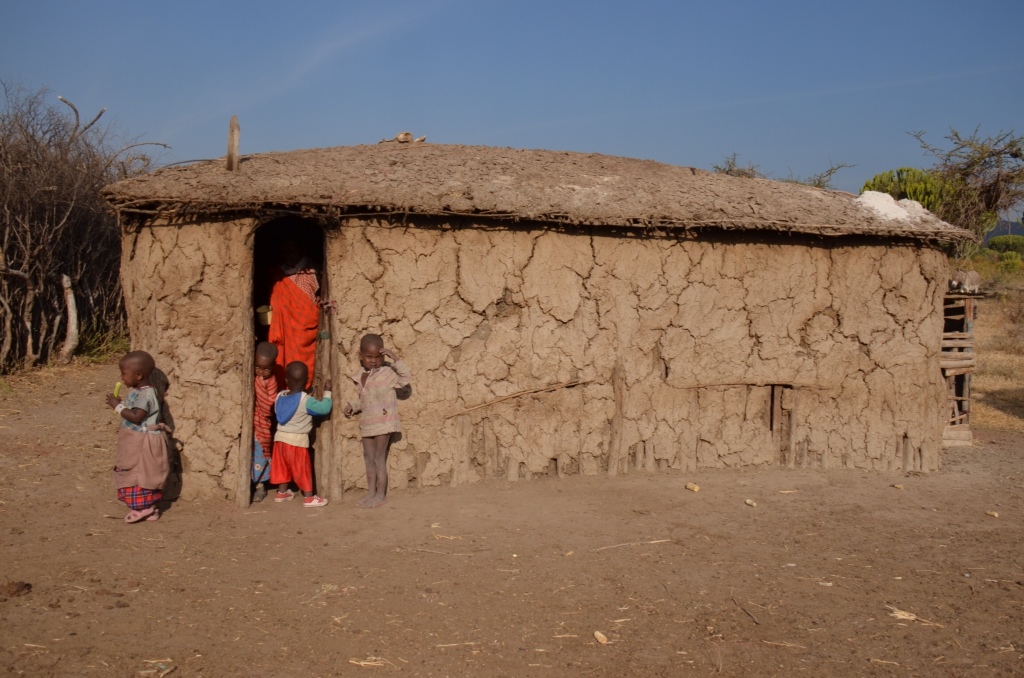
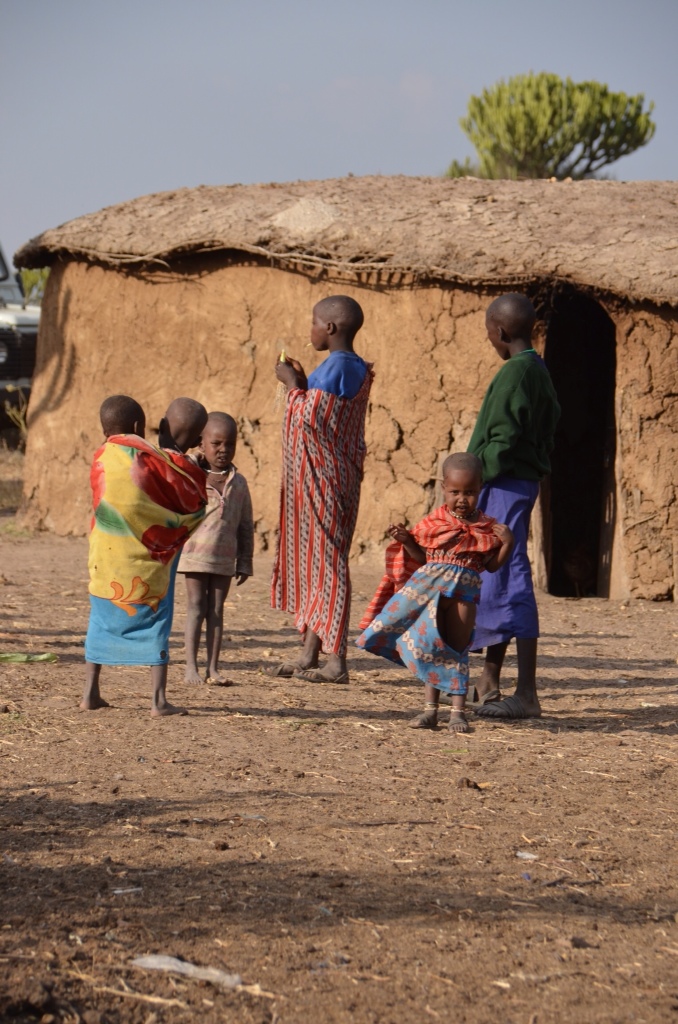
We finished our day with a visit to a working Maasai boma. A traditional boma is living place for the Maasai consisting of their livestock enclosures and several small huts. The huts are made of sticks, mud, straw and cow dung.

The livestock enclosures are formed from the limbs of the thorny acacia. The cattle are well-trained and probably would not need to be fenced in. The enclosures are to keep the lions and hyenas and other predators out.

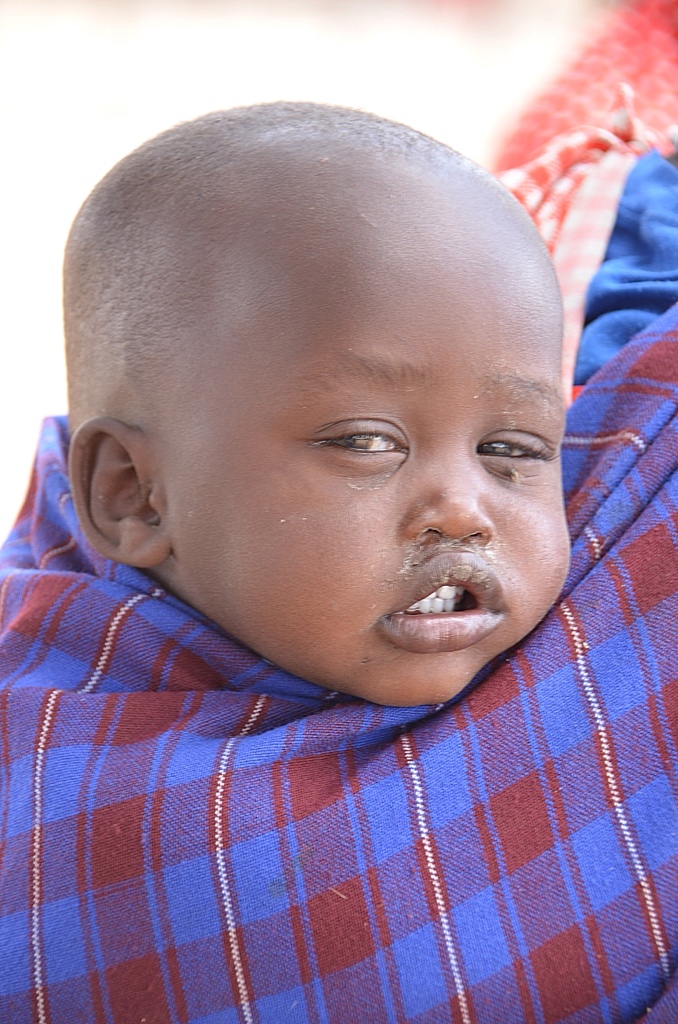
This little girl was chewing on a corn stalk:

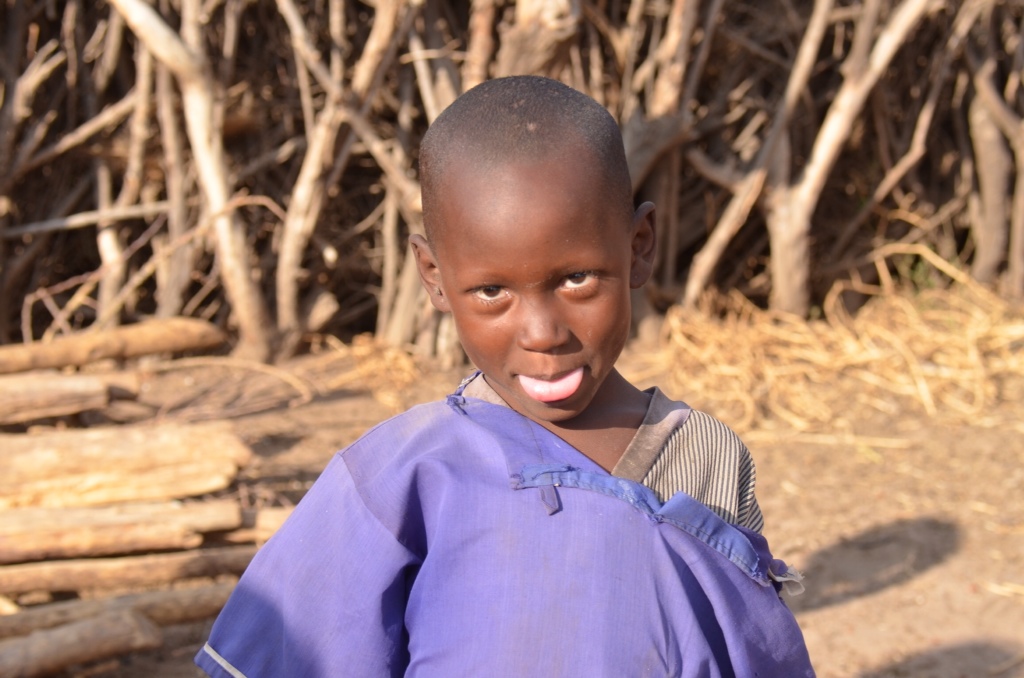
Every little boy knows how to stick out his tongue for the camera:

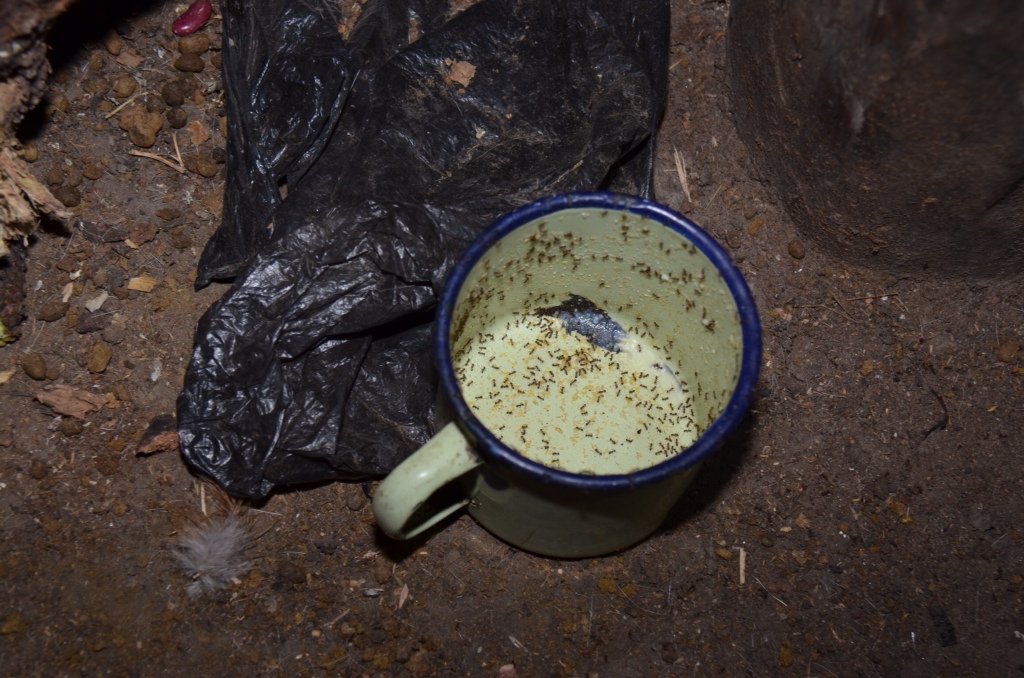
This ant-filled cup was inside the boma we visited:

This part of the boma is used to house the young cows, sheep and goats. They are brought inside with the family at night for protection from predators.

The family’s room:

On the left side, the children’s bed can be seen. The parents’ bed is on the other side of the fire, out of the shot. As you may have gathered, the Maasai are polygamous. When the father is “visiting,” the children are sent to another hut to spend the night.

The people waiting patiently outside while we toured their huts:

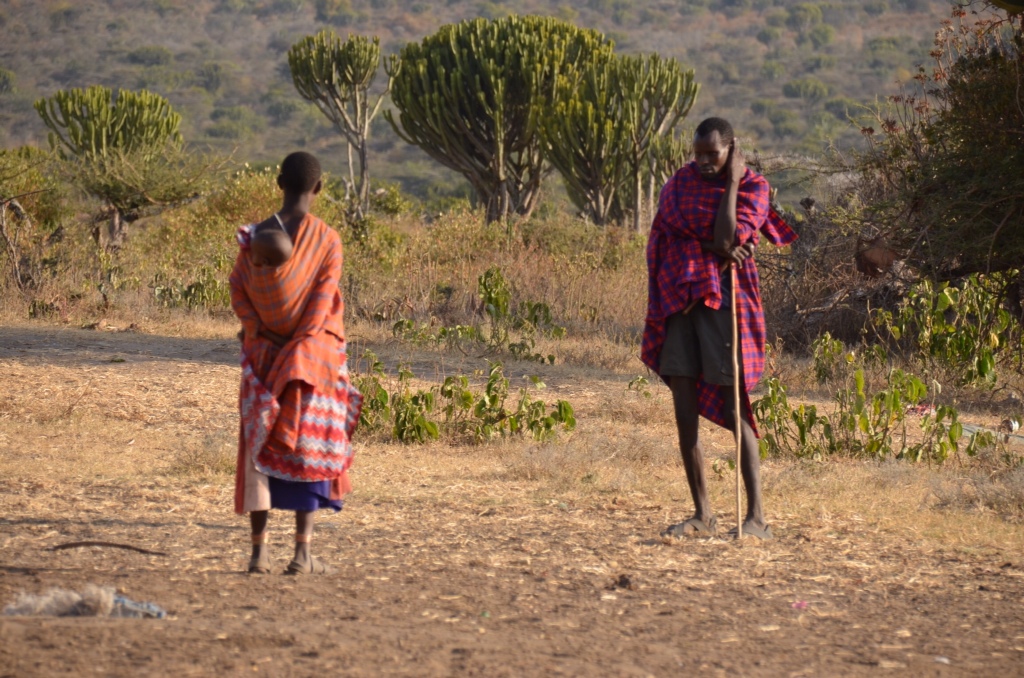
The menfolk were conspicuously absent from the boma during our visit, but I saw these two colorfully dressed men walking nearby:

We did see this man walk up at the far end of the boma and gesture. The woman went to him and they exchanged greetings and had a discussion. Husband and wife? Brother and sister? I don’t know.

The lives of these people seem incredibly difficult. The ever-present flies were stuck to the children and adults, and no one brushed them away. Their homes smelled of earthy barnyard and smoke. The children work in the fields almost as soon as they can walk. We saw children that could not have been more than four years old, alone and tending to the cattle in the fields. We have all watched the late-night television programs which show human beings living in less than ideal conditions (I think of Sally Struthers). It is another thing entirely to visit them in person. These people are not starving, but they are leading a hard life. It made me both thankful for all that I have and shameful for all that I waste. I am not sure what else to say here. I do not want to trivialize or romanticize the lives of this proud and interesting people. They roam free with the animals–both wild and domesticated–in one of the most beautiful landscapes on earth; however, the toll they pay is a heavy one. The poverty is beyond description, but there is something to be admired about how much they do with so little.

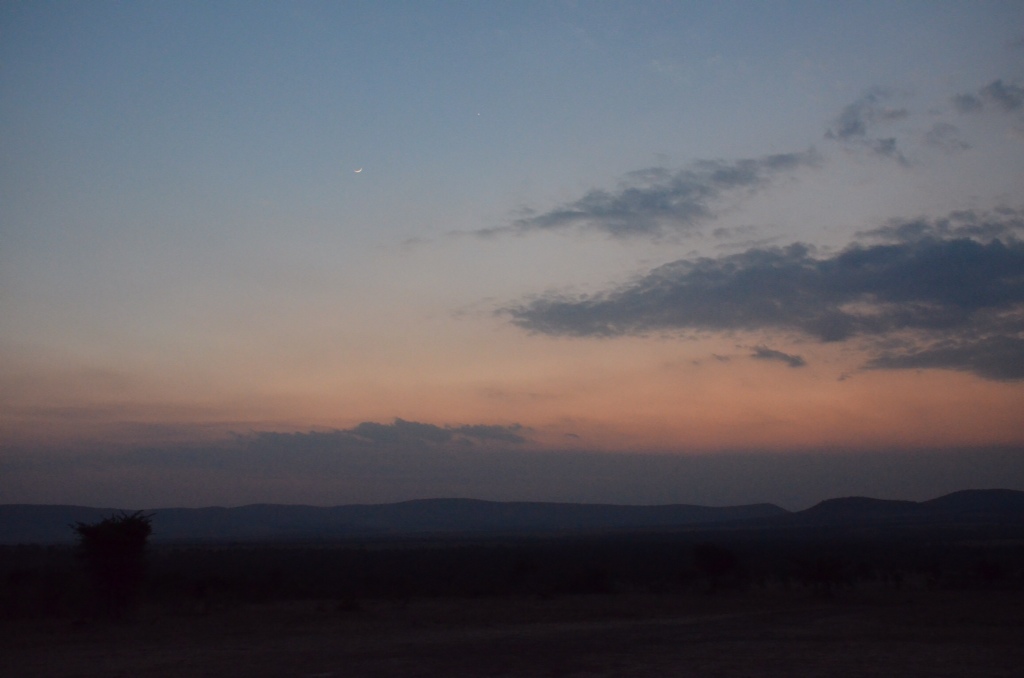
After our visit, we returned to our nyumbas for the last time. We watched the sun sink over the Serengeti, and the new moon became visible as a sliver in the night sky.

Our chef fixed us a traditional African meal, with a beef barbecue, potatoes, spicy rice, and other delights. I was glad they chose to feed us their food on the last night, as a final way of giving us a piece of their place.

Stay tuned for the journey back to Arusha and the Amsterdam interlude……

African safari 2013: Part 10

July 10, 2013

It was our last full day on safari, and our itinerary was to be a bit different. The focus for the day was on the people of Tanzania. After a hot cup of coffee, we started with a long walk around the property. As usual, we were accompanied by armed escort.

It was exciting to see the wildebeest on the run.

Genene was the slowest one in the group, but the guides did not seem to mind. They stayed back with her while the others in the group raced ahead. Here is a photo of Genene with all her escorts: Head guide Hasheem, our support guide Simon, the kids' mentor Tom and the other support guide, Harrison.

Genene and Simon strike a pose together.

After about three miles, Genene began to flag quite a bit. I started to have visions of death on the plain.

Greg tried to carry Genene for a little way, but she is getting to be a big girl and Greg is not a big boy, so he did not make it far.
 
Hakuna matata! The guides saw the problem and stepped up immediately. Tom hoisted her onto his shoulders and off they went.
The other guides all called out to Tom in Swahili, and Tom explained that they were all offering to take a turn. (I hope they weren't actually cursing us!) Simon took his turn, and they all laughed about how heavy Genene is. She looks pretty delicate, but she's actually quite muscular and there was some huffing and puffing from the guides. Simon is a member of the proud Chagga tribe. They live at the base of Mount Kilimanjaro, and Simon has personally summited Kili twice. However, he confessed that he had spent too much time in America on his breaks and had grown “soft.” He did not look soft to me. The men all commented that they had a new respect for the porters of Kilimanjaro, who routinely carry 80 pound packs on their heads up the mountain.

No one had to carry Genene too far. They called for a Rover, and Genene and I hopped in while Greg stayed with the rest of the group to finish the walk. We did not have to ride far to our surprise: breakfast in the bush! Our hosts had surprised us with a beautifully set table and all the fixings: eggs, cereal, pancakes, coffee, tea, fruit. It was a very nice treat.

After breakfast we went back to the nyumbas for a moment to gather our gear. These tents were designed exactly like the tents at our other two camps, but because we were on Thomson land, they were set up on foundations. It made for a nice vantage point from which to watch the sunsets.

We headed toward Sukenya School. On the way, we saw two giraffes banging their necks together. There is always something going on.

We rode to the school as a family, and our car picked up the Maasai translator, who used the English name Johnson.

Sukenya School is set in the Enashiva Nature Refuge and serves the Maasai people in the Sukenya area. The primary school serves seven grades, and I only saw one teacher. There must have been more. Thomson Safaris has a philanthropic arm known as “Focus on Tanzanian Communities,” and the charity provides some subsidy to the school. We were encouraged to bring school supplies and so we filled a duffel bag with boxes of chalk, notebooks, crayons, books, bookpacks, and so on. Their needs are so great and so basic. The teacher seemed very grateful for the bag of goodies.

It has apparently been an uphill struggle to bring education to the Maasai. They are a pastoral, semi-nomadic people and have enjoyed (or endured) their lifestyle for eons. Our guides had explained that the smart, industrious children of the tribe do not go to school. They are sent to the fields and the plain to tend the livestock and gather wood. If a child is considered dumb or lazy or incompetent at tending cattle, he or she is sent to school.

We toured their front office.


The supply room.

After touring the facilities, we were led into the classroom of seventh year students. They sang their national anthem for us and their school song. They told us of their ambitions. One little girl said she wants to be a doctor. I hope she makes it. Then they turned the tables on us and began asking us questions, and they requested a song from us. Our ambitious group tried to bang out the “Star Spangled Banner,” but we were pretty bad. I smiled as I remembered Tony Kushner's line from “Angels in America”: “The white cracker who wrote the national anthem knew what he was doing. He set the word 'free' to a note so high nobody can reach it.” The kids loved our effort though. I can tell because of how much they giggled, pointed and laughed.

At long last, Genene got to meet her penpal. When we signed up for this safari, Genene was given a chance to write a letter and get a penpal, and she took full advantage. She and her new friend from Sukenya, Anjela Paulo, traded several pieces of correspondence. They shared their experiences with school, homework, housework, and all that goes into being a kid in Africa and America. At the end of our classroom visit, the teacher called Anjela forward, and she and Genene exchanged greetings. The safari consultants had encouraged us not to give any kind of extravagant gift that could create jealousies or problems for the children. Instead they asked us to focus on the cultural exchange and on homemade items. Genene gave Anjela a small painting that she had made of a giraffe (Anjela's favorite animal). We also bought every postcard from Houston that we could find and printed several photographs of Genene doing typical American things: Christmas, Halloween, afternoon at the pool. Their meeting was a genuinely warm, though very brief, moment, and Genene now says it was a highlight of the trip for her. We will remember Anjela. I hope she will remember us.


We went outside for a few minutes, and the bell rang for recess. We were mobbed! Genene and her long blonde hair were an absolute sensation. The kids ran their hands through it, touched her ears and earrings, and played with her camera. Genene bore it all fairly graciously though it was a bit disconcerting. I guess it is probably disconcerting to the kids when we come in their classrooms and take pictures of them, too.


The Maasai people are smooth (not hairy), and both men and women shave their heads. Greg's arm hair was even a hit, though he had to tell them to stop pulling it. At one point, I knelt down so they could touch and feel my hair. One little girl must have touched the bobby pin in my hair, and she recoiled, screamed and ran away. Perhaps she thought I was a cyborg.

The kids loved to pose for the camera and then wanted to see their photos on the display screen.

A soccer game was arranged, and the Americans were soundly defeated.


The next picture shows the only bad moment of the safari for Genene. The ball was in play and came down right toward her. She instinctively reached up and caught it. Everyone was laughing good-naturedly, but Genene felt as if they were laughing at her and so she cried. It was her only melt-down of the trip. Tom brought her to the sidelines for a little time with me. I told her to rub some grass on it and get back in the game. She finally composed herself sufficiently to play the last two minutes.

The kids shook hands and showed traditional post-match good sportsmanship.

After the school visit, we stopped at a Maasai women's collective to buy beadwork. The ladies welcomed us with a traditional dance.


The tables were set up in a large circle in a field. Johnson, our translator, explained that we were to make the rounds through all the tables and could pick up anything that interested us. When finished, we were to take everything to a spot in the middle, the “decision table.” All of the different artists would gather around and name their respective prices.

We picked out these items.

Johnson gave us the prices for each item, and negotiations commenced. I am not much of a bargainer in these kinds of settings, and in the end I figure that what seems like a few dollars to me is a lot more to them. I cycled through one round of offer and response, settled on a sum, and all the ladies clapped. The other two families went through their own set of negotiations. Sheryl and Jim managed to settle on a good price, but Jocelyn and Scott thought they had seen better prices back in Arusha and left empty handed. In spite of that, I think that everyone enjoyed the experience.

I find these women to be very interesting.


Johnson pulled out his cell phone and called for a ride. Even the Maasai are plugged in.

We took the short drive back to the nyumba for lunch and then had another delightful treat. A Maasai storyteller came to speak with us. Johnson told us her Maasai name, but it was difficult to pronounce and I can no longer remember it. Johnson had also explained to us the traditional Maasai greeting. They typically reach out to shake hands and say “Sopai.” (which sounds like sopa) Your reply is “Ipa.” (Ay-pa) Genene dutifully did so, and the old lady beamed.

She told us the story of her life. As a youngster, she ran naked in the fields with the cattle. Her mother gave her a cowhide to wear, but she would throw it off whenever possible. (Children are the same everywhere, aren't they?) One day, she lost one of her father's bulls, and her mother was very angry. Her mother told her that she was going to arrange for her to be married, so that she could lose someone else's bulls. The marriage was arranged, but our storyteller cried bitter tears because she had met a boy in the field whom she liked. Her parents mixed the milk of a black cow and a white cow as a sort of love potion to make her forget the boy in the field and love the boy she was to marry. We asked her if it worked and waited breathlessly for Johnson's translation of the reply: “It totally worked!” She was a first wife, and she and her husband had four children, two boys and two girls. She now has “countless” grandchildren. There were other wives, but she seemed happy with the arrangement. Her husband is now dead. I asked her if she ever knew what became of the boy in the field. When Johnson translated this to her, her response was great laughter and animation. She has reconnected with him, and they are now “together” though not married. True love finds a way.
The storyteller:
 

Johnson translating:

I think hands can tell a lot about a person's life. This is the hand of the storyteller:
 

Johnson was a compelling character in his own right, with a perfect command of English. He is about to start college in Arusha. I wanted to ask him what event of laziness or incompetence in his youth had led to him getting sent to school, but that would have been rude. I wonder….

The storyteller's second effort was a fable about a jackal, a hyena and a lion. She claimed it was an “absolutely true story” and then began: Once upon a time….. The jackal had made a habit of feeding from the leftovers in the lion's den. The jackal was careful to make no disturbance so that the lion would never know of his presence. One day, the jackal was striding across the Serengeti, all fat and full from the lion's throwaways, when he came upon his friend, the starving hyena. The hyena begged to know where the jackal was filling up. The jackal finally capitulated and told the hyena about the lion's den but begged him to be discreet and “not to break the bones.” Of course, the hyena went in there and chowed down, breaking bones and making a mess. The lion caught the hyena but decided to be merciful and give the hyena a job guarding the lair and the lion's cub. The hyena proved unworthy of the job when he chowed down enthusiastically on some more bones. The bones broke, flew through the air and killed the cub, splitting his head in two. The hyena tried to put the cub back together. (This part was actually quite comical. The old lady made the motions with her hands of the hyena trying to put the two pieces of the cub's head together.) The lion returned. The hyena tried to say nothing was wrong, but the cub's head fell into two pieces. The lion killed the hyena.

At this point, the old storyteller stood up and sang. Johnson explained that her song was the song of the jackal to the dead hyena. It seemed a bit sorrowful, but mostly the jackal was saying “I told you so.” The hyena had been warned not to break the bones, and the consequence was death.

The Maasai use these stories as a way to educate their children. I am still pondering all the lessons in the fable. The hyena should have followed instructions better. The jackal probably should not have shared his secret food source. The lion should not have used a hyena as a babysitter.

The storyteller amicably answered all our questions about her life, and the session was over. She borrowed a cell phone and called for her ride. The cell phones do kill the romance a bit.

We finished our day with a visit to a working Maasai boma. A traditional boma is living place for the Maasai consisting of their livestock enclosures and several small huts. The huts are made of sticks, mud, straw and cow dung.

The livestock enclosures are formed from the limbs of the thorny acacia. The cattle are well trained and probably would not need to be fenced in. The enclosures are to keep the lions and hyenas and other predators out.


This little girl was chewing on a corn stalk.

Every little boy knows how to stick out his tongue for the camera.

This ant-filled cup was inside the boma we visited.

This part of the boma is used to house the young cows, sheep and goats. They are brought inside with the family at night for protection from predators.

The family's room.

On the left side, the children's bed can be seen. The parents' bed is on the other side of the fire, out of the shot. As you may have gathered, the Maasai are polygamous. When the father is “visiting,” the children are sent to another hut to spend the night.

The people waiting patiently outside while we toured their huts:

The menfolk were conspicuously absent from the boma during our visit, but I saw these two colorfully dressed men walking nearby:

We did see this man walk up at the far end of the boma and gesture. The woman went to him and they exchanged greetings and had a discussion. Husband and wife? Brother and sister? I don't know.

The lives of these people seem incredibly difficult. The ever-present flies were stuck to the children and adults, and no one brushed them away. Their homes smelled of earthy barnyard and smoke. The children work in the fields almost as soon as they can walk. We saw children that could not have been more than four years old, alone and tending to the cattle in the fields. We have all watched the late-night television programs which show human beings living in less than ideal conditions (I think of Sally Struthers). It is another thing entirely to visit them in person. These people are not starving, but they are leading a hard life. It made me both thankful for all that I have and shameful for all that I waste. I am not sure what else to say here. I do not want to trivialize or romanticize the lives of this proud and interesting people. They roam free with the animals–both wild and domesticated–in one of the most beautiful landscapes on earth; however, the toll they pay is a heavy one. The poverty is beyond description, but there is something to be admired about how much they do with so little.

After our visit, we returned to our nyumbas for the last time. We watched the sun sink over the Serengeti, and the new moon became visible as a sliver in the night sky.

Our chef fixed us a traditional African meal, with a beef barbeque, potatoes, spicy rice, and other delights. I was glad they chose to feed us their food on the last night, as a final way of giving us a piece of their place.

Stay tuned for the journey back to Arusha and the Amsterdam interlude……


African safari 2013: Part 9

July 9, 2013

“Jambo Jambo” was scheduled for 7:00 AM, but I was up much earlier than that. The older I get, the less sleep I seem to be able to get. I miss the days when I could sleep in. I try, but it just doesn’t happen for me much now. The good news is that I get to see a lot of sunrises that I missed when I was younger. One pleasant thing about sleeping in the tents is being able to hear all the night noises. You can hear the occasional lion roar or call, the zebras make a barking sound, and so on. However, at sunrise the Serengeti really makes a racket. Birds begin to sing or squawk, insects chirp, wildebeest grunt–it’s a cacophony. I walked around the tent camp listening to the Serengeti’s song and watching the sunrise. I saw several sunrises in Tanzania, and some of them were quite pretty. However, the sunset was, for the most part, much showier.

We left the Central Serengeti nyumbas at 8:30 after breakfast. As per custom, we lined up alongside the camp staff to shake hands, say goodbye and pass out the tip envelopes. The kids had their own car, and Greg and I ended up with Simon in the private car while the other couple shared the third Rover. We were driving to the Eastern Serengeti to private land owned by Thomson Safaris. Along the way, we looked for game and were richly rewarded.

The giraffes were so close you could almost touch them:

The lions were hanging out on the kopjes:
 

So were the lizards:

Another kopje, another lion:

Why did the elephant cross the road?

Our guide was the only one who saw this girl. Can you see her?

How about now?

The Klipspringer is specially adapted for walking on the kopje and cliffs. I wouldn’t hang around there with all those lions if I were him:

Just as we were about to leave the park, our guides heard about the big bonanza: a group of lions with a fresh kill! We went out of our way and got to see something truly remarkable. The pride had taken down a large water buffalo and were chowing down. The king must have already had his fill. Lion society isn’t fair. The lionesses do all the hunting, but when a kill is brought down, the big man moves in first to eat. Then the ladies get to take a turn. Cubs go last. It reminds me of the Aylett family reunions. When my grandmother was still alive, she would insist that all the menfolk go through the buffet line first. Her request was met with good-natured jeers from the crowd of Aylett women, but we obliged her! She is gone now, and the pecking order with it.

Anyway, back to the lions:

As we left the feeding frenzy area, we spotted another male lion, hiding in the bushes:

Our guide explained that this male was likely an interloper and not related to the big male we had just seen eating with his pride. This lion was hiding to avoid provoking a fight with the pride leader over the fresh kill. A male’s domination over a pride does not last long, perhaps 2 to 3 years at most. The males are challenged constantly for control of the pride. The loser of such contests is driven from the range area. The winner will kill all the young cubs fathered by the loser so that the lionesses will come into heat again and be available for breeding with the new pride leader. It’s tough out there in the animal kingdom.

We saw a new mother elephant with her baby, which was no more than a couple of weeks old. I thought it interesting that as soon as Mom saw us, she maneuvered so that she was between us and the baby.

We drove on to our camp in the eastern Serengeti. We went on some of the roughest roads I have ever seen, and I have seen some rough ones. My dad was a forester, and I spent a lot of time on logging roads with him as a teenager. This was rougher than anything we ever encountered. In some places the road was completely washed away, and the solution for the people in this area is simple: they just make new roads by driving off into the desert. It is a pleasure to see the Land Rovers doing what they are designed to do. In Houston, everyone drives a giant car to get the kids to soccer practice. It’s not really necessary, but we are a car culture and so we zoom along. The Rovers and Land Cruisers are an absolute requirement in this rough country.

Simon warned us that we were about to see some more exotic varieties of the two-legged animal. He was right. We drove through several bustling villages with shanties and Maasai boma. Some waved at us. Some ran to the road and held out their hands and begged. Others simply went about their business and ignored us. We even saw a group of Maasai gathered around a muddy water hole and soon figured out what was going on: clothing and blankets were strewn in all the bushes. Laundry day! The lives of these people look very hard, but many of them had only smiles and waves for us.

We arrived at the eastern Serengeti camp at 1:30, and lunch was ready and waiting for us. We had a delicious meal of ground beef with sauce, salad, squash, carrots, flat bread and pineapple with cocoanut for dessert. The camp chef even got all the special orders from the group correct, making everyone very happy. We were all happy to get some down time and spent the afternoon reading and relaxing.

In the late afternoon, we went for a one-hour nature walk around the property. One advantage of being on Thomson land was the ability to stroll among the animals. At all the Tanzanian national parks, you are not permitted to get out of your car, except for bathroom emergencies. (Our guides told us to refer to this as “checking the tire.”) Anyway, it was nice to be able to amble about, particularly since we had an armed escort and a guide. Watching the guide, you would think he was walking at a slow mosey pace. You would be mistaken. He was covering ground in those sandals! As with everything else, Genene piddles when she walks, and we were soon the tag-end Charlies of the group. I didn’t mind because you see more things on a slow walk than a fast one. We were never out of sight of the man with the gun, so I didn’t worry.

The whistling thorn acacia has hollow galls, which attract aggressive biting ants. The tree encourages ants to live in it and even produces a sugary excretion as food for the ants. In turn, when animals try to feed on the tree, the ants come out and give them a bite. Symbiosis:

As the sun went lower, I got a chance to practice my silhouettes:

Genene enjoyed being able to walk out after the giraffes. All the kids wanted to chase after these graceful animals. The giraffes wisely kept their distance:

Another day ends with a stunning sunset:

We had another delightful meal at the main tent: pumpkin squash soup, lamb and chickpeas casserole, cauliflower, zucchini squash, peas and passion fruit tarte.

After dinner we went for a nighttime game drive. I realized with a laugh that I had come halfway across the world to do what we did for fun (and because we were bored with nothing better to do) in Arkansas: spotlighting deer. Our guides drove the three cars, and we rode as families.  Each car also had a spotlight operator. They used the red spotlights to avoid traumatizing the animals too much. Our light man was particularly good, I thought: he moved the light very quickly across the plain, intently searching for glowing eyes and movement. There were countless Thomson gazelle, like sand at the beach. They were laying EVERYWHERE. We caught a glimpse of something called a spring hare: it looked a bit like a rabbit but moved like a kangaroo. He was fun to chase:

Wildebeest on the move in the dark:

Our most exciting moment was spotting an aardvark. Our spotter found him, and the chase was on! Our car took the lead, and the other two cars came racing from behind. It was hilarious to see the three Rovers zipping across the field, trying to run that little beast to ground. We did. He jumped in a hole and stayed there. (Wouldn’t you?) Our guides toyed with trying to pull him out but in the end, wiser heads prevailed and we left the poor thing alone. Only our car got a good look at him: the other two cars caught only a glimpse of something running and then saw the dirt flying out of the hole after he went in and started burrowing.

Trying to catch an aardvark:

We also saw a lesser mongoose, and the spotter found a bushbaby way up high in a tree. I still don’t know how he saw that little thing!

After about an hour of driving around with the spotlight, we had seen enough and headed back for the camp, tired and happy. Tomorrow is our last full day on safari. I am tired and sad that this adventure is coming to a close.

African safari 2013: Part 8

July 8, 2013

Our family’s “Jambo Jambo” call was at 4:00 AM so that we could go on a sunrise balloon ride over the Serengeti. I feel sorry for the camp staff. Their days start very early and end very late. They had prepared coffee and cookies for us to get us going, and we hit the road by 4:30 AM.

We had to step over the largest line of ants that I have ever seen to get to the vehicle:

The balloon operator picked us up and carried us to the launch site. They have a special permit to drive in the park before daylight, so we got a unique pre-dawn look at life there. We got to the gate, and it took a few minutes for the ranger to wake up, come out of the guard-house and let us in. The rangers carry a long weapon at all times, even at 4:45 in the morning. They have to be ready for anything from wild animals to poachers. On the drive we saw a bat-eared fox and a hyena stalking just at the edge of our headlights.

We got to the launch site as the first light was breaking:

There were four balloons at our launch site. Each of them holds 16 people, plus the pilot. They are laid over on their sides at first, and giant fans are used to fill the balloons with cold air.

Sunrise happened as we watched the balloons fill up:

Two people sit in each compartment. There are four compartments on each side of the balloon, two on top, and two on bottom. The pilot has the middle, which is not subdivided. Each person crawled into the compartment (like bees in a honeycomb). We each sat down on our backs with our gear tucked down between our legs. We were strapped around the waists, and there was a connecting strap to the balloon. Our pilot began to send hot air into the balloon, and it began to rise. The burners are quite loud and warm, and the morning chill was soon gone. In a few moments, our basket turned upright and we launched. It was exhilarating! I have never flown in a balloon before, but it was a wonderful feeling of soaring over the plain. As soon as we were aloft, we were allowed to stand and look out.

Our pilot deftly guided the balloon over the Serengeti. He had better control that I would have imagined. He could rotate the balloon at will, so that part of the time each person got to be “in front” and then the rest of the time the other half of the folks in the balloon got that chance.

We flew directly over an eagle’s nest. The bird seemed annoyed with us for coming so close:
 

Our pilot could make the balloon go lower if we saw something of interest, and he could make it soar high over the plain. We noticed a lot of cars gathered around a particular spot and figured there might be something interesting going on.


We saw the lioness and had a great vantage point:

She had two other accomplices, and everyone in the balloon watched enthralled as she tried to run down a gazelle. She did not succeed. I did not have my camera up to my face, but I am not sorry. I watched the whole thing unfold in a matter of seconds. I would have missed it had I been fiddling with the camera.
 
The flight lasted one hour. We saw a hippo running beside a river. We saw countless gazelle, buffalo, wildebeest, zebra: it was an animal bonanza. We saw more animals in an hour than we had seen all day the previous day. The balloon gives a unique perspective that just cannot be gotten from the ground. When viewing from the trucks, we are looking across and through the tall brown/golden grass, and our field of vision is limited. From above, we can see the wildlife moving directly underneath us, and they are like millions of ants. They are everywhere!
 
A few landscapes:
 Zebra and giraffes seen from above:

The dots are hundreds of water buffalo:

After an hour, we made a safe though bumpy landing. Our pilot instructed us to get back into our seated positions while he put it down. Basically, our pilot just had to skid us to a stop. We hit the ground with a thump, bounced up again, hit again, and then started dragging. Genene squealed with delight and thought it was great fun. I was glad when it was over. Eventually the basket slowed and turned back over to its side. We were on our backs again, and we waited to be unstrapped.

All of the passengers from the four balloons met at a central spot on the Serengeti so that the celebration could start. The operators explained that ballooning is associated with champagne because the early flights took place in France. We got a short and painless history of early ballooning, and then the champagne corks popped and the fun commenced.

Our pilot gave the balloonist’s prayer, which I had never heard before but thought was quite beautiful. It brought tears to my eyes:

The winds have welcomed you with softness
The sun has blessed you with its warm rays
You have flown so high and so well
That God has joined you in laughter
And set you gently back again
Into the loving arms of Mother Earth.
 

From there we rode to another site, where a full English breakfast was served to us by men in some kind of “Out of Africa” garb. Linen, bone china, Sheffield cutlery–all the finery of a proper breakfast under the acacia trees.

Genene enjoyed the “loo with a view,” a toilet set up in the middle of the plain with a spectacular view of some nearby mountains:

We met a very nice couple from California who told us of their adventures. Another couple from Chicago had left their children at home and had been on safari for weeks. They had started in Kenya and seen the Great Migration up there. There is so much to see.

Our only problem with the breakfast was that the bees soon found us and swarmed us. They were after our foods and were not particularly aggressive, but Genene could not relax with them diving into her juice glass every three minutes.

On our way back to reunite with the other Thomson safari guests, we saw a leopard hanging in the crook of a tree, thus getting number 4 of the Big Five:

You must look carefully at all the kopjes. We found another leopard hiding in the rocks:

We rode as a family the rest of the morning. The only thing that Genene wanted to see on the trip was a cheetah, and Greg and I were starting to be fearful that it would not happen. Then the guides got word that there was a mom with two half-grown cubs nearby and so we were off. It was truly a close encounter. I had my 500 mm lens on the camera, and I was afraid I was going to be so close that I couldn’t capture their entire bodies. The cheetahs are beautiful, photogenic creatures. They are the fastest land mammal on earth and can achieve speeds of up to 80 mph. The tear stain under their eyes serves the same purpose that it serves for a football player: it cuts down the glare and helps them to see their prey in bright sun.


We watched them until they wandered away from the cars and blended into the grass:

We rode as a family all morning and had a picnic lunch by a kopje. This was no ordinary box lunch. I guess the guides had heard our complaints and brought plates and silverware and all kinds of good food, which we ate under the shade of the trees. Everyone was grateful for the treat.

After lunch, the kids got in their own car, and Greg and I rode with Sheryl and Jim. We saw tons of wildlife and checked some new things off our list.

The kids get a close encounter with a lion in the green grass:

And around the corner, two more:

Still more lions:

This big guy never would come close:

On the watch:

Elephants crossing:

 
African fish eagle:
 
This has to be one of the coolest things we saw. We did not see the leopard, but we saw what he set aside for himself. An entire Thomson gazelle was hanging in a tree:

We stopped by a hippo hole and found crocodiles sunning themselves on the bank:

I caught the hippo with his mouth wide open:

It was perhaps the best day of wildlife viewing we would have. It was a long but rewarding day. We went out first as a family at 4:30 am, and Sheryl, Jim, Greg and I were the last to come in after 6 pm. The kids were already playing in the yard when we drove up. We showered off just in time to see another spectacular sunset (and I realize that I am overusing the word spectacular; I just cannot think of a better word):

Dinner was delightful. We had lamb chops, African soybeans, green beans, cauliflower, zucchini soup, and fried banana dessert. Genene actually asked us if she could go to bed, something that never happens at home. We sent her to the tent, while the adults sat by the fire for a little while longer and talked over all the things we had seen that day. We came in later to find Genene sound asleep with her little stuffed dog, Senior. Senior has been to Belize, Tuscany, England, Paris, Mexico, Ireland, and Rome, but we think he likes Africa best.


African safari 2013: Part 7

July 7, 2013

We left the comfort of Gibb’s Farm this morning to head into the Serengeti. It was to be a long travel day on rough roads, so our guides programmed some breaks along the way. Our first stop was Olduvai Gorge, the site of early man. The gorge has yielded many early hominid fossils that provide keys to our human evolution. Drs. Louis and Mary Leakey began excavation work here in 1931, and they worked here for the entire lives. They are gone, but excavation work continues to this day. It is one of the most important prehistoric sites in the world. Four different species of early man have been discovered here, preserved in the different layers of volcanic ash and rock. The docent told us that early man began here and from this place migrated all over the world. He said rather wryly, “Welcome home.” The exhibits there were very shabby, I thought, considering the importance of the area. Genene enjoyed seeing a plaster cast of footprints of the different hominids and looking at the various bones. The Houston Museum of Natural Science has a particularly wonderful exhibit on early man, and we had gone there a few months ago and thus our experience was enriched.

Olduvai Gorge, the site of early man:

Fascinating little details are everywhere. This is the nest of a weaver bird:

We ate a boxed lunch at Olduvai before heading out again. A word about the boxed lunch: it was our biggest food complaint of the trip. The boxed lunches did not measure up against the tent food or the lodge meals. They were pretty plain and loaded with starch. Our tour operators were further hampered by a lot of special needs in our group. Our family did not have any allergies or issues, but among the group, we had a vegetarian, a person who wouldn’t eat any mayonnaise, a person who could not eat nuts or cheese, a family that couldn’t eat pork, and so on. By the time all these special orders are accommodated, it gets pretty hard to put something in a box lunch that is edible.

On the way into the park, we spotted camels by the roadside. They are not native to the area but are used by the Maasai. We stopped to get a photo, and two Maasai men materialized from nowhere. Our safari guides had warned us that Maasai frequently shake down tourists for a fee if their photo is taken, much like the Roman gladiators who worked us over last year near the Colosseum. No one in our car had even had a chance to take a photo, but the men wanted to shake our hands and talk to us. We did not pay them, and our guide drove on.

We got to the Serengeti gate in the afternoon and stopped to do our paperwork, stretch our legs and enjoy the view. Genene and the other kids enjoyed climbing a huge kopje and gaining a spectacular view of the Serengeti from the top. Kopjes, the rocky granite outcrops, can be found throughout the Serengeti. They stand out dramatically against the plains and have their own range of vegetation and wildlife. Lions love to take advantage of the shade and protection they provide. (think of Pride Rock from the Lion King).

The word “serengeti” is Maasai, and the loose, romantic translation is “the land that flows on forever” or sometimes “the endless plain.”

The Serengeti gate:

Colorful lizard on the rocks:

The view from the top of the kopje:

This may be my favorite family photo from the whole trip:

We entered the Serengeti and began our wildlife viewing. We were very quickly rewarded. Up to now, we had only seen lions from afar or middle distance, but we had an immediate close encounter. A huge crowd of cars was stopped by the roadside, always an indication of something going on. The guides communicate with each other via radio, and even competing company guides collaborate to locate wildlife for the guests. There was a lioness on the roadside walking among the cars!

The kids’ car gets the closest encounter:

Scanning for prey:

Passing through:

We drove on for a ways and spotted another crowd of vehicles by a hippo watering hole. At first we thought, “Ho hum, more hippos. We saw them yesterday.” (It is amazing how quickly we can become blasé about seeing something that we thought was incredibly exotic the day before.) In any event, as we sat there watching the hippo, a lioness came out from behind a tree.

We were startled, and then we got our second big surprise: a huge male followed close behind! They started mating right there in front of us.

It didn’t take long, and our female squirmed around in apparent delight and satisfaction and went to lay back down again.

After a few minutes, our girl got up and sauntered by the lion again, and he got up, followed, and mounted her again.

I caught them in their moment of mutual bliss:

When we saw our man last, he was looking pretty satisfied:

The birds are showy, but who can compete with the king of the cats getting it on in the middle of the day:

Leaving the Serengeti park for our private tent area:

We were greeted at the nyumba by camp staff with cold towels and fresh fruit juice. The sunsets in the Serengeti are absolutely spectacular, and I am amazed at how fast they happen. You can literally see the sun going down, dropping out of the sky like a stone.

We had another delicious meal at the tent. Genene was thrilled that they had mac and cheese for the kids. We adults had cauliflower soup, beef tenderloin barbecue, spinach, pumpkin squash, potatoes, and mango crumble.

Greg, Genene and I will be separating from the group for a while tomorrow morning. We booked a balloon ride over the Serengeti, but the other two families did not. Our day will start early, so we are anxious to finish our supper and hit the rack.


African safari 2013: Part 7

July 7, 2013

We left the comfort of Gibb's Farm this morning to head into the Serengeti. It was to be a long travel day on rough roads, so our guides programmed some breaks along the way. Our first stop was Olduvai Gorge, the site of early man. The gorge has yielded many early hominid fossils that provide keys to our human evolution. Drs. Louis and Mary Leakey began excavation work here in 1931, and they worked here for the entire lives. They are gone, but excavation work continues to this day. It is one of the most important prehistoric sites in the world. Four different species of early man have been discovered here, preserved in the different layers of volcanic ash and rock. The docent told us that early man began here and and from this place migrated all over the world. He said rather wryly, “Welcome home.” The exhibits there were very shabby, I thought, considering the importance of the area. Genene enjoyed seeing a plaster cast of footprints of the various hominids and looking at the various bones. The Houston Museum of Natural Science has a particularly wonderful exhibit on early man, and we had gone there a few months ago and thus our experience was enriched.

Olduvai Gorge, the site of early man:


Fascinating little details are everywhere. This is the nest of a weaver bird:


We ate a boxed lunch at Olduvai before heading out again. A word about the boxed lunch: it was our biggest food complaint of the trip. The boxed lunches did not measure up against the tent food or the lodge meals. They were pretty plain and loaded with starch. Our tour operators were further hampered by a lot of special needs in our group. Our family did not have any issues, but among the group, we had a vegetarian, a person who wouldn't eat any mayonnaise, a person who could not eat nuts or cheese, a family that couldn't eat pork, and so on. By the time all these special orders are accommodated, it gets pretty hard to put something in a box lunch that is edible.

On the way into the park, we spotted camels by the roadside. They are not native to the area but are used by the Maasai. We stopped to get a photo, and two Maasai men materialized from nowhere. Our safari guides had warned us that Maasai frequently shake down tourists for a fee if their photo is taken, much like the Roman gladiators who worked us over last year near the Colosseum. No one in our car had even had a chance to take a photo, but the men wanted to shake our hands and talk to us. We did not pay them, and our guide drove on.


We got to the Serengeti gate in the afternoon and stopped to do our paperwork, stretch our legs and enjoy the view. Genene and the other kids enjoyed climbing a huge kopje and gaining a spectacular view of the Serengeti from the top. Kopjes, the rocky granite outcrops, can be found throughout the Serengeti. They stand out dramatically against the plains and have their own range of vegetation and wildlife. Lions love to take advantage of the shade and protection they provide. (think of Pride Rock from the Lion King).


The word “serengeti” is Maasai, and the loose, romantic translation is “the land that flows on forever” or sometimes “the endless plain.”

The Serengeti gate:


Colorful lizard on the rocks:

The view from the top of the kopje:

This may be my favorite family photo from the whole trip:

We entered the Serengeti and began our wildlife viewing. We were very quickly rewarded. Up to now, we had only seen lions from afar or middle distance, but we had an immediate close encounter. A huge crowd of cars was stopped by the roadside, always an indication of something going on. The guides communicate with each other via radio, and even competing company guides collaborate to locate wildlife for the guests. There was a lioness on the roadside walking among the cars!

The kids' car gets the closest encounter:


Scanning for prey:

Passing through:


We drove on for a ways and spotted another crowd of vehicles by a hippo watering hole. At first we thought, “Ho hum, more hippos. We saw them yesterday.” (It is amazing how quicly we can become blasé about seeing something that we thought was incredibly exotic the day before.) In any event, as we sat there watching the hippo, a lioness came out from behind a tree.


We were startled, and then we got our second big surprise: a huge male followed close behind! They started mating right there in front of us.

It didn't take long, and our female squirmed around in apparent delight and satisfaction and went to lay back down again.


After a few minutes, our girl got up and sauntered by the lion again, and he got up, followed, and mounted her again.

I caught them in their moment of mutual bliss:

When we saw our man last, he was looking pretty satisfied:


The birds are showy, but who can compete with the king of the cats getting it on in the middle of the day:

Leaving the Serengeti park for our private tent area:

We were greeted at the nyumba by camp staff with cold towels and fresh fruit juice. The sunsets in the Serengeti are absolutely spectacular, and I am amazed at how fast they happen. You can literally see the sun going down, dropping out of the sky like a stone.

We had another delicious meal at the tent. Genene was thrilled that they had mac and cheese for the kids. We adults had cauliflower soup, beef tenderloin barbecue, spinach, pumpkin squash, potatoes, and mango crumble.

Greg, Genene and I will be separating from the group for a while tomorrow morning. We booked a balloon ride over the Serengeti, but the other two families did not. Our day will start early, so we are anxious to finish our supper and hit the rack.